

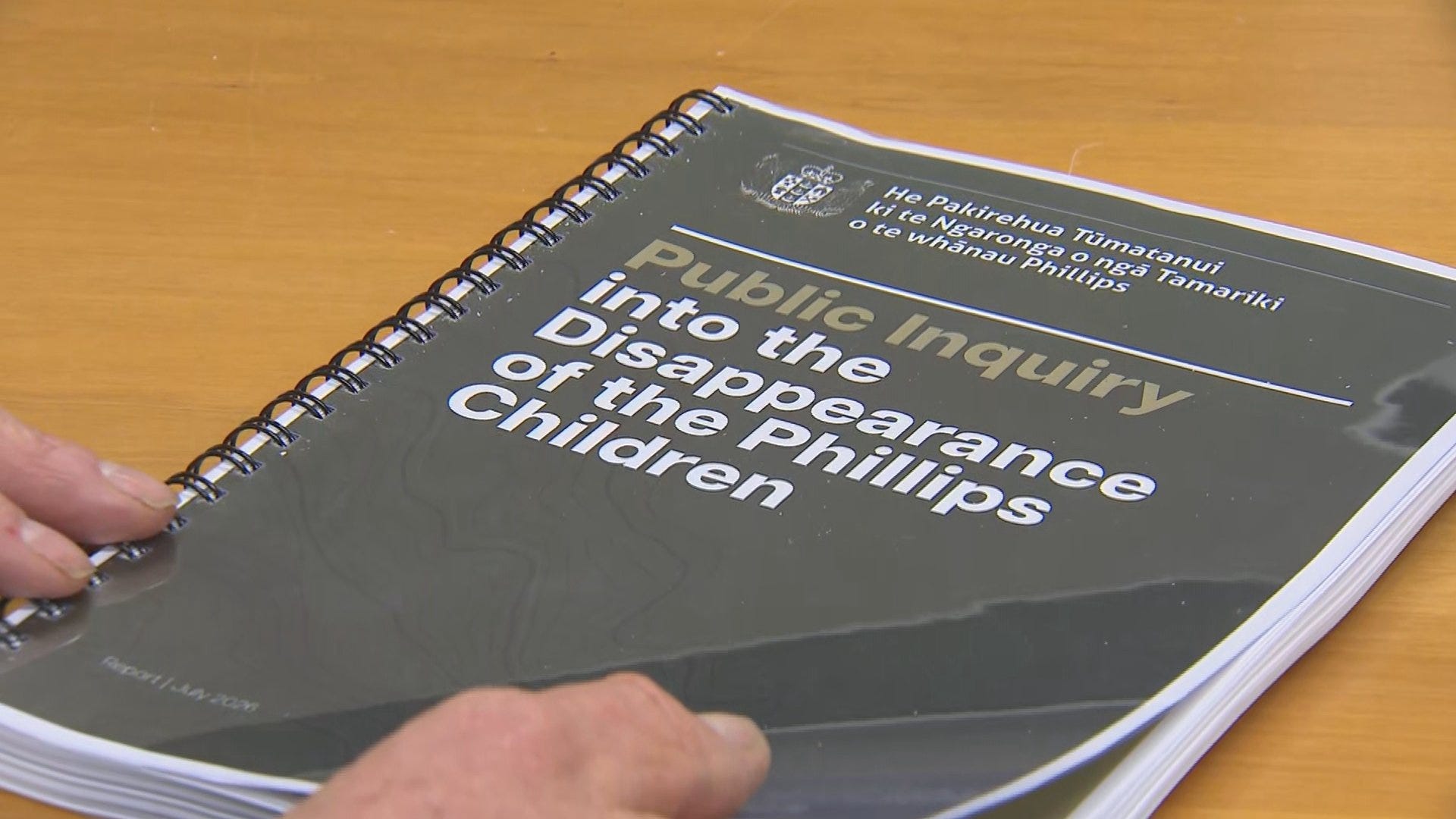
The newly released inquiry into the Tom Phillips tragedy is a damning account of how Police and Oranga Tamariki failed his three children. It documents family warnings that were discounted, evidence that went unread and opportunities to find the children that were mishandled.
Phillips concealed the children in the bush around Marokopa from December 2021 until September 2025, when he was fatally shot by Police and the children were recovered. The inquiry, led by Simon Moore KC, finds that better cooperation between agencies could have prevented the second disappearance or brought the children home sooner.
Ministers have accepted the report’s nine recommendations and agency leaders have apologised. But it remains unclear what accepting responsibility will mean for the agencies and the people who made these decisions. Here are ten questions about those failures and what should happen next.
1: Why were the mother and sisters not taken seriously?
The most disturbing feature of this case is how hard the maternal family had to work to get the authorities to recognise the danger. As Juliet Speedy reports for Stuff, an Oranga Tamariki (OT) record from October 2021 noted that one sister asked whether the agency “would be held responsible if the children went missing again”. The family was warning about the very thing that subsequently happened.
Mihingarangi Forbes says the people who deserve recognition are the children’s older sisters, Storm and Jubilee Dawson: “They raised the alarm and kept raising it, they spoke up when adults and agencies, charged with protecting their younger siblings failed to speak up and failed to listen”. Forbes and Annabelle Lee-Mather have followed the sisters and their mother, Cat Christey, for several years. Forbes writes: “Both the media and government agencies seemed to minimise or completely ignore Cat’s relationship and mana as the children’s mum.”
The inquiry found that agencies often minimised the maternal whānau’s concerns as part of a parenting dispute. Michelle Duff, writing in The Spinoff, argues that the case exposes “damaging and misogynistic narratives” that “cast men as heroes and women as complainers and overreactors”. The children’s mother also told OT she felt disadvantaged because she was Māori and the Phillips family were white. That does not establish the motive behind every decision, but it does require an explanation of why the family’s detailed warnings carried so little weight.
2: How did the children get declared “completely fine”?
RNZ’s Sam Sherwood reports that an older sister sent OT an affidavit describing what she said was controlling and abusive behaviour by Phillips. The affidavit was affirmed on 4 October 2021, and the inquiry found it appeared nobody at OT read it. After a home visit, OT recorded Phillips as “a very capable and loving father”. On 6 October, it told the Family Court the children were “completely fine”, without telling the court about the maternal family’s concerns or the ongoing Police investigation and concerns.
When a sister subsequently challenged that assessment, Sherwood reports that she was told the judge had made his decision and nobody could change it. OT had failed to give the court important information, then invoked the court’s decision when the family questioned its assessment. The inquiry found that OT could have taken further steps through the court to protect the children.
Amanda Malu, OT’s chief executive, has acknowledged the significance of the unread affidavit. As Speedy reports, she said: “had we read it, the advice we would have given to the court would have been different.”
3: Why did Oranga Tamariki close its file while the children were missing?
By February 2022, the children had been missing for more than two months, and their sisters were still trying to get action. One wrote: “There needs to be the utmost urgency placed upon this case, as these children do not deserve this… Those children did not ask to be kidnapped.” In the correspondence reported by Speedy, she described missed Christmas celebrations, a birthday and weeks without contact. The family understood that prolonged isolation was itself harmful.
Yet Sherwood reports an internal OT response stating: “If the children are missing that is a police matter not an Oranga Tamariki matter anyway.” OT closed its report of concern that month. By then, according to the inquiry, it had gone almost five months without meeting either sister or the children’s mother. It should have kept the file open and informed Police and the Family Court about the risks.
4: Why were opportunities to find them mishandled?
Although some officers feared for the children from the outset, the initial Police approach after the second disappearance reflected a prevailing belief that they were not in immediate danger. In May 2023, a woman identified as Rhonda gave a man she suspected was Phillips a lift and saw children at his vehicle. She also had a photograph of him, taken at her home, which she later supplied to Police.
Jenna Lynch reports that a dispatched unit was diverted to another family-harm incident. The original callout was subsequently recorded as requiring no further action, a designation Police could not explain to the inquiry. Further contact occurred, but the lead was not investigated promptly enough. The other family-harm incident explains why the unit was diverted. It does not explain why Police failed to arrange a prompt follow-up.
As Sherwood reports, a March 2023 Police review had already criticised the investigation’s lack of momentum, fragmented records and insufficient direction. This was a difficult and dangerous search, but its management was being criticised while it was underway. The agencies cannot dismiss it all as hindsight.
5: Why were firearms warnings not properly acted on?
Duff highlights the different assessments Police recorded after the first disappearance. In the case for revoking Phillips’ firearms licence, they wrote: “His large and regular consumption of alcohol and his irrational thinking are ingredients of a man willing to do anything to keep his children in his care.” Yet their report to OT recorded no immediate concerns for the children’s safety. The inquiry found that Police reported their concerns promptly, but did not adequately explain why they feared Phillips might take the children away again.
Nor was the firearms response adequate. As Benn Bathgate reports, Police had not properly pursued the mother’s firearm-safety complaints and delayed serving Phillips’ licence-suspension notice. Some guns had been seized, but Police had not done enough to locate all of them or address his access to other weapons where he was required to stay. Nobody can guarantee that different decisions would have prevented the eventual shooting. But the later emphasis on how dangerous Phillips was makes those earlier failures especially difficult to excuse.
The paywall now starts partway through Democracy Project newsletters. The rest of this column examines the rejected offer of help, the Netflix documentary, the limits of the inquiry and the question of accountability. Please take out a paid subscription to read on and support the Democracy Project.