

Craig Stobo is gone as chair of the Financial Markets Authority. Not because of the rumours that swirled around him for months. Not because of the Estonia trip. Not even, formally, because he sat on the board of a mortgage-broking company that was using his FMA title in its marketing.
He went because he could not do the most basic thing required of a Crown entity chair: stop behaving like a political commentator.
Wendy Aldred KC cleared him on some of the more sensational allegations. But on political neutrality, she was blunt. Stobo’s public commentary was too partisan, too frequent, and incompatible with chairing the Financial Markets Authority.
So yes, there is a tidy version of this story. A complaint was made. An investigation followed. The report came out. The chair resigned. Cameron Brewer said the required words about confidence in the regulator.
But that version is too generous. The resignation is not the end of the scandal. It is the least interesting part of it.
The chair who kept talking
Aldred’s 45-page report, released yesterday, paints a picture of a Crown entity board chair who simply refused to recognise the constraints of his office and the obligations of a senior state appointee. His repeated public praise of Christopher Luxon was all on the record. So were the warm noises about Simeon Brown, Erica Stanford and Winston Peters. To one audience Stobo declared the coalition was delivering “The Great Unwind” of “atrocious policy settings of the last government.” To another, he claimed the Greens were “losing the climate debate as unrealistic economic reality of transition costs.”
Then there was the personal submission to the Justice Select Committee supporting David Seymour’s Treaty Principles Bill, in which Stobo argued that the bill would “ensure that we can prosper as a modern representative democracy.” That submission contradicted the FMA’s own board-approved Māori strategy, Matangirua. Stobo had sat through a presentation on it weeks earlier.
Aldred’s verdict was unsparing. Stobo’s commentary was “laudatory” of the National-led government and “critical” of the previous Labour-led government. It fell well below the expectations of a Crown entity board chair. It was not protected by the fig leaf that he had been speaking in some other capacity. As Aldred put it: “It is not realistic to think that this will avoid the risks identified … Mr Stobo is not simply a member of the board, but is its chair, and those members of the public with an interest in the FMA … will not cease to identify Mr Stobo with the FMA simply because comments may be attributed to him in another capacity.”
The flaw at the heart of the New Zealand elite’s standard defence — “I was wearing a different hat” — has rarely been demolished so plainly.
The “different hats” delusion
The FMA’s general counsel Liam Mason had warned Stobo about exactly this kind of behaviour. The report makes clear those warnings went unheeded. On 12 July 2025, Mason wrote to Stobo about comments the chair had made at an NZ Initiative event, where Stobo had questioned whether the climate-related disclosure regime — a regime the FMA is statutorily responsible for monitoring — should be voluntary.
Stobo’s defence to Aldred was telling. The Minister of Commerce, who was also at the event, had asked him “what hat he was wearing” before posing the question. Stobo did not clarify.
Of course he didn’t. Everyone in the room knew exactly which hat he was wearing.
Mason said that board members “needed to be very careful about making comments about matters for which the FMA has responsibility. We’re a regulator but we also have a law reform role.” Internal policy existed precisely to prevent the kind of confusion Stobo seemed determined to create. FMA board member Prasanna Gai had also raised concerns, in his case about Stobo’s commentary on monetary policy, given the FMA’s relationship with the Reserve Bank.
Three FMA board members ultimately met with then-Minister Scott Simpson to escalate the concerns. Three board members going to their Minister is not a minor act of internal governance — it is what happens when a chair has lost the confidence of his own board.
The Indi business is worse than the report says
Aldred concluded that Stobo’s Indi directorship did not, on its own, justify removing him from the FMA. He had disclosed the interest properly when he took it up in August 2024 and acted reasonably when concerns were raised. At an FMA board meeting on 16 September 2025 he agreed to resign.
However, he did not actually resign until 12 December, around the time MBIE’s investigation was announced. The report calls the three-month delay “unacceptably long.”
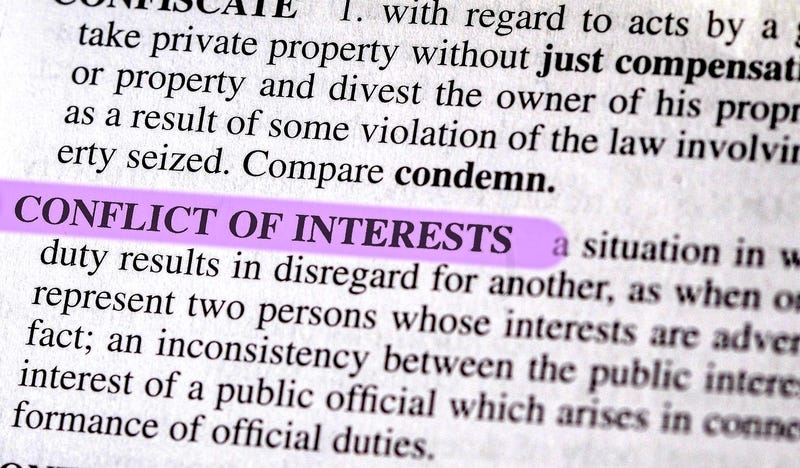
What is harder to pass over is what The Independent Mortgage Company (“Indi”) was doing while Stobo remained on its board. Indi is not some harmless hobby board. It is a digital mortgage broker trying to take business off the banks. The FMA has a role in bank conduct. And here was Indi, marketing itself with the chair of the FMA on its board.
So, a new market entrant, competing in a sector the FMA polices, was using the FMA chair’s name and title in its commercial pitch. As economist Michael Reddell put it on X, “it is almost beyond belief that the chair of the FMA was director of a mortgage company, which was using his name and FMA title in their marketing.”
FMA chief executive Samantha Barrass clearly thought it was beyond belief too. She told Aldred the role was “heavily conflicted,” adding: “We need to be beyond reproach because the inappropriate management of conflicts is not just a matter of regulatory requirements, we take enforcement action when conflicts are not managed appropriately.”
The chief executive of the FMA was, in effect, telling a King’s Counsel that the chair had failed the very standard the agency she runs imposes on the firms it polices.
The paywall now starts at halfway through all Democracy Project newsletters. Please take out a paid sub if you want to support this service and access the full content, including the following sections: “This public sector problem keeps happening”, “The appointment that should never have happened”, “Stobo has gone quiet, and so has everyone else”, “Why the FMA cannot look captured”, and “The system limps on”.