

Super profits are being made in New Zealand by insurance corporations. A handful of companies have a near-monopoly on the market, which has allowed them to inflate costs for consumers. The industry is therefore the latest example of a broken market leading to New Zealanders being severely ripped off.
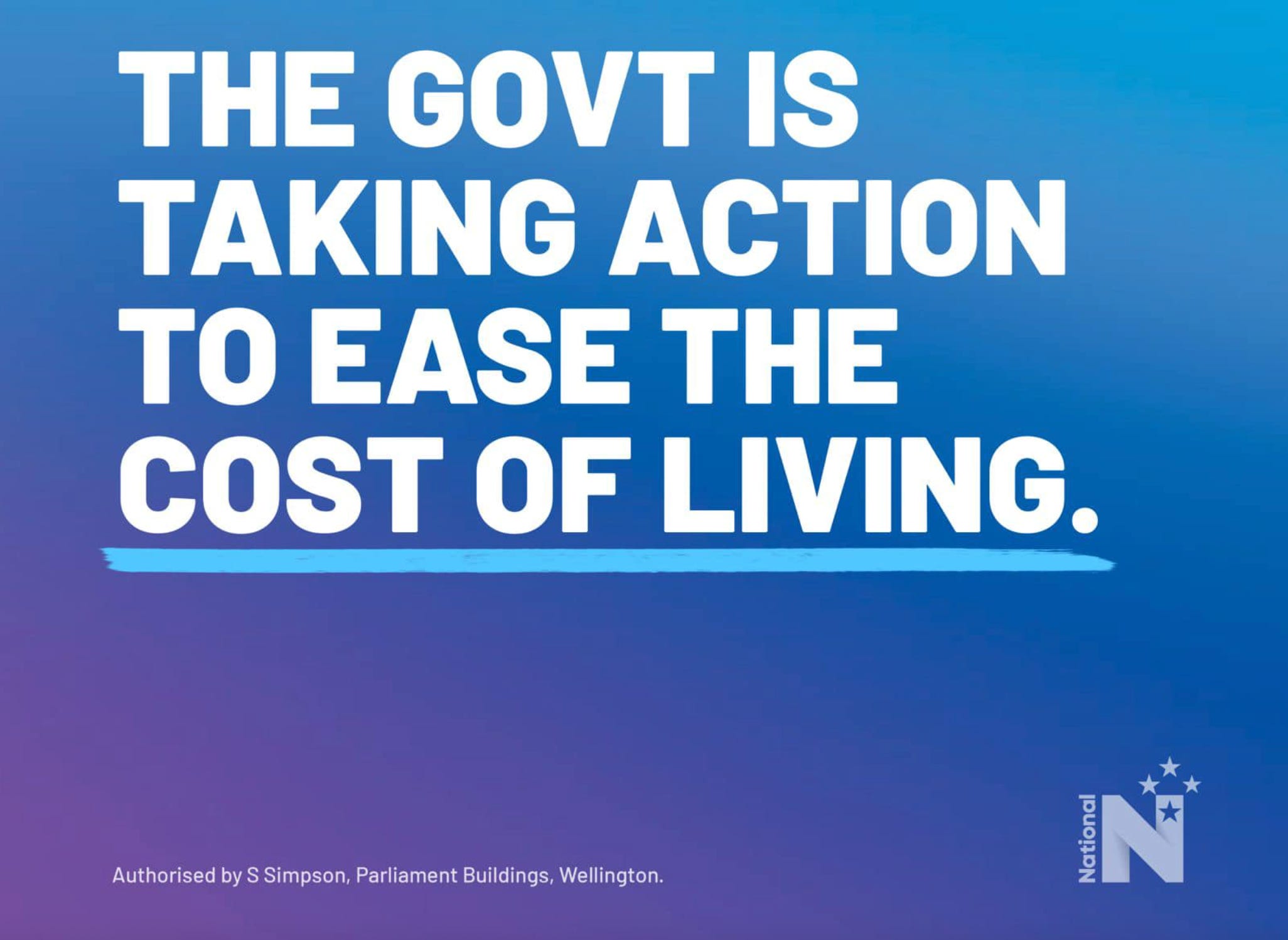
In a cost-of-living crisis, and with an election approaching, the National-led Coalition Government has finally acted on the matter. Last night Finance Minister Nicola Willis announced a new “deep dive” review of the insurance sector. Cabinet has agreed to investigate the drivers of home insurance costs, asking the Council of Financial Regulators to undertake a six-month fact-finding mission.
Unfortunately, this move has all the signs of being political theatre designed to create the impression that something is being done about the problem. The review is an incredibly moderate exercise with very little power to investigate or make recommendations for reform. Unsurprisingly, the insurance companies have responded positively to the announcement. They’re no doubt relieved that the Commerce Commission hasn’t been asked to undertake one of their more rigorous “market studies” that would be more likely to threaten this unregulated and highly profitable sector.
The Insurance market is broken in New Zealand
Here’s what we’re dealing with. Home insurance costs have risen 916% since 2000, the greatest increase of any item tracked by Statistics NZ. Premiums jumped 40% in just two years, growing at three times the rate of general inflation since 2011.
Meanwhile, the top two insurers (Australian-owned IAG and Suncorp) control roughly 70-76% of the market. In 2024, they posted combined profits exceeding $730 million. IAG’s insurance profit surged an extraordinary 938% year-on-year. And the top 10 insurers collectively recorded over $1.2 billion in profit.
At the same time that premiums are going up dramatically, insurance services are actually withdrawing their coverage. This last week has seen announcements of companies pulling out of places like Westport, Rolleston, and Woodend. AA Insurance has placed holds on new home policies in these areas due to flood and seismic risk. If a homeowner cannot secure insurance for a new purchase, they cannot get a mortgage. Property values then collapse. Towns face the prospect of becoming economic dead zones.
A Commerce Commission “market study” is needed
Concern about the broken insurance market has been growing for years, prompting calls for radical reform to ensure the market is working properly. One of the key advocates for fixing this is public-interest group Consumer NZ. Late last year they released a report with the blunt title: “Will you be able to get home insurance by 2035?”
Written by investigative researcher Rebecca Styles, the report delivered a blunt warning: “If insurance becomes a luxury only available to a privileged few, the impacts on communities, our economy and society will be severe.” Her research found the proportion of households dropping home insurance had more than doubled, from 7% in 2022 to 17% in 2025.
Consumer NZ has specifically called for the Commerce Commission to conduct a formal “market study” of the insurance sector. Market studies are the mechanism enabled by law to properly scrutinise sectors of the economy. They come with special powers to uncover evidence of problems and the ability to make binding recommendations. The threat of government splitting up monopoly companies that are exploiting their positions also lurks in the background.
Treasury has also been favourable to such a study. The agency’s own analysis, revealed through OIA requests, shows that the insurance sector exhibits the same red flags as industries like supermarkets and building supplies. Treasury recently concluded: “we consider that the insurance industry is likely to be a good candidate for a Commerce Commission initial market assessment, potentially leading to a market or competition study under the Commerce Act.”
Treasury identified New Zealand’s residential insurance market as “highly concentrated, with three insurers controlling significant market share.” This analysis was partly based on the research of economist Amara Anyanwu, who has recently published a peer-reviewed analysis in Policy Quarterly that provides compelling data on how broken the insurance market is. His analysis directly challenges the industry’s preferred narrative that high prices simply reflect risk. Anyanwu argues the evidence demands strong policy action, noting that “the scale and persistence of ‘excess profits’ point to structural weaknesses in competition.”
A Weak review, with industry collaboration
While many consumers and experts might have hoped for radical action by the Government to fix the broken insurance market, the announcement from Willis and colleague Scott Simpson seems extremely weak.
One of the biggest weaknesses of the review is the directive for the investigators to work with and consult the industry. This reduces its independence and ability to make strong recommendations for reform. Consumer NZ’s Jon Duffy has warned that the review must instead be “fully independent and free from industry influence.” The current structure fails that test.
It seems that the Government, in announcing such a soft review, has carried out the bare minimum politically necessary response. By making some sort of vague announcement like this, the Government obviously hopes to demonstrate concern without committing to confrontation. It provides political cover (“we’re taking action”) without meaningful intervention, buying time until the election is over. At the same time it keeps industry onside by involving them in the process, and it avoids antagonising powerful Australian corporate interests.
The industry response has been revealing. Kris Faafoi, the CEO of the lobby group representing the insurance corporates (the Insurance Council), has welcomed the review. He said that Nicola Willis had assured him the review wasn’t “a big stick exercise.” That’s quite the reassurance for an industry making record profits while households struggle to afford cover.
Willis’ framing of the review is also worrying. The Finance Minister stated she wanted to understand “how much of the price increases were driven by factors outside the Government’s control, such as climate and earthquake risk, and how much related to ‘regulatory burden’ and ‘red tape that we put on insurance companies’.” In other words, the Government’s instinct is to blame regulation, not corporate behaviour.
This is despite the fact that New Zealand insurers have faced multiple enforcement actions for systematic overcharging in recent years. Last year, IAG received a record $19.5 million fine for overcharging 250,000 customers by $35 million. In this case, the High Court found a “troubling compliance culture” and issues persisting “close to a decade.” The previous year, AA Insurance received a $6.175 million penalty for misleading customers about multi-policy discounts, overcharging 112,463 customers by $4.89 million. Tower also faced proceedings for failing to apply discounts, resulting in $11 million in overcharges. These aren’t isolated incidents. They’re systematic failures suggesting inadequate regulation, not excessive regulation.
Willis also framed expectations modestly: “If there are small things we can do at the margin which will reduce the pressure on your insurance bill, we want to do it.” That’s not the language of a minister preparing to take on a powerful industry.
The lobbying muscle of the insurance sector
To understand why the Government is so reluctant to unleash a truly independent inquiry into the insurance sector, it is worth looking at the political power the industry has accumulated. The Insurance Council of New Zealand has become a highly effective lobbying machine.
Its chief executive, Kris Faafoi, is a former Labour Cabinet minister who oversaw the very sector he now represents. There is no meaningful cooling‑off period or ban on such revolving‑door moves in New Zealand politics, so this kind of shift has become normalised.
Under Faafoi’s leadership, the Council has not just been working the phones in Wellington; it has been flying MPs overseas. In 2024 and again in 2025, it organised delegations of ministers and opposition politicians to London to meet major reinsurers and other industry figures, ostensibly to shore up New Zealand’s access to risk capital and to discuss climate adaptation.
These trips have included key players in the current debate: Commerce Minister Scott Simpson, Minister for Climate Change Simon Watts, Labour’s Finance Spokesperson Barbara Edmonds, Labour’s Rachel Brooking, and Green Party co‑leader Chlöe Swarbrick.
Industry-funded trips like this can have a strong influence on politicians. They are designed to create relationships and shape policy thinking in ways favourable to the industry. As a result, it is hard to avoid the impression that both Labour and the Greens have become more muted on insurance issues. MPs on the corporate trip posted justifications to social media that framed the insurance companies as partners in climate adaptation policy, rather than as corporations with vested interests in maintaining profitable market structures.
It’s questionable whether MPs should accept industry-funded travel to meet with corporations and lobbyists. The Greens have previously criticised such activity, and the fact that a Green Party co-leader now accepts industry-funded travel is particularly revealing of how normalised this capture has become. Swarbrick came in for criticism from left and right for travelling business-class to London, assisted by the insurance industry. Some pointed out the irony of her party campaigning on climate action, yet insurers are profiting enormously from climate-related premium increases.
Climate, competition, and the politics of blame
One striking feature of the current debate is the way different players try to foreground either climate change or market power as the main culprit.
Economic commentator Bernard Hickey has argued forcefully that the Government is looking in the wrong place. In his analysis, premium inflation is fundamentally about climate change and global reinsurance costs. He accuses ministers of ignoring “some basics of science and economics” by focusing on competition and “red tape”, while at the same time dismantling emissions‑reduction policies that would slow the underlying risk.
Hickey is right to insist that climate risk is real, and that it is now feeding directly into the cost of living. The brutal truth is that, even in a perfectly competitive insurance market, some properties would have become much more expensive to insure – or uninsurable – because they were built in the wrong place.
But this shouldn’t be turned into an argument against looking at market power. Climate change does not explain why insurers in New Zealand have twice the return on equity of their counterparts in Australia – a country with its own repeated floods, fires and cyclones. It does not explain the record dividend payments after disasters. It does not explain why the industry has fought so hard to keep its risk models and pricing algorithms secret.
In reality, climate and competition sit on top of each other. There is a genuine climate‑driven repricing of risk underway. However, that upheaval is taking place inside a market where a small number of powerful firms have the ability to pass on costs, pad margins and then hide behind the language of “global forces” and “science‑based risk modelling”.
There is also a sharp class and democracy angle here. The shift to fine‑grained risk‑based pricing sounds fair at first glance – why should someone on a hill subsidise premiums for someone on a floodplain? But in practice, it has resulted in geographic red‑lining. Working‑class communities and smaller towns in risky areas are seeing premiums leap or cover withdrawn altogether. Wealthier households often have more options: they can afford higher premiums, retrofit their homes, or move away. Those on low incomes are left with stranded assets and few choices.
As climate risk is pushed onto private insurance markets, without a serious public debate about managed retreat, social equity or who should ultimately bear the costs, the country stumbles towards a kind of quiet, market‑driven climate apartheid. That is not a phrase the industry likes to hear, but it captures the emerging reality.
Conclusion: a weak review in a strong industry
New Zealand’s insurance sector has become a classic case of how broken markets and weak political oversight can feed inequality and undermine democracy.
On one level, the story is straightforward: climate change and natural disasters have made insurance genuinely more expensive. On another, more uncomfortable level, a small number of powerful corporations have taken advantage of this upheaval to entrench an oligopoly, maintain excess profits and export large dividends offshore, while the political system has largely looked the other way.
The Government’s new review of insurance affordability does not meet this moment. It is too cosy with industry, too modest in its ambitions, and too reluctant to use the tools that have been deployed against other concentrated sectors. At a time when Treasury, Consumer NZ, independent economists and journalists are all pointing to serious competition problems and a mounting affordability crisis, the decision to opt for a soft “deep dive” rather than a hard‑edged market study is telling.
This is what weak regulation in the face of strong corporate lobbying looks like. And it raises a blunt question: is the Coalition Government serious about tackling New Zealand’s broken markets and cost‑of‑living crisis, or is it more serious about keeping powerful insurers happy?
For now, the insurance industry can be confident that its profits are safe, its London relationships are intact, and its risk models remain locked away from public view. The risks and costs, meanwhile, continue to be shifted onto households, communities and future governments.
That is not a sustainable equilibrium – it can’t last. If insurance – the basic promise that your home won’t ruin you if disaster strikes – becomes a luxury good in New Zealand, then the case for a much tougher, more democratic intervention will become impossible to ignore.
Dr Bryce Edwards
Director of the Democracy Project
Further Reading: