

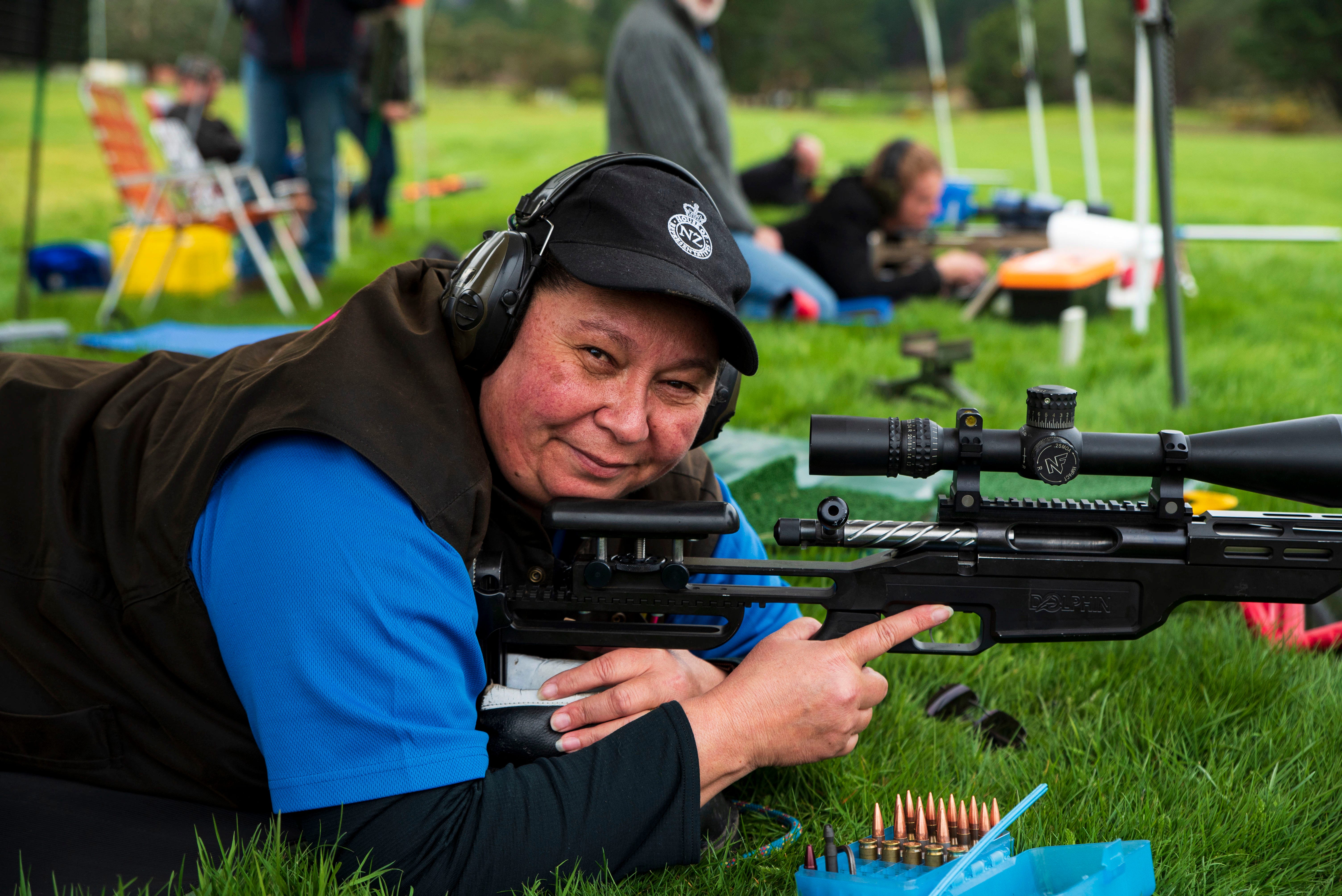
Associate Justice Minister Nicole McKee’s tenure as the government’s firearms regulator is fast becoming a textbook case of regulatory capture. Once the spokesperson for New Zealand’s largest gun lobby, McKee is now in charge of gun control. The latest revelations around her hand-picked appointments to a key firearms advisory group have exposed what looks like naked cronyism, casting doubt on political integrity and the influence of the gun lobby in our democracy.
How McKee chose her people
Derek Cheng’s NZ Herald investigation lays bare a troubling appointment process. Four members of the Ministerial Arms Advisory Group (MAAG) reached the end of their terms late last year. McKee decided to reappoint two, but cut two others: Gun Control NZ co-founder Philippa Yasbek and community advocate Helene Leaf. Initially, McKee agreed with Ministry of Justice officials on a wide call for nominations. But barely a week later, she reversed course.
According to OIA documents, McKee’s office instructed officials not to seek outside nominations if her coalition colleagues could furnish candidates instead. She already had two preferred nominees in mind. She privately urged both individuals to submit their CVs to the Act Party Chief of Staff, who then “nominated” them for the advisory group. In effect, the Minister hand-picked her new advisors first, then laundered their appointments through a partisan nomination process.
“Nicole has asked that I send these to you,” Mike Spray wrote in a July email, attaching his CV. In August, McKee’s ministerial advisor sent details for Michelle Roderick-Hall with the message: “Another one for nomination please good sir.” Only then was the process handed to Justice Minister Paul Goldsmith, who formally announced the appointments. Goldsmith’s role was largely to provide cover, lending his name to what was essentially McKee’s own selection.
The background of one of the new appointees heightens concerns: Spray has worked for McKee’s firearms training business.
Yasbek has slammed the secretive process. “It’s basically jobs for your mates,” she told the Herald. “New Zealand has a long tradition of doing merit-based appointments, not a crony-based system where appointments are who you know rather than what your abilities are.” Cheng reports that she concedes Spray and Roderick-Hall might be good additions, “but it’s hard to know without a wide and open process for nominations.”
Institutionalising capture
But the MAAG appointments are just one symptom. Yasbek is sounding the alarm about something bigger: McKee’s Arms Bill, currently before Parliament, which would institutionalise regulatory capture into the legislative framework itself.
“This is a fancy way of saying that the regulator serves the interests of the regulated group rather than the broader public interest,” Yasbek explains, “prioritising the convenience of gun owners rather than focusing on public safety.”
This matters because MAAG is not symbolic. It advises directly on firearms policy, including the forthcoming rewrite of the Arms Act. Who sits at that table shapes the advice the minister receives, the trade-offs she hears, and which risks are emphasised or minimised. Stacking that table with allies is not neutral governance. It’s agenda-setting.
The Bill proposes that the responsible minister recommend who heads the new Arms Regulator. Normally, chief executives of public service agencies are appointed through the Public Service Commissioner to ensure independence. As Gun Control NZ’s submission notes: “There is no justification for this constitutionally unprecedented approach.” McKee gets to pick her own regulator.
There’s more. The Bill would exclude sworn police officers from the regulator, despite Police having the most firearms enforcement expertise. And the proposed Firearms Licensing Review Committee would include people who “represent the interests of licence holders” on a body meant to provide impartial quasi-judicial review. As Yasbek warns, this would “put a further thumb on the scale in favour of issuing licences, which would systematically increase risk in the system.”
“The game is rigged”
“People believe the game is rigged,” Yasbek told the Herald. “And it’s part of a broader pattern, a slow corrosion of how our democracy functions, and of trust in public institutions.”
She pointed to Act’s track record, citing the appointment of Stephen Rainbow as Human Rights Commissioner. That appointment was recently ruled unlawful by the High Court, which found Justice Minister Goldsmith failed to apply the correct legal test. Rainbow was nominated by Act after texting Andrew Ketels offering to help the party. An independent panel rated him “not recommended.” Rainbow himself texted Ketels saying “I didn’t get the HRC job” in May, yet by August he was announced as commissioner anyway.
When asked to respond to Yasbek’s characterisation of the MAAG process as “jobs for your mates,” Act leader David Seymour declined to comment.
A Broader pattern
McKee’s actions come when concerns about cronyism in public appointments are running high. Since the change of government, political insiders and former MPs have been sliding into state sector roles at a remarkable clip. Paula Bennett was appointed chair of Pharmac. Simon Bridges became NZTA chairman. Steven Joyce is helping design the National Infrastructure Agency. Bill English reviewed Kāinga Ora.
Every administration does some of this. Labour had its share. But the McKee case is different. Bennett, Bridges, Joyce have been parachuted into governance roles, questionable perhaps, but at least ostensibly for their experience. McKee is directly responsible for regulating a sector in which she has a deep personal stake. She has essentially appointed herself to the role of gun regulator, and now appointed her gun lobby friends to advise her. This isn’t just patronage; it’s the active takeover of a regulatory regime by insiders.
As I have previously noted, such moves risk undermining the neutrality of the public service. Regulatory bodies are supposed to act in the public interest, guided by evidence and broad input, not dominated by the interest groups they’re meant to oversee.
Blogger No Right Turn wrote on this topic yesterday: “The culture of crony appointments has to stop. That’s not just a matter of de-electing this regime, because Labour is no different. Instead, all government appointments, whether statutory or ministerial, need to be taken out of the corrupt hands of politicians, and be made by an independent appointments body.”
What’s at stake
The MAAG exists because of the Christchurch terror attack. It was set up to give the minister access to a range of perspectives on firearms policy. When that body becomes stacked with people selected by the minister for their alignment with her views, it defeats the purpose entirely.
Goldsmith defended the MAAG process as “appropriate.” Both he and McKee declined to comment to the Herald, referring questions to the Cabinet Office, which referred them back to ministers. This convenient circularity tells you how seriously accountability is taken.
New Zealand’s democracy relies on basic norms of accountability and fairness. When those in power treat public roles as spoils for friends, or allow special interests to capture policy-making, those norms take a hammering. The cronyism on display here isn’t an isolated blip. It’s part of a broader pattern that should alarm anyone who cares about clean governance.
Democratic accountability means ministers should serve the public, not their former interest groups. It means appointments should be made on merit and transparency, not whispered through party channels. On all those counts, the McKee saga is a cautionary tale of what happens when political expediency trumps principle.
A Test for Luxon
Ultimately, this becomes a test for Prime Minister Christopher Luxon. He chose to give firearms oversight to a former gun lobbyist and has repeatedly defended her. That decision now carries consequences.
If public confidence in firearms regulation collapses — or if reforms weaken safeguards introduced after Christchurch — responsibility will rest at the top.
New Zealand can tolerate a degree of political appointments. What it cannot afford is the normalisation of regulatory capture. Ministers must serve the public interest, not their former constituencies. Advisory bodies must test assumptions, not echo them. On that standard, the McKee appointments fail.
NOTE: This post has been amended to remove two sentences that suggested the Minister or her company founded the Whakatupato programme, related to one of the appointees. This was based on an error in the original news story on the NZ Herald, which has also been corrected.
Dr Bryce Edwards
Director of the Democracy Project
Further Reading:
