

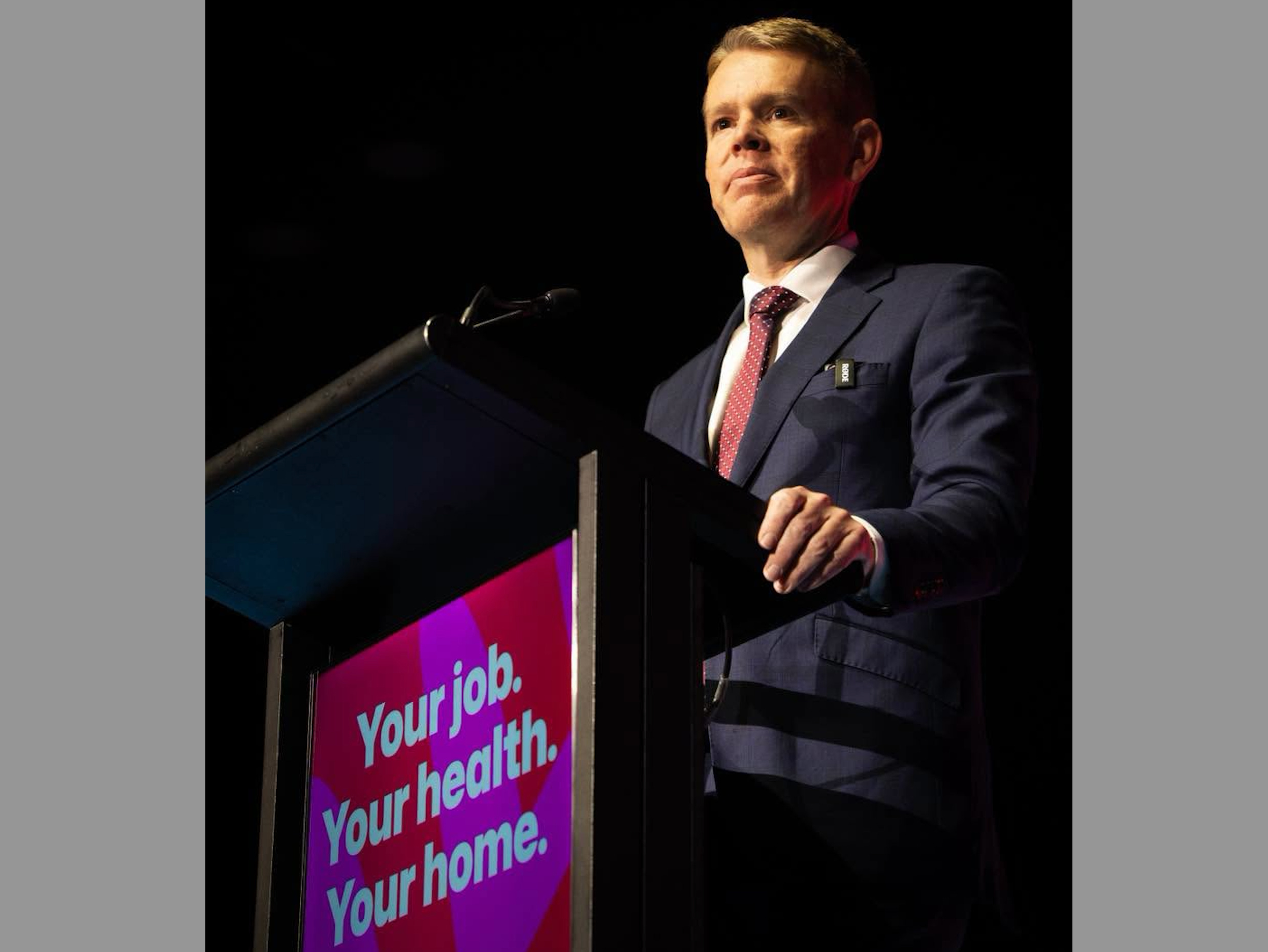
The unofficial theme of Labour’s annual congress in Wellington at the weekend was that “New Zealand is broken”. It is, of course, the same diagnosis National used to take power in 2023, and it is a fair one: putting the country’s biggest problems on the political agenda is exactly what an Opposition is for. Labour deserves credit for naming what needs fixing.
The problem, however, is that Labour also showed in the weekend that they aren’t willing to advance the sort of innovative, bold or radical solutions to fix the broken elements of New Zealand.
Big rhetoric, no appetite for the fix
The sharpest version of this critique came from the Herald’s political editor Thomas Coughlan, whose column today carried the perfect headline “Labour thinks New Zealand is very broken — it’s not promising to fix it”. The rhetoric from the stage, he wrote, was that the country is “quite fundamentally broken — and it resonated”. The catch was what happened off it: “away from the stage and away from the audience, it’s clear Labour has little appetite to live up to this rhetoric.”
That gap between what Labour condemns and what it will commit to undo runs right through the weekend. Coughlan noted that despite a roomful of supporters cheering Hipkins’ attacks on the Coalition’s spending cuts, the leader “wouldn’t even commit to not following through on the $2.4b in public service cuts” the Government has scheduled for the next three years, offering only that a public service policy was on its way.
Asked directly whether Labour would reverse the cuts, Hipkins would say only that the party would eventually set out a “difference in priorities to this Government”. Pressed further, he fell back on the line that did a lot of work all weekend: “We’re going to focus on winning the election first.”
Coughlan’s verdict on the underlying problem was blunt. Labour, he wrote, is “very keen to make the case that everything is broken — it’s very reluctant to promise anything that lives up to fixing it.”
A congress light on substance
The press gallery was underwhelmed, and said so. RNZ’s Craig McCulloch acknowledged the hype — around 500 supporters, kapa haka, a red-washed room — but found that “beneath the noise lay a tepidity and sense of caution which the party has struggled to shrug”. The speeches open to media, he reported, were “forward-looking, but light on substance”.
Stuff’s Glenn McConnell reached a similar conclusion, writing that Labour “hasn’t quite shaken off its caution, timidness and indecisiveness which took hold after it lost power in 2023”.
McCulloch singled out Hipkins’ best applause line — his invitation to voters to ask whether they were better off than three years ago — and identified exactly what it left out: “It was an effective line, but missed the obvious follow-up: would it be any better under Labour?” On the plans to turn things around, he found the detail “thin on the ground”, and located the deeper failing in Labour’s comfort with its own polling. The party, he argued, “has been in desperate need of a gearshift, with its year defined to date by an almost belligerent policy paucity”, and was missing the “untapped despondency in the wider electorate” that its lead disguises.
Even the rebrand drew his scorn. The slogan “jobs, health, homes” was reissued, McCulloch noted with audible weariness, as “your job, your health, your home” — “yet another symbol of the surface level change on offer”. The Spinoff’s Lyric Waiwiri-Smith captured the same thing more genially: Labour, she wrote, is “back in a major way, wielding its majorly moderate policies”.
What the public wasn’t allowed to see
Perhaps most revealing feature of the weekend was not a speech but a door being closed. As Coughlan reported in a separate piece, Labour ran its congress with extraordinary message discipline — “slick presentation, tight audio-visual game” — and locked the media out of anything that might have shown the party arguing with itself.
National, by contrast, lets journalists watch some of the back-and-forth between members and the leadership. Labour does the opposite. Reporters were admitted to the set-piece speeches delivered to adoring members and, in Coughlan’s words, “moving them on for more sensitive speeches.” The Saturday addresses by campaign chair Kieran McAnulty and Māori campaign chair Willie Jackson were closed to media entirely. The party, in Coughlan’s phrasing, “pulled out all the stops to get the media to scram from the more sensitive parts of the congress”.
This is worth dwelling on, because it is the same instinct that produces the policy caution, expressed as stagecraft. A party that rations what voters are permitted to see at its own conference is unlikely to be expansive about what it will actually do in government. The message control and the policy caution are the same instinct, not two separate ones — a party that won’t let voters watch it argue is unlikely to be frank about what it would do in office.
The bill nobody will name
Underneath the caution sits an unanswered question about money. Several reporters converged on it. Waiwiri-Smith noted that Labour’s various spending promises “will rely on the party’s proposed capital gains tax for funding”, a tax that “is beginning to look like the party’s bottomless pot of gold”. Richard Harman put the leader’s difficulty plainly: “because Labour has not produced much policy and because it has yet to produce its fiscal plan, he can’t actually say much.”
Pay equity is where the question bites hardest. Labour has promised to restore the regime the Government scrapped, which Treasury has costed at roughly $11 billion. Harman recorded the exchange when journalists pressed on how it would be paid for. Hipkins: “On pay equity in due course. This is going to be paid for out of future budget allowances.” But those future operating allowances, Harman pointed out, currently run at just $2.4 billion a year. As the reporters in the room put it to the leader, there are only two levers, cutting something or raising taxes, and Labour will name neither.
Coughlan drew out the consequence that makes this more than a process complaint. Labour has locked in its superannuation settings and pledged no new taxes beyond the capital gains tax. On a Treasury briefing originally written to warn the Government, holding to those settings would mean real-terms cuts to health and education over the coming decade — what Treasury described as “reducing access to health and education services” and an “implied reduction in their quality”. As Coughlan observed, no one thinks austerity is Labour’s policy, “and yet with its superannuation commitment locked in, alongside a pledge for no additional taxes beyond its CGT, it very much is.”
The paywall now starts at halfway through all Democracy Project newsletters. Please take out a paid sub if you want to support this service and access the full content, including the following sections: “One policy, recycled”, “A bolder party than its leaders”, “A fair go, but not on TV”, “The shadow of Starmer”, and “What this all means”.