

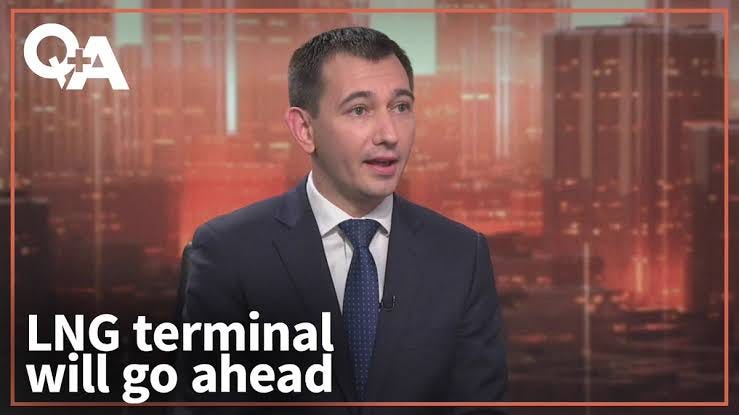
The National-led Government should not sign a binding contract for its proposed LNG import terminal before the 7 November election. This is a major, billion-dollar, long-term commitment with disputed benefits, an unsettled funding model and explicit opposition from parties that might form the next government. Yet Energy Minister Simeon Brown insists a contract could be signed during the campaign. His explanation, reported yesterday by Jenna Lynch in Stuff, is that “the government is the government right up until the election”. That establishes his authority to act. It does very little to justify the decision he wants to make.
National should be making its case to voters before creating financial obligations that a different government might have to pay to escape in terms of contractual break-fees. The energy-security problem is real, and there are serious arguments for retaining access to liquefied natural gas. But the public is entitled to scrutinise this particular solution, its costs and its alternatives before being committed to it. The latest reporting makes the need for restraint stronger: ministers envisage signing the commercial agreement before Parliament even passes the legislation intended to enable the terminal to be built.
A contract before the law
Tom Pullar-Strecker reports in The Post today that the Enabling Liquefied Natural Gas Bill has not been introduced and is not on the expected business list for Parliament’s final sitting week. Brown’s spokesperson defends signing first as “the more responsible approach, because the legislation can then be written for a known facility in a known location, with consents and conditions to match”. She adds: “A contract is not a consent. Until the enabling legislation is passed, all existing relevant law continues to apply in full, and no contract can override it.” Brown also says the Government will not sign a contract that fails to offer value for money.
So the sequence being proposed is this. Sign the commercial agreement. Hold the election. Then ask the next Parliament for the law. Which raises a question nobody has put to the Minister: what would New Zealanders owe if the contract were signed and the next Parliament refused to pass the bill? A contract might reserve a vessel or pay for preparatory work, but it cannot itself authorise construction of the actual terminal. Depending on its terms, MPs could be asked to choose between approving the terminal and leaving taxpayers with a compensation bill. Parliament would still have the right to refuse. Brown needs to tell us what using that right could cost.
There is a second cost that has had almost no attention. Karen Boyes, chief executive of the Major Electricity Users Group, favours signing the contract and passing the enabling legislation in tandem. But if the contract is signed first, she asks in Pullar-Strecker’s report: “are there any other risk premiums that are being factored into the commercial contract because they know there isn’t an enabling environment guaranteed?” She adds: “Perhaps if we had the time to get the legislation in, you might remove some of that risk in the commercial negotiations.” If the political rush increases the commercial risk, electricity users or taxpayers could end up paying for National’s determination to sign before polling day.
The election is part of National’s calculation
The political deadline has been part of this project for months. In February, RNZ’s Kate Newton reported that the Cabinet paper recognised the risk of a future government abandoning LNG and recommended signing contracts by mid-year to lock in the concept. The paper stated: “Our objective is to provide as many of these approvals as possible before the election.” The timetable has slipped, and the legislation remains outstanding, but the determination to sign before voters go to the polls persists. The Government’s own paperwork shows that making the project harder for a successor to abandon was part of the calculation. That is a serious democratic objection to signing now.
Brown is correct that the Government retains its powers. The Cabinet Office’s pre-election guidance expressly says the caretaker convention does not apply before polling day. It also recognises that governments exercise restraint when an election and possible change of government are imminent, particularly over appointments and advertising. The Prime Minister makes the final judgement about whether a decision should proceed. Christopher Luxon can tell Brown to wait, and he should do so. Officials can continue their work without signing the terminal contract.
Even the coalition’s final position is unresolved. Shane Jones told The Post this week that Cabinet must determine “whether it’s the right time to sign up to such a deal”. His stand-in at the Te Papa energy debate on Wednesday, Martin Gummer, called LNG “the least worse option” and stressed that procurement options had not yet gone to Cabinet. Gummer also argued that a terminal decision should ideally have been made last year, and warned about the risks of further delay before a possible dry year in 2028. NZ First supports pursuing imports, but Cabinet has yet to settle the timing and terms of the deal.
What would cancellation cost?
In February, the Herald’s Kate MacNamara reported that Treasury had been examining indemnities to protect investors in thermal generation against policy changes. She wrote: “Such insurance would essentially see the New Zealand public guarantee investments against the financial losses that would arise if that same public chose a new government intent on policy U-turn.” That work concerned a separate proposal for thermal generation. We do not know whether the LNG agreement will offer comparable protection. Before it is signed, voters should know what they could have to pay if they elect a government that wants to stop the project.
Chris Hipkins has already acknowledged the difficulty. Asked about cancelling a signed agreement, this week he told The Post’s Rob Stock: “We’d need to see what the overall implications of that would be. I don’t want to be giving compensation to the oil and gas industry.” His promise to stop LNG “if there is any way to stop it” is therefore qualified. The termination terms have not been published, so claims that the Government is deliberately including a punitive break fee remain speculation. Brown should disclose what taxpayers could owe if the project is cancelled, before he signs the agreement.
Suppliers can legitimately expect payment for commitments they undertake. Governments also routinely sign contracts extending beyond their terms. But ministers should avoid creating a foreseeable and expensive dispute just before an election. The ferry debacle ought to have taught them something: KiwiRail’s final settlement with the shipbuilder was $144 million. Those contracts were signed in 2021, so the timing is different. National knows from the ferries how much taxpayers can lose when a government abandons a signed contract. It should take that experience seriously before signing another agreement that the Opposition has already said it wants to abandon.
The paywall now starts partway through all Democracy Project newsletters. Please take out a paid sub if you want to support this service and access the full content, including the following sections: “The energy argument still needs scrutiny”, “Other expensive council decisions”, “The funding and safety questions remain”, “National should follow its own infrastructure principles”, and “Put the proposal to voters”.