

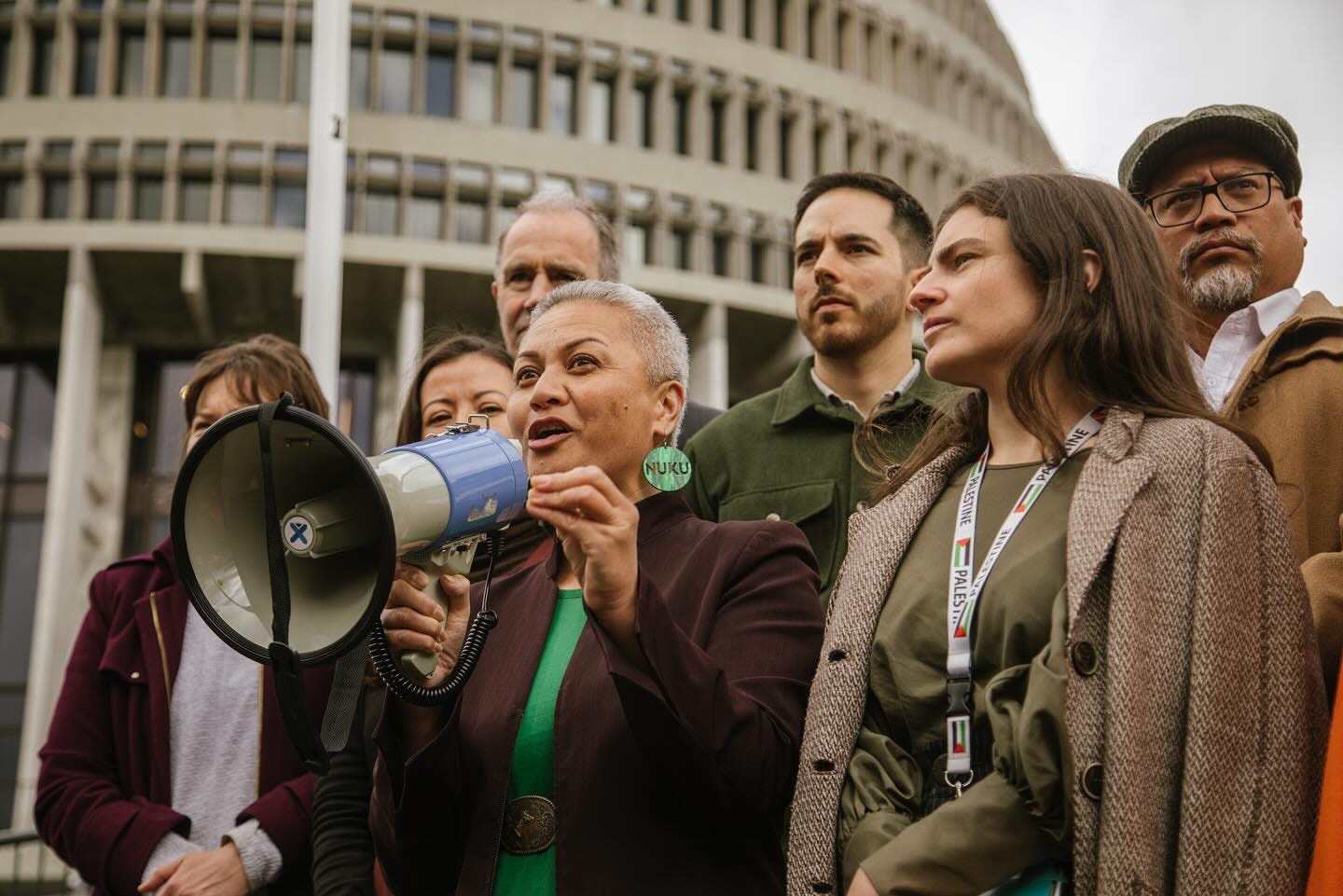
In my last column, I laid out the sorry state of the Green Party as 2026 kicks off. Scandals piled up, staff jumped ship, polls slid south, and the leadership clung to excuses about algorithms and the Coalition Government being responsible for turning people off the Greens. All this despite a coalition in chaos and a Labour Party that’s barely visible.
The symptoms are clear, but what’s the disease? Today, I’m digging into the deeper mess: a party bogged down in culture wars and identity politics that’s pushed aside its environmental roots and failed to connect with the voters who matter most. It’s a trap of their own making, one that’s left them looking like a middle-class club more interested in pronouns and Palestine than power bills and polluted rivers.
The Abandoned climate agenda
Let’s start with the most glaring irony. Here’s a party called the Greens that’s all but abandoned the environment. Winston Peters nailed it last year when he asked in Parliament when the Greens had last bothered with a question about the actual environment. Turns out, not often.
The unfortunate reality is that climate change is discussed much less in the media. When I crunched the numbers for last year, looking at media headlines, I found that media coverage of climate change in politics dropped a whopping 41 percent compared to 2024. Reporting on emissions was also down 20 percent. And the Greens have followed suit, dialling back their emphasis on what used to be their core mission.
Journalist Graham Adams put it bluntly in one of his columns: climate politics is in retreat, and the Greens are leading the way. They’ve sidelined environmentalism for a mishmash of social justice causes. Sure, the Government’s been busy gutting climate policies: weakening the Emissions Trading Scheme, fast-tracking projects that spew emissions like there’s no tomorrow.
This should be Green catnip, a chance to rally the public against vested interests in mining and big ag that are rigging the system for profit while the planet burns. But instead of making it their defining fight, they’ve let it slide – it’s almost an afterthought for the Greens these days.
Chlöe Swarbrick tried to reframe climate as “a first principle through which all other policies should be viewed,” but that sounds more like abstract philosophy than a call to arms. It doesn’t land with folks worried about the basics.
Of course, it’s true that times change. Swarbrick herself admitted in an NBR interview that it’s tough to get people fired up about climate if they can’t put food on the table. It’s a good point. But instead, they’ve left the field, leaving voters to wonder if this is still an environmental party at all.
Stuck in the culture wars
That vacuum’s been filled by something else in the Greens: the culture wars. Critics have dubbed them the “Palestine and pronouns party,” and it’s not hard to see why. Graham Adams nailed this too, pointing out how Green support stays hunkered down in inner-city electorates full of students and the well-off. Ordinary working people and the poor, the very people the party says it champions? They’re not buying it. Little interest there in an agenda heavy on trans rights and identity causes that feel confined to middle-class bubbles.
Take the Benjamin Doyle saga as a prime example. Here’s a Green MP who resigned after a social media storm over what he called “queer slang” but the public saw as something far sketchier. The party’s defence of him turned into a textbook case of how culture wars backfire: defending the indefensible while alienating everyone outside the echo chamber.
Andrea Vance called it a “master class in deflection.” Instead of accepting that an MP had shown poor judgment, the Greens chose to make it about identity-based bigotry. She has also written sharply on how the Greens keep falling into the culture war quagmire by succumbing to Winston Peters’ agenda. Time and again, provocateurs like Peters bait them with inflammatory nonsense, and the Greens dutifully oblige with moralistic fury.
Peters taunts them in Parliament about gender ideologues and pronoun police, and instead of ignoring him and pivoting back to climate or housing, the Greens double down – proving his point. As Vance sharply observed, “He sets the bait and the Greens keep swallowing.” Every minute a Green MP spends fulminating over a micro-aggression or draping themselves in some symbolic cause is a minute not spent connecting with voters’ real-world concerns.
Crucially, this isn’t just a narrative imposed from the outside – the Greens themselves have leaned into it. Their social media feeds overflow with what Vance disparagingly called “a flood of social-justice clickbait.” The party’s loudest voices often seem preoccupied with the latest ideological crusade: one week it’s denouncing perceived racism at a university event, the next it’s a social media broadside about co-governance or an impassioned defence of niche gender terminology.
There’s nothing wrong with standing up for social justice, of course. But when it eclipses everything else, a political party starts to look less like a credible force and more like an activist subculture. Vance’s description of the Green caucus as “anarkiddies” – unruly activists who prefer performative outrage to the grind of real politics – might be an exaggeration, but it’s hitting a nerve.
The Greens are out of sync with the post-woke era
This isn’t just about tone — stoking the culture wars is a strategic dead end. New Zealand hit “peak woke” around 2023, when identity politics dominated everything from education to health. But since then, the tide’s turned. We’re in a post-woke era, with voters swinging back to material concerns: jobs, housing, the cost of living. Voters want to know who will fix the cost of living, who will take on the supermarket duopoly, who will hold the banks accountable for gouging. They’re less interested in Treaty interpretation debates or the finer points of gender theory.
Look at rising political leaders like Zohran Mamdani in New York, who Swarbrick name-drops as inspiration. He won big on bread-and-butter leftwing populism: fare-free buses, universal childcare, rent freezes, a hefty minimum wage hike. Stuff that hits inequality head-on and challenges vested interests without getting lost in cultural signalling.
Swarbrick can actually talk a good game about this. She’s toured Europe recently, rubbing shoulders with economists like Yanis Varoufakis and Thomas Piketty, and England’s Green leader Zack Polanski. She pitches the Greens as the “big ideas factory,” churning out policies like a Green Budget and industrial strategy that could create sustainable jobs. And yes, she admits the need to address “material, real-world needs.” But it’s mostly lip service.
The party’s still tangled in identity battles: LGBTQ+ rights, drug reform bundled with Te Tiriti and degrowth economics into what Adams calls an “incoherent package.”
Trapped in the middle-class enclave
That middle-class liberal bent is the Greens’ Achilles heel. They claim to fight for the underdog, but their base is affluent urbanites. Out in the suburbs and regions, where inequality really grinds, the messaging falls flat. Swarbrick’s outreach to West Coast miners last year was a smart nod to this — finding common ground on decent jobs and community pride, not just anti-coal rants. But it’s one-off stuff, not a real pivot.
The Greens face a demographic problem they seem unable or unwilling to confront. Their support remains concentrated in inner-city electorates populated by students and the affluent. Adams put it bluntly: “The working class and the poor, whom the party claims to champion, show little interest in its agenda.”
This isn’t an accident. The Greens’ fixation on issues like transgender rights and Treaty principles reflects an ideology rooted in middle-class university enclaves – one that has been “steadily losing influence” beyond those circles, as Adams notes. When your political language is steeped in academic jargon and your priorities reflect postgraduate seminar concerns, you’re not going to connect with workers worried about whether they can afford the power bill.
Green MPs are far more visible at an Auckland pride parade than at a South Auckland food bank. The party of social justice sometimes seems to forget about social class.
What’s frustrating is that Swarbrick clearly understands this. She’s even cited Mamdani as an inspiration. “Putting policies on the table which meaningfully address the material, real world needs of people, well, they’re going to resonate,” she told one interviewer.
But the Greens can’t seem to replicate that discipline. They talk about Mamdani-style non-woke politics while continuing to lead with identity issues. Swarbrick herself has said “anything other than material redistribution is tokenism”. Yet her party keeps generating headlines for exactly the kind of symbolic battles she claims to reject. You cannot build a mass movement on vibes and social-justice clickbait.
Social media slump and echo chambers
Then there’s the social media downfall, which ties it all together. The Greens used to own this space. In fact, Swarbrick’s own breakthrough as a politician came from savvy online moves. But now they’re whining about algorithms. Here’s the paradox: a party that complains about others stoking culture wars while pumping out provocative content on hot-button topics. In his Newsroom article, Fox Meyer noted the Greens’ own stuff is “often highly provocative and focused on exactly those hot-button topics.”
This denial stops them from adapting. Swarbrick’s solution? “Touch grass” and go face-to-face. It sounds folksy, but it’s a retreat from the digital arena that built them. And it ignores the bigger issue: their approach just isn’t working. Blaming external forces (Government disengagement, shadowy algorithms) lets them dodge the mirror. James Shaw’s departure last year stripped away some pragmatic ballast, leaving a caucus more prone to this hubris.
Altogether, it looks like the Greens suffer from a positioning crisis, not just bad luck. They’ve alienated ordinary working people with cultural obsessions, abandoned their environmental brand when it matters most, and blamed everyone else for communication flops. It’s a recipe for irrelevance in an era screaming for answers on inequality and government cronyism.
New Zealand needs a strong Green voice to hold power to account, expose conflicts in fast-track deals, and push for transparency on emissions costs. The system increasingly looks rigged for the wealthy. Someone should be channelling public anger at this state of affairs into a compelling political movement.
But as they stand, the Greens look more like part of the problem: stuck in their bubble while the country’s “broken” status quo rolls on.
If identity politics explains why they’re struggling, what should they be doing? The answer lies in an opportunity they’re missing: the chance to channel public anger at “Broken New Zealand” into a populist economic message. That’d be the subject of my next column on the Greens.
Dr Bryce Edwards
Director of the Democracy Project
Further Reading:
