

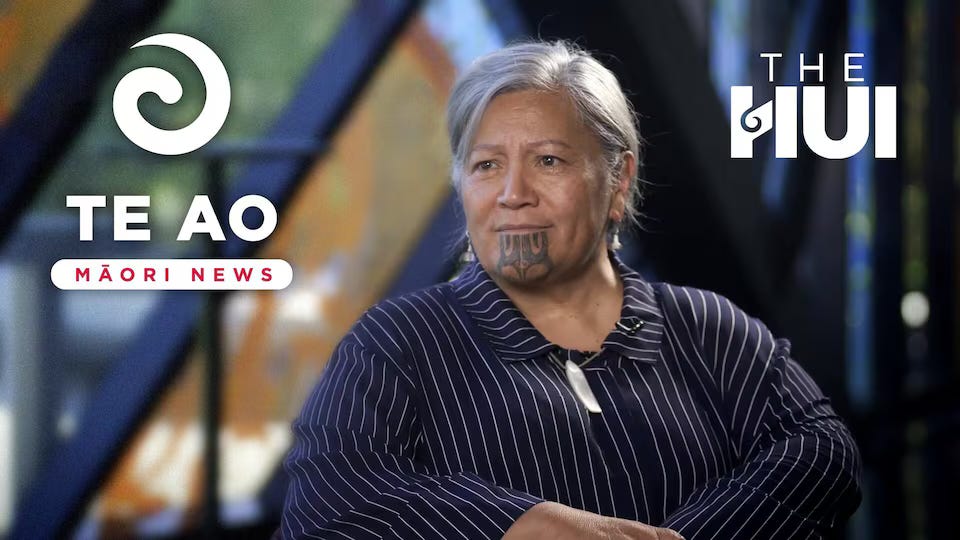
On Monday, Mariameno Kapa-Kingi announced publicly she was leaving Te Pāti Māori to form the Te Tai Tokerau Party. The announcement was framed in the language of mana motuhake, regional self-determination, and wahine leadership. It was, she said, the approach she and her team decided was best for them.
Two months earlier, the High Court had ruled her expulsion from TPM unlawful. Justice Paul Radich found that the party had failed to follow its own constitution — her electorate committee excluded from the meeting that decided her fate, no proper opportunity given to respond, tikanga principles not applied in any meaningful way. She was reinstated. And then she left anyway. Because, as she put it, the party’s leadership had failed to meet a single one of her conditions, which included the resignation of party president John Tamihere.
Since then, co-leader Rawiri Waititi has had to publicly hose down speculation about whether Oriini Kaipara or Hana-Rawhiti Maipi-Clarke might also drift away. Oriini Kaipara’s office spent yesterday denying she’d told a Stuff reporter she was “considering options”. Glenn McConnell had reported the week before that Hana-Rāwhiti Maipi-Clarke was being lobbied to head a breakaway party in Tainui.
The split is not what it looks like
The conventional framing in most of the coverage this last year has been one of turmoil, chaos, a party tearing itself apart. But if you want to understand Te Pāti Māori’s split, you have to stop looking for a great ideological struggle and start looking at the machinery of power, money, family, and control.
There is no ideological dispute here — no policy clash, no principled disagreement about what TPM should stand for. As RNZ’s Craig McCulloch noted accurately during the November 2025 expulsions, “from what has dripped out over the past six weeks, it seems the feud is driven more by personality than principle.”
This seems even truer now. And once you see that, a lot of Te Pāti Māori’s recent behaviour makes more sense. The factional war is not an accidental outbreak of bad vibes. It is what happens when a party becomes too personalised, too centralised, and too fused with the ambitions and networks of a small elite circle.
The fight is over jobs, budgets, control of electoral machinery, and — above all — who controls the party president’s role. Kapa-Kingi’s demands were not ideological. They were structural: remove Tamihere, reinstate Ferris, issue an apology. She didn’t present a rival policy platform when she launched her new party on Monday. Not even close. Te Tai Tokerau Party has a name, a founding statement, and about 200 financial members. What it does not yet have is a published policy programme — because this breakaway is not about kaupapa. It’s about power.
As Liam Rātana noted in the Spinoff, the new party’s structure leaves Kapa-Kingi politically fluid, even, in theory, open to supporting a National-led government if it suited Te Tai Tokerau.
Tākuta Ferris has been sitting as an independent MP since his own unlawful expulsion in November 2025. He will announce his path for November in coming weeks. His entire former electorate committee resigned from TPM. The Te Tai Tokerau electorate committee also resigned this week. An organisation whose internal democracy has collapsed produces this kind of symptom. Policy disagreements don’t.
From six seats to here
At the start of 2025, Te Pāti Māori was on the crest of a wave. It held six of the seven Māori seats. The Tōitū Te Tiriti hikoi had generated the largest political protest in New Zealand’s history. Polls had the party above the five per cent threshold. Oriini Kaipara won a decisive by-election victory in Tāmaki Makaurau. A party reset was announced.
Within weeks, the reset was fiction. In October 2025, Kapa-Kingi’s son Eru publicly accused the party’s leadership of running “a dictatorship model” and announced Tōitū Te Tiriti’s independence from any political party. The party retaliated with an email to members alleging financial misconduct by Mariameno and an altercation involving Eru at a parliamentary protest. On 9 November, at a meeting from which Kapa-Kingi’s and Ferris’s electorate committees were excluded, both MPs were expelled. The Iwi Chairs Forum — representing 88 iwi — was in the middle of brokering a peace hui when the expulsion vote happened. Te Pāti Māori held it anyway.
Hone Harawira, watching from the sidelines, described it as “the party tearing itself apart and not an enemy in sight.” He was right. And now he may become TPM’s candidate in Te Tai Tokerau against the woman the party just expelled.
After the High Court’s March ruling, Kapa-Kingi described the silence from the party leadership as “deafening.” Rawiri Waititi sent her a brief text. John Tamihere said nothing at all. “The question remains,” she said, “whether Te Pāti Māori can be trusted by my rohe, while no changes have been made.”
No changes were made. She quit.
If this were really a grand debate over ideas, someone would be able to state the disagreement plainly. They can’t. Because the heart of it is far less noble: self-interest, hierarchy, grievance, and turf.
A family business, not a movement
The most useful analysis of the court documents came from David Farrar, who asked simply: “Is it a party or a family?” The question answered itself. President: John Tamihere. Co-leader: Rawiri Waititi — Tamihere’s son-in-law. General Manager: Kiri Tamihere-Waititi — Tamihere’s daughter. Party Secretary: Lance Norman — employed by Tamihere’s Whānau Ora Commissioning Agency. Waiariki electorate co-chair: Monica Waititi — Rawiri’s sister-in-law. Te Tai Hauāuru electorate chair: Hinemoana Durie-Shedlock — Tamihere’s sister-in-law. Ikaroa-Rāwhiti electorate chair: Te Rina Lemon — described in court documents as Tamihere’s niece.
Farrar put it bluntly: “This would be like the National Party that has Bill English as Leader, Maria English as General Manager, Maria’s husband as a deputy leader, Mary’s sister as a regional chair, Libby English as another regional chair and Jo Coughlan as a third regional chair. It would be unthinkable”
The people walking out are the ones who tried to challenge that axis and lost.
In sworn court documents released during the judicial review, one member of the party’s national council, Robert Whaitiri, stated that “all decisions in the party were being made by a small number of persons” and that the national executive and national council were “asked to simply rubber-stamp any decisions made.”
Tamihere himself once made an almost identical critique — but of others. In a 2018 RNZ interview he argued that “there are effectively two classes of Māori, the iwi elite and everyone else”, and that Māori without tribal connections were being shortchanged by leaders looking after their own. Tamihere is now an emblem of his own diagnosis: the Māori elite that he once said was looking after its own
The paywall now starts at halfway through all Democracy Project newsletters. Please take out a paid sub if you want to support this service and access the full content, including the following sections: “Follow the money and the whakapapa”, “Who was this party for?”, “Not heroes, not villains, just politicians”, “The Māori electoral landscape, fractured”, and “What democracy requires”.