

Corporate lobbyists have become central to decision-making in the New Zealand political system. But we know remarkably little about how they work, who they work for, or what they charge. In my ongoing research on influence behind the scenes of government, one lobbyist told me that the standard pitch of lobbying firms to business is that they can normally change a government decision for a $250,000 fee. That kind of money gets you into the room where it happens, apparently. But there are plenty of other business models and fee structures at play among the corporate intermediaries of our political system.
This week, two separate developments have made visible what’s normally hidden on the opaque financial arrangements between lobbyists and their clients. And what they reveal should concern anyone who cares about the health of our democracy.
A $3.27 million lobbying fee
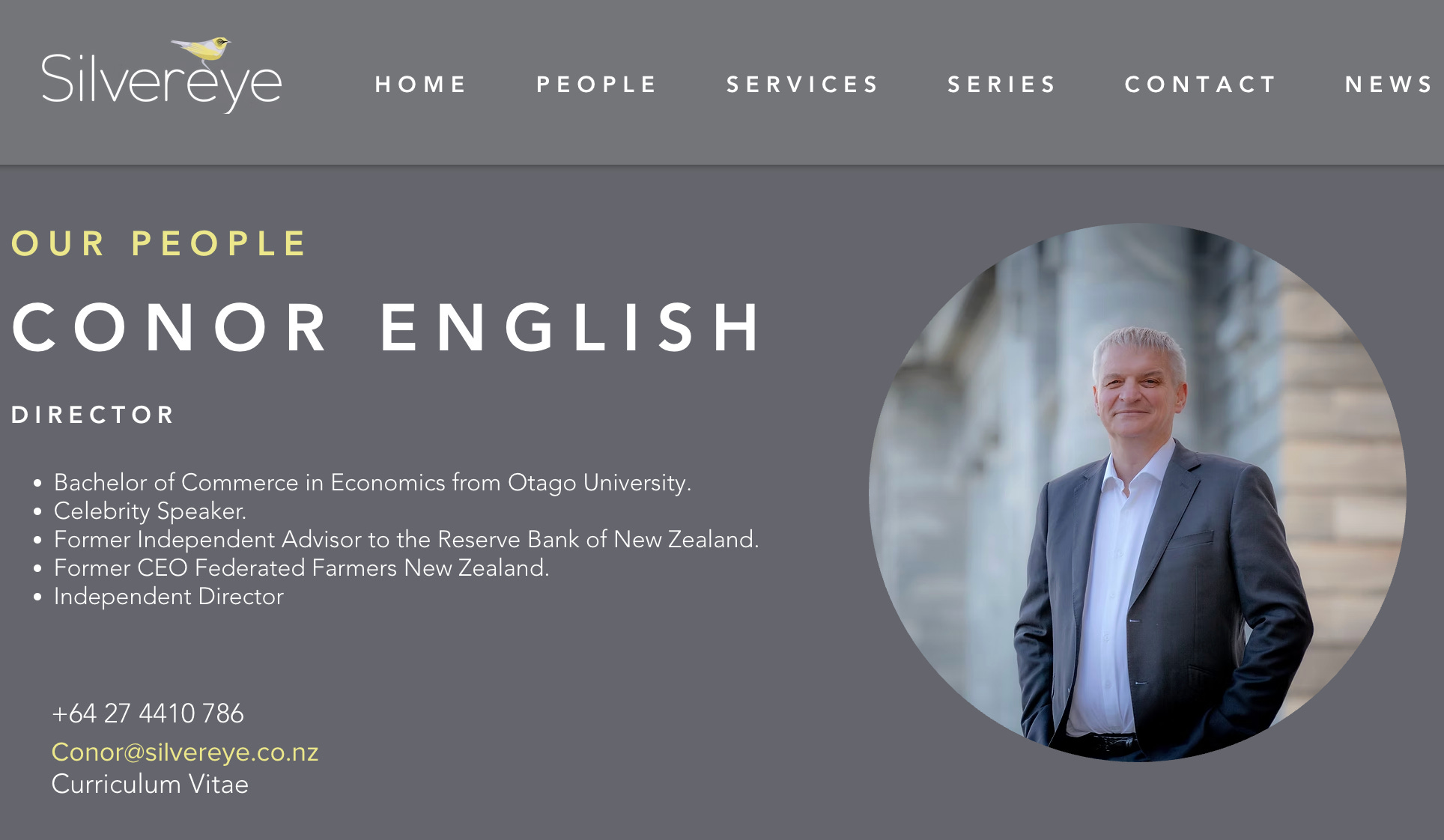
The first development came via legal proceedings involving the Silvereye lobbying firm of Conor English and Jo Coughlan. The pair have become embroiled in a legal battle with one of their own clients over what they claim is insufficient payment for lobbying services.
Last week, BusinessDesk journalist Thomas Manch reported that the lobbying firm had charged their property developer client, Gillies Group, $3.27 million for successfully lobbying the last Labour Government to buy residential land off the company. That’s a huge amount of money: over three million dollars to lobby government to purchase a property.
Silvereye says its client refused to pay the full amount agreed, and so the dispute ended up in court. A statutory demand was issued for $3.49 million, which included the fee plus $269,740 in interest. In December, the High Court set aside the legal demand, effectively blocking Silvereye’s debt recovery attempt at that stage. Then the lobbying firm tried to have the details suppressed. This month, the High Court refused that too.
What we now know about the deal
Through the court process, the public now knows that the dispute centres on a housing development at Plimmerton Farm near Porirua. The property developer, KM & MG Holdings Ltd (part of the Gillies Group, led by Malcolm Gillies), engaged Silvereye in 2021 to lobby the Labour Government into purchasing some of the land for state house building.
Conor English, brother of former National Party Prime Minister Bill English, carried out the lobbying, reportedly working one day a week over a lengthy period. He was successful. Then, in September 2023 the Government approved a land supply agreement with Gillies Group to purchase 587 build-ready lots and 19 apartment “superior lots” in the first stage of the Plimmerton Farm development.
Originally, in 2021, the property developer offered a lobbying “success fee” of 1.5% of that deal’s value, or $1.89 million. Coughlan, English’s wife and Silvereye’s managing director, pushed for 2%. English emailed Coughlan’s query to the client. Gillies pushed back, writing that “we both need to feel that the outcome of this negotiation is fair.” English replied: “Ok with proposal as emailed. The key is to get the big outcomes.”
But by 2023, the arrangement with Kainga Ora had changed significantly. When the deal was completed, Silvereye invoiced Gillies for $3,277,500. Gillies disputed the fee. Lawyers got involved. Mediation failed. The statutory demand followed.
Justice Owen Paulsen set aside the demand, finding there was “sufficient evidence to satisfy me that it is arguable that Mr English, on behalf of Silvereye, agreed at the 11 August 2023 meeting to a new fee arrangement to replace the one formerly agreed.” He noted: “Whether that is the case cannot be determined in this summary proceeding.”
Silvereye wanted it kept secret
On failing to get their way in court, Silvereye then asked that the details of the case be suppressed. According to Manch’s reporting, “Silvereye argued it would suffer reputational damage if the matter was made public before the dispute could be resolved, and there would be a ‘risk of higher than usual media interest’ because of English being the brother of a former prime minister.”
Justice Paulsen dismissed the suppression application, deciding that “public interest in open justice outweighs any prejudice that Silvereye may suffer.”
Silvereye’s managing director Jo Coughlan told BusinessDesk that they had never wanted to use litigation, “but we have tried unsuccessfully to resolve this and we now have no choice but to use the courts in order to ensure a fair outcome.” She added: “We’re confident we have a strong case and that our position will ultimately be vindicated.”
Who is Silvereye?
So who exactly are these people? Silvereye was founded in 2008 by Jo Coughlan and markets itself as “New Zealand’s premier Government relations and strategic communications consultancy” under the tagline “Connect. Engage. Influence.”
Coughlan served as press secretary to Foreign Minister Don McKinnon, sat on Wellington City Council for three terms (2007-2016), and ran for Mayor of Wellington in 2016. She is also chair of the NZ Chinese Language Week Trust and sits on the board of the NZ Business and Parliament Trust, the body that facilitates networking between business leaders and MPs. Conor English was formally appointed as director in February 2020. He was previously CEO of Federated Farmers (2008-2014), an independent adviser to the Reserve Bank, and is currently Chairman of Agribusiness New Zealand. He is one of the twelve English siblings from a prominent Southland family.
Their staff have included a former chief of staff to Winston Peters (David Broome, who later became a lobbyist for Philip Morris) and other former ministerial press secretaries. The firm does not publicly disclose a full client list, and New Zealand has no lobbying register that would require it to.
The business model runs on insider knowledge and relationships “in and around Government.” It’s the classic revolving door.
The Invisible lobbyist
Here’s something worth noting: the published ministerial diaries on the Beehive website show no entries listing Silvereye, Conor English, Jo Coughlan, or Malcolm Gillies in meetings with the Housing Minister during the period of the Plimmerton Farm lobbying (2021-2023).
That’s not entirely surprising. The deal was struck between the government state housing agency, Kainga Ora, and the Gillies Group, rather than directly with the Minister. Lobbying can operate through officials and Crown entity boards without any ministerial diary entry being created.
But it does illustrate the core problem: a $3.27 million lobbying engagement, involving the brother of a former Prime Minister, conducted over years, with significant public money at stake, and there is essentially no public record of it happening. We only know about it because the lobbyist and the client fell out over payment.
One lobbyist calls out another
Not all corporate lobbyists charge success fees. There are a variety of business models in the industry. This week, Holly Bennett, who runs the lobbying firm Awhi, weighed in on the Silvereye case. She told BusinessDesk: “I don’t think that kind of arrangement is normal in the industry. I don’t anticipate that many of my lobbying peers function like that.”
Bennett is trying hard to brand herself as a more ethical lobbyist. She essentially markets Awhi as the “good guys” of corporate lobbying. On the Silvereye success fee, Bennett didn’t hold back: “They have been asking for a success fee based on contract negotiations with the state. That is something that I consider to be an affront to decent society, and we all should be concerned about that.”
She added there are “questions to be answered as to whether or not that’s a legitimate way for [lobbying] organisations to operate, especially in and around public money. I don’t think, personally, that it passes the sniff test.” And for this reason, other countries such as Canada have banned lobbying “success fees” being charged.
The Price list for political influence
Coincidentally, Awhi has just published its lobbying rates online, which is the first time a New Zealand lobbying firm has done so, to my knowledge. The firm now offers a remarkably detailed menu of lobbying services, complete with trademarked product names and fixed prices. It’s essentially a shopping catalogue for political influence.
The retainer packages come in four tiers named after native trees. At the bottom, the “Pitau” package offers four hours of lobbying time per month for $1,800 plus GST. At the top, the “Kauri” package provides up to 60 hours per month for $15,750 plus GST, including a weekly personalised political intelligence briefing. All retainers require a minimum four-month commitment, meaning the top-tier package will cost at least $63,000 plus GST before you can walk away. The implied hourly rates range from around $260 to $450.
For one-off engagements, Awhi sells a government relations plan called the “Spectrum Sweep” for $8,250 plus GST, promising to help clients identify decision-makers and develop political messaging. A matching communications plan, the “Comms Compass,” costs the same. The “Submission Machine” prepares submissions on government consultations from $4,500 plus GST. That last one is particularly revealing: it shows how even supposedly democratic consultation processes can be outsourced to paid professionals by those who can afford it.
Perhaps most striking are Awhi’s election-specific services, timed for the 2026 general election. For $6,950 plus GST, Awhi will write an “Election Manifesto” for a corporate client. This is a persuasive document aimed at convincing political parties to adopt the client’s policy priorities into their election platforms. For $5,550 plus GST, Awhi will draft a “Briefing to Incoming Minister,” a document designed to land on a new minister’s desk after the election, urging them to act on the client’s priorities. This makes explicit what is usually hidden from view: well-resourced organisations paying professional lobbyists to write the very documents that incoming governments will read as they take office.
For comparison, Guyon Espiner’s 2023 investigation on lobbying for RNZ found that Thompson Lewis, whose team includes two former prime ministerial chiefs of staff, charges government clients such as Transpower a retainer of $6,000 per month, and up to $2,000 per day for crisis work. The University of Waikato paid Neale Jones’ Capital Government Relations firm a $6,900 monthly retainer (about $262,000 over three years). And Massey University paid former Cabinet Minister Clayton Cosgrove’s company nearly $64,000 since 2020.
What this tells us about democracy
While Awhi’s fees are far more modest than the millions claimed by Silvereye, they illustrate the everyday economics of political influence in New Zealand. A mid-sized organisation wanting a year of Awhi’s mid-tier lobbying support, combined with a few one-off products, could easily spend over $100,000. The trademarked product names make these services feel as routine as hiring an accountant. But the underlying transaction remains what it always has been: paying a professional to gain access to, and influence over, political decision-makers. Ordinary citizens and community groups are priced out.
New Zealand still has no lobbying register, no mandatory code of conduct, and no enforceable cooling-off period for the revolving door between government and the lobbying industry. The OECD recently ranked us 35th out of 38 countries for regulating influence on policymaking. That’s a shocking position for a country that prides itself on clean government.
Awhi’s menu also highlights something the industry prefers not to spell out: lobbying is rarely sold as “lobbying”. It’s bundled as “government relations”, “media strategy”, “stakeholder mapping”, “issues management”, “political monitoring”, and campaign-style communications. The access is the hook; the deliverable is often a comms product that looks harmless on paper.
Why this matters
The Silvereye court case and Awhi’s pricing disclosure have opened a window onto an industry that normally operates well out of public view. The scale of the money involved – a $3.27 million success fee for lobbying government on a property deal negotiated in private – demands attention.
If a lobbyist’s financial incentive is directly tied to the size of a government contract or purchase, it rewards the lobbyist for maximising the state’s spend. It creates a system where the lobbyist has every incentive to push for the biggest possible deal, regardless of whether that represents the best use of public money. When that happens out of view, with no register, no disclosure, and no record in ministerial diaries, it is the public who loses out.
The week’s developments also raise a harder question: If the Silvereye fee only came to light because the parties fell out, how many other seven-figure lobbying deals are running right now with no public trace?
Dr Bryce Edwards
Director of the Democracy Project
Further Reading:
