

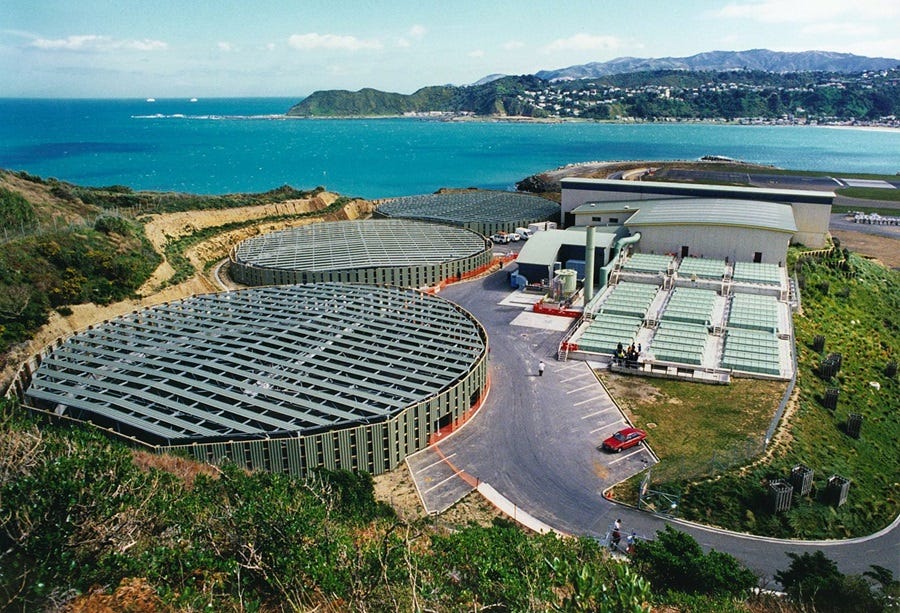
About 14 billion litres of raw sewage have gone into Wellington’s south coast over the last seven months, and it’s still flowing daily. It’s the environmental outcome of a mega-million-dollar catastrophe at the Moa Point sewage plant that authorities have been dodging the blame for.
This week, the government’s Crown Review delivered 103 pages explaining how such an extraordinary failure was allowed to happen. Its findings are brutal: risks were badly managed and Wellington City Council remained “ultimately accountable”. Mayor Andrew Little has accepted that the disaster was “preventable and avoidable”.
The only thing the report does not tell Wellingtonians is whether there will be any accountability and consequences. Instead, we are told the failure was “systemic”. That’s true, because Moa Point wasn’t brought down by one bad vote, or by one wet night in February. But in New Zealand public life, “systemic failure” too often becomes a way of saying that everybody failed and therefore nobody can be blamed. But that conclusion shouldn’t be allowed to stand.
Wellington councillors cannot hide behind Wellington Water
The Crown review is clear about where ultimate responsibility sat when the plant flooded on 4 February: Wellington City Council. And specifically, it’s the elected councillors and mayors over recent decades that have been negligent in governing in one of their core activities.
The council owned Moa Point, held the public mandate for it and made the funding decisions about it. What it did was contract the work out — Wellington Water to manage the asset, Veolia to operate it, Filtec and Stantec on the ultraviolet renewal. But those arrangements did not relieve the council of its duty to ensure wastewater services were delivered safely and reliably.
The buck should therefore still stop with the elected councillors. It was their responsibility to know whether Wellington’s most important sewage plant was safe. Nobody expects councillors to know how every pump works. Nor were they handed everything they needed — that would have required officials capable of challenging Wellington Water, and honest estimates of what maintenance and renewal cost.
The review found that although councillors received reports and assurances from officials they didn’t sufficiently challenge them or establish their own expectations of Wellington Water. The report concluded that the council’s problem was insufficient engagement, and assessed the council’s performance as “certifying, with elements of passive”. In other words the council was under-governing its single most important asset, and receiving assurances is what it did instead of governing.
Councillors past and present have defended themselves by saying Wellington Water never asked for the necessary money, or that the Council approved the requests placed in front of them. The most prominent of these has been Wellington Central MP Tamatha Paul, who had previously been the city councillor chairing the Environment and Infrastructure committee with explicit responsibility for capital works delivery (including Wellington Water’s programmes). It was on her watch that Moa Point was failing its compliance checks month after month and Wellington Water’s dysfunction was becoming impossible to ignore.
The review pulls Paul’s defence apart by showing that the Council never obliged Wellington Water to have the planning and asset knowledge needed to formulate such requests.
The question for such councillors is straightforward: what did they do to find out whether the funding requests reaching them reflected the actual state of the plant? Judging from the review, they didn’t do anything.
Fragmented accountability (or “too many hands”)
The Post’s Tom Hunt concluded yesterday that the review had found no single “smoking gun” or “bogeyman”. His point was that responsibility had been scattered across public bodies and paid contractors, none of which kept sight of the plant as a whole. Hunt reported Andrew Little putting the missing role more colourfully: Wellington needed a “pain in the arse” who would keep asking questions until something was done.
Political theorists call this the “problem of many hands”. When enough organisations are involved with a decision, each holds only one part of the information and each can point somewhere else after a failure.
But there is plenty of responsibility to go around. Veolia has serious questions to answer about alarms, staffing and emergency procedures, and former Wellington Water leaders need to explain how they managed the project and its contractors. Then there are the senior council officials, who let the in-house expertise go and signed off the assurances that councillors were relying on. The chain does not end there. Mayors and councillors owned the political decisions about funding, acceptable risk and oversight.
It was the councillors who decided to set up the arms-length arrangement with Wellington Water and the contracting out of the Moa Point plant. And over recent years, as the arrangement deteriorated the councillors not only chose to continue with it, but they failed to supervise it properly. It’s not good enough to just suggest, as some politicians have, that an arm’s length relationship with Wellington Water meant that the councillors had no accountability for wastewater. Councillors chose to hold the plant at arm’s length. They then behaved as though that put the politics of it out of their reach too, which was never true.
One councillor did try to go outside the circle. Andrew Little told Mike Hosking yesterday that a colleague had taken her concerns about asset management to the Office of the Auditor-General “and didn’t get a response.” He didn’t name her, but Diane Calvert, who chairs the council’s Planning and Finance Committee, has told The Post she took her concerns all the way to the Auditor-General. In terms of the Office of the Auditor-General, Little said, “We do need those third parties doing their job as well”.
The paywall now starts partway through all Democracy Project newsletters. Please take out a paid sub if you want to support this service and access the full content, including the following sections: “The plant that was never finished”, “Who did not front?”, “Andrew Little’s test”, and “A wider New Zealand failure”.
