

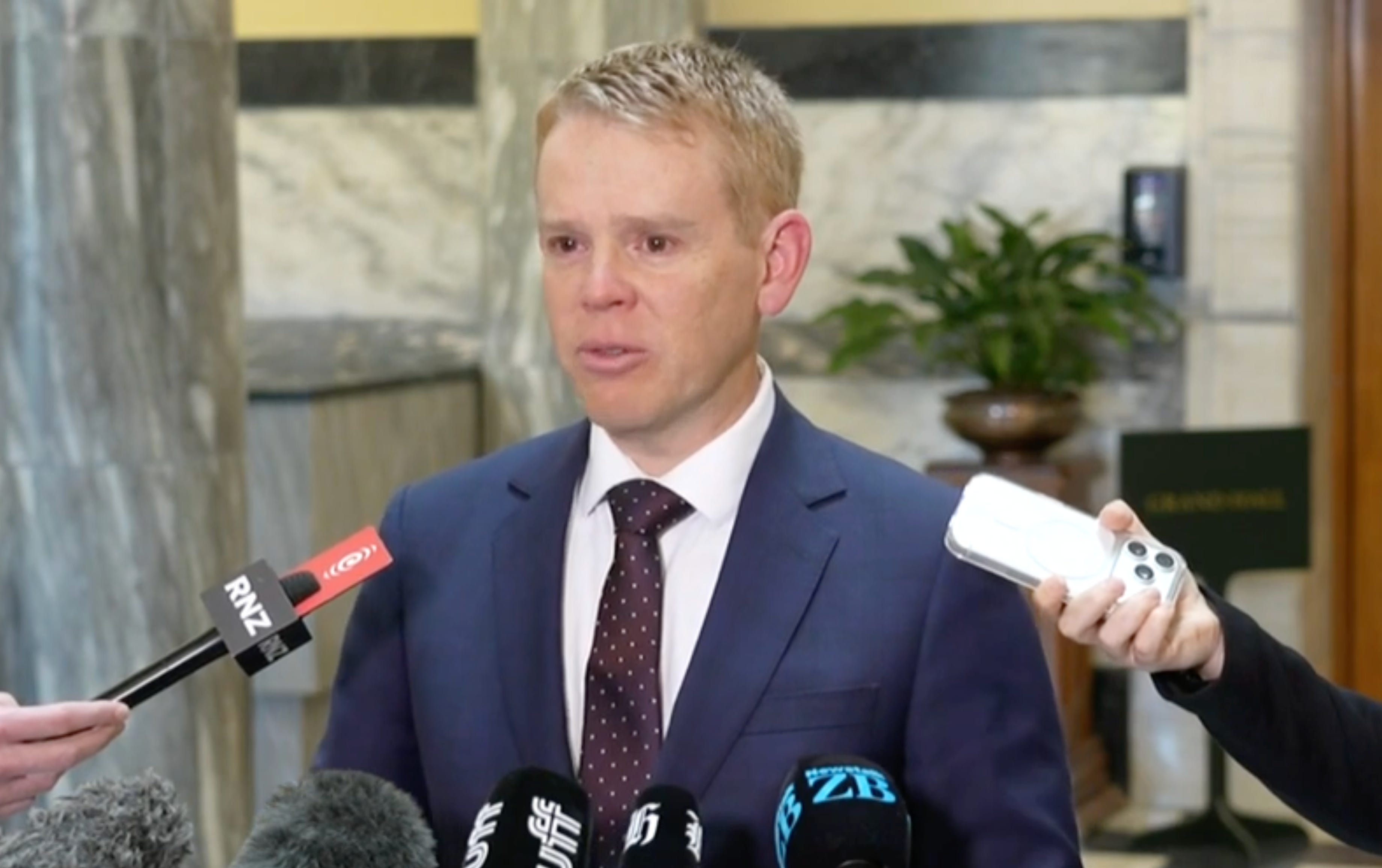
New Zealand politics just got personal. On Sunday evening, Labour leader Chris Hipkins’ ex-wife Jade Paul posted a series of claims about him on her private Facebook page. The post was deleted. Hipkins issued a five-word denial: “I reject the allegations entirely.” He’s seeking legal advice. And just like that, we’re having a national conversation about the oldest and most uncomfortable question in political life: when does a politician’s private behaviour become the public’s business?
I spoke about these issues on RNZ’s Afternoons with Jesse Mulligan earlier today. This column expands on many of those points, in an attempt to help navigate an episode that is ethically fraught, politically explosive, and not going away soon.
Let me be clear at the outset: this column does not repeat the specific allegations. They are unsubstantiated, contested, and do not involve criminal conduct. Children are involved. What I’m interested in is the politics around the scandal: the media ethics, the strategic and historical patterns, and what it means for our democracy.
What we know
The verifiable facts are thin. Paul posted to her private Facebook page on Sunday evening while on holiday in Fiji with the couple’s two children. She framed her claims as a direct response to Labour’s campaign slogan “Jobs, Health, Homes.” The post was removed, but not before it had been screenshotted and sent to newsrooms.
Newsroom’s Marc Daalder traced the pathway: Paul’s friend list reportedly included Police Minister Mark Mitchell, Winston Peters’ press secretary John Tulloch, National’s pollster David Farrar, and commentator Ani O’Brien. Screenshots reached newsrooms late Sunday. By 8am Monday, the screenshot was posted publicly on X. The story escaped the private sphere in under 18 hours without any journalist needing to independently investigate; they only had to decide whether to amplify what was already circulating.
Labour’s Barbara Edmonds described it as “a very difficult situation” and warned against going down the route of “deeply personal” attacks, saying: “I don’t think New Zealand likes that.”
Should the media be chasing this?
The NZ Herald’s editor-at-large Shayne Currie told Ryan Bridge on Monday morning that he believes the public interest threshold has been met. That’s a significant editorial judgment from a senior figure, and it shouldn’t be dismissed. But it deserves scrutiny.
There are essentially two tests that have traditionally governed how New Zealand journalism handles politicians’ private lives. The first is the hypocrisy test: personal conduct warrants reporting if it directly contradicts a politician’s public platform or reveals a meaningful double standard. The second is the power imbalance test, sharpened by the #MeToo era: was there an abuse of power, a misuse of public resources, or conduct that made the private genuinely political?
On the hypocrisy test, there’s a thin but real argument. Paul framed her original post as a direct response to Labour’s campaign slogan “Jobs, Health, Homes.” The suggestion was that Hipkins’ public messaging was contradicted by his private behaviour. That’s a hypocrisy argument. It’s not a strong one — Labour’s platform doesn’t claim Hipkins is a perfect husband — but it’s not nothing either.
For now, most major outlets have drawn that line in the right place — reporting the existence of the dispute and Hipkins’ denial, without publishing the specifics. That position is defensible, but it won’t hold for long. It invites curiosity without really settling anything.
In the end, it’s worth remembering that there’s a meaningful distinction between “the public might be interested” and “it’s in the public interest.” The NZ Media Council’s privacy principle demands an “exceptional degree of public interest” where children are involved. The Broadcasting Standards Authority explicitly distinguishes legitimate concern from mere “curiosity on a human level.” These standards exist for exactly this kind of moment.
Newsroom’s Jonathan Milne made perhaps the most interesting case for continued coverage. Paul’s account, he wrote, “if true, could raise public interest questions about Hipkins’ judgment and use of his office.” He pushed back against the blanket denial, arguing there will be “an unavoidable public expectation that Hipkins now put his side of the story more substantially than yesterday’s curt five-word denial.” Former ministerial adviser Ben Thomas agreed, warning that if Hipkins doesn’t confront the claims, there’s a risk of a perception he’s “using his position and resources to try and shut down his former partner.”
But the allegations remain unverified. An Nor do they allege any illegality. There is no police complaint, no court filing, no investigation. As Milne himself acknowledged, short of “a grotesquely unpleasant civil court case,” no authority can determine the facts. Journalists should not be investigating the minutiae of the Hipkins marriage without an extremely good reason. To do so would legitimise the tabloidisation of New Zealand politics and incentivise future actors to weaponise family disputes.
The Collapse of the privacy ringfence
New Zealand has long been different from the US or the UK when it comes to politicians’ private lives. We never developed a tabloid press.
A 2004 study in Parliamentary Affairs concluded that New Zealand media coverage of the political process had “generally avoided excessive intrusion into the private lives of politicians,” attributing this to a sense of “fair play” that survived even commercial pressure.
For decades, a kind of informal pact held – what I’ve described in previous columns as the “Mutually Assured Destruction” doctrine. Both major parties knew that all sides harboured individuals with personal vulnerabilities. So they didn’t go there. Yes, politicians kept “dirt files” on their opponents, but the missiles stayed in the silos.
John Key was pretty explicit about this when he was Prime Minister. In 2013, he told Labour MPs he’d written down their alleged misdeeds and put them in his top drawer. The following year he was even blunter: “I have quite a long list. If Labour members really want to invite me to table all of those, they are welcome to do that, but I just make one little warning to them: do not go there.” The threat worked because the pact was symmetrical. Both sides had something to lose.
But that compact is now dead. Social media killed it. When any Facebook friend can screenshot a post and send it to a newsroom, the old agreement simply cannot hold.
Every one of New Zealand’s major personal-life scandals has been broken through a channel outside traditional media. David Lange’s affair was exposed when his wife went to the papers. Don Brash was chased by media after Labour MPs raised his affair in Parliament – David Farrar has long argued the media shouldn’t have done so, and the case remains a touchstone for those arguing double standards.
Len Brown’s affair was broken on Cameron Slater’s Whale Oil blog, linked to a rival campaign. Slater was explicit about his motives: “Of course politics was involved. Of course I wanted to knock Len Brown over.” Brown survived but was finished as an electable figure. As political scientist Grant Duncan wrote today, drawing a direct parallel: “A common [opinion] was: if his wife and family can’t trust him, then we can’t trust him either.”
Jami-Lee Ross’s personal conduct was weaponised by his own deputy leader. Ian Lees-Galloway was fired after a third-party tip. Benjamin Doyle resigned from Parliament following on from Winston Peters amplifying private social media posts. And now Hipkins is under pressure, via a private Facebook post screenshotted to journalists.
The technology changes; the pattern doesn’t. The press gallery’s gatekeeping function is has been bypassed every time.
It’s worth noting the parallels between the family scandals of Lange and Hipkins – they have both been caused by spouses speaking out. Lange’s affair with his speechwriter Margaret Pope had been an open secret in Wellington for years. The press gallery knew; nobody published. That convention held until Lange’s wife Naomi and his elderly mother went to the media and named Pope. Once the family broke the silence, the dam broke too. Farrar drew that parallel explicitly today, writing that the media generally shouldn’t report on politicians’ private lives, but “It is a more difficult call when a family member states things in a public forum”.
Another detail worth noting. When Hipkins became PM in January 2023, he told the press gallery this about his former wife: “We remain incredibly close. She’s still my best friend.” He then asked media to respect his family’s privacy. For three years, they did. Farrar raised the obvious problem on Kiwiblog: “it is very, very hard to reconcile what Hipkins said in 2023 with what Paul is saying today… Either Hipkins was lying in 2023 when he said Paul was still his best friend and they were incredibly close, or something has happened since then so that they have gone from being best friends to threatened defamation lawsuits.” That gap between the public narrative and the current reality is, at minimum, a credibility question – even for those who think the underlying allegations are nobody’s business.
The Dirty politics dimension
A “dirty politics” possibility could become the next major phase of the story. Where journalists absolutely should be digging is the story behind the story. How did a private Facebook post become a national headline? Who distributed those screenshots? Perhaps that’s where the real public interest lies.
Jade Paul is not merely a private citizen. Newsroom reported she had been working as an adviser in the ministerial office of NZ First Minister Casey Costello, leaving about a year ago. Her Facebook friend list included some of the most connected people on the political right. All have denied sharing the screenshots.
Ani O’Brien, a political campaigner and former National Party staffer who now works for Jordan Williams, posted to X around the same time as the original Facebook post, writing: “They will call her crazy. She is not crazy. I suspect they will try say she is an alcoholic or something similar. They will do anything to discredit her.” She says she didn’t share the screenshot and had “always cautioned” Jade Paul about what media would do to her. But she had also publicly hinted at the relationship breakdown weeks earlier, in February, responding to a column describing Hipkins as likeable with: “Ask Hipkins’ ex-wife.”
This is not to suggest orchestration. But the composition of the audience, and the speed with which the post reached X and then newsrooms, raises questions about who it was that was spreading the Facebook screenshots. If it emerges that Hipkins’ political opponents played any role in elevating the story, the political dynamics shift dramatically. It might even generate sympathy for Hipkins – the narrative flipping from “what did he do?” to “who orchestrated this?”
And it could trigger the exact MAD retaliation the old convention was designed to prevent. Labour would have every incentive to publicise personal life details of those on the other side, of which there are surely many examples. Politicians keep dirt files. If one side is seen to have pressed the button, retaliatory strikes follow. That would be an ugly outcome for our democracy.
“The personal is political” – and selective solidarity
In her second Facebook post, Jade Paul was explicit about the feminist politics underlying her decision to speak: “So many women are hurt by high profile men who just do what they want with no consequences. We get told all of the time that if we speak out then our lives will be ruined, our kids will be impacted. We get labelled as ‘crazy’ or defamatory when we tell the truth. Today I have had enough.”
Paul’s second post plants this scandal firmly in the #MeToo frame and the feminist principle that “the personal is political”. Grant Duncan made the sharpest observation about the gender dimension. Labour relies heavily on female voters – a February Roy Morgan poll had Labour at 35% among women versus 24.5% among men. Voters, “especially women voters,” Duncan wrote, will “want to understand how kind and trustworthy Hipkins really is.” People do not mentally compartmentalise a leader’s private conduct from their public trustworthiness.
There is an uncomfortable irony that needs to be stated plainly. Some on the political left who have championed the principle that women’s allegations deserve to be heard – who have endorsed “believe all women” as a starting point – appear to have gone conspicuously quiet now that the allegations involve a leader on their own side. Others have actively sought to minimise Paul’s claims. If the principle only applies when it’s politically convenient, it isn’t really a principle at all.
Milne captured part of this: “I imagine there are many women who would like him to at least address his ex-wife’s claims with respect.” Grant Duncan was blunter: Labour “can’t try to silence or ignore the woman’s voice without crass hypocrisy.”
At the same time, the right’s sudden discovery of concern for women’s voices can also ring hollow when you remember how quickly “believe women” becomes “she’s crazy” the moment an allegation is inconvenient.
What opponents will be thinking
The election is set for 7 November. Labour and National have been polling within a point of each other. Hipkins has benefited from what Grant Duncan called “an underlying trust factor” – in a 2023 Reid poll, 53% trusted Hipkins, versus 37% for Luxon. That trust premium is now under threat. Not because the allegations are proven, but because the fog of unresolved personal scandal corrodes exactly the kind of vague goodwill that “trustworthiness” measures capture.
Opponents are staying publicly silent. That’s the MAD doctrine at work. No senior National, Act or NZ First figure has commented. They don’t want the same scrutiny applied to their own team. But indirect amplification – feeding the story to sympathetic commentators and talkback while maintaining plausible deniability – is another matter entirely.
The strategically significant wildcard: Winston Peters’ refusal to work with Hipkins. If the scandal triggered a leadership challenge, a new Labour leader could unlock NZ First as a coalition partner, paradoxically strengthening Labour’s governing prospects. For now, caucus discipline holds. But eight months is a long time in a race this tight.
The likely electoral impact is probably less about “mass voter conversion” and more “base corrosion plus distraction”. Scandals hit hardest among a politician’s own supporters. Duncan warned bluntly: “This Hipkins scandal could resurface any time before election day, possibly under cover of parliamentary privilege. And Kiwi voters don’t forgive and forget this kind of thing.”
What kind of politics do we want?
This is hardly the biggest scandal ever. It is a painful, private marriage break-up that collided with social media and an election campaign.
In the end it’s not entirely clear how the media should be covering this. Clearly, journalists should not be chasing the salacious version of events. And if the story is simply that a private relationship has ended badly and someone is furious, then much more restraint is required. The correct democratic response is for the media to step back, treat it as private, and refuse to serve as the battleground.
But journalists also can’t pretend the story doesn’t exist, because it’s already circulating widely, and it involves the leader of the opposition in an election year.
But how we respond matters. If we normalise the weaponisation of deeply personal allegations – unsubstantiated and involving children – we will simply get more of it. Once that boundary breaks, nobody can credibly complain when it’s their turn. The missiles fly both ways. Politics gets uglier and less focused on things that actually matter.
Every news cycle consumed by unverified personal claims is a news cycle not spent scrutinising policy, holding the government to account, or debating the choices New Zealanders face in November. That is the democratic cost of scandal politics, and it is real whether the allegations turn out to be true or false.
Politicians are imperfect. That’s not the question. The question is whether we want an election fought on verifiable records and policy trade-offs, or on screenshot warfare that leaves families as collateral damage. Voters ultimately care more about jobs, health, and homes than ex-spouse posts. Politicians and media would be wise to remember that.
Dr Bryce Edwards
Director of the Democracy Project
Further Reading: