

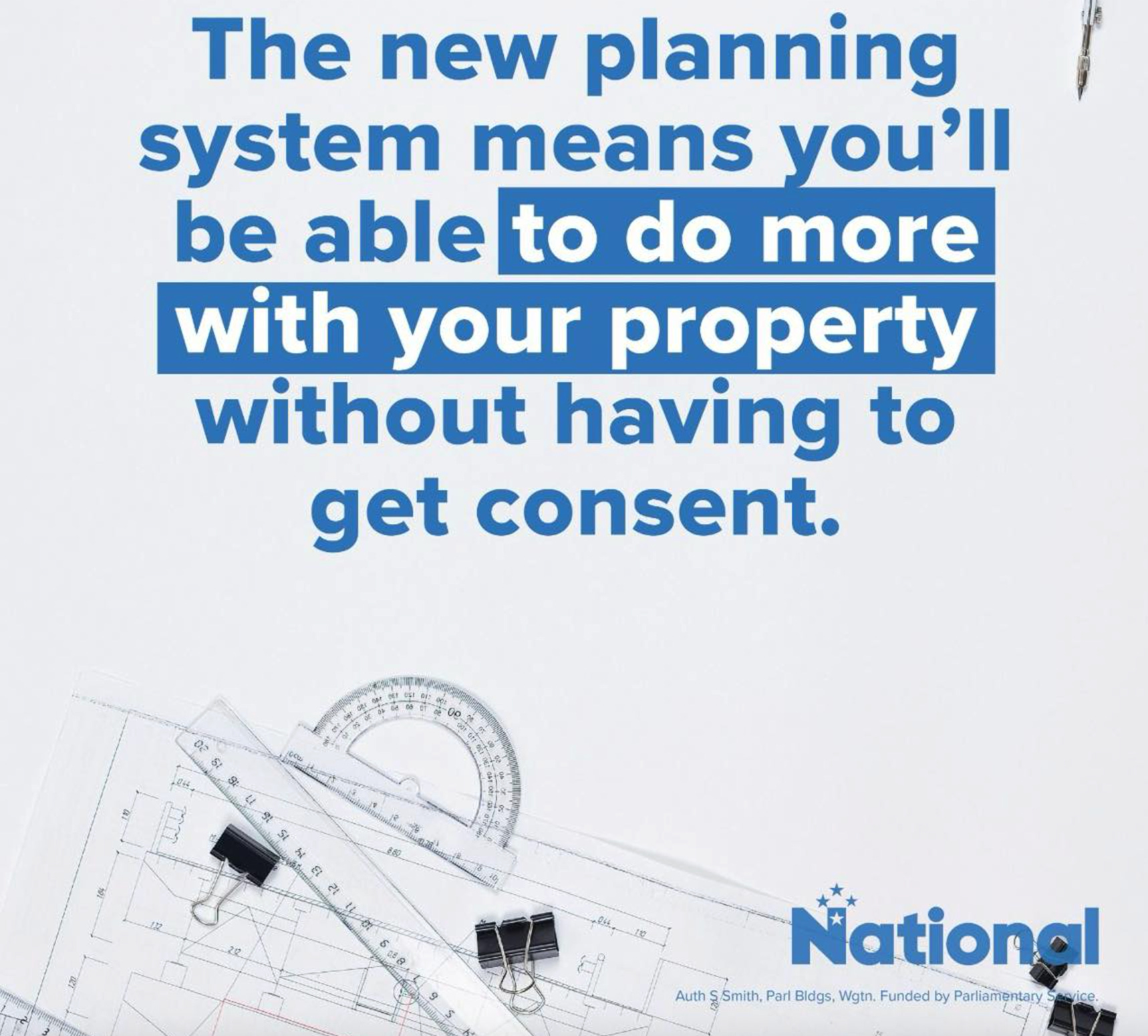
The unveiling of the Coalition Government’s replacement regime for the Resource Management Act 1991 (RMA) was choreographed not merely as a policy announcement, but as a liberation event. In the Banquet Hall of Parliament, amidst the clatter of teacups and the scent of cheese scones, journalists and stakeholders were granted a brief, controlled glimpse into a legislative package that promises to fundamentally rewire the physical and economic landscape of New Zealand. The rhetoric employed by RMA Reform Minister Chris Bishop and Prime Minister Christopher Luxon was soaring and unequivocal: this was the “single largest economic reform in a generation,” a decisive break from a “culture of no” that has allegedly strangled the nation’s potential for three decades.
The narrative presented was one of emancipation. By shedding the “millstone” of the RMA, New Zealand would ostensibly be ushered into a new era of “choice, freedom and opportunity”. The villains in this story were the bureaucrats, the nimbys, and the tangled web of red tape that has made building a house or a wind farm a Herculean task. The heroes were the property owners, the developers, and the farmers, who would finally be trusted to “get on with it”.
However, beneath the polished surface of this “abundance agenda” lies a complex and radical restructuring of power dynamics. This column argues that the proposed reforms represent more than just a streamlining of planning processes; they constitute a profound ideological pivot. The shift is away from the integrated management of environmental effects and towards a system that prioritises private property rights, economic externalities, and central government control.
This analysis, conducted through the lens of political integrity and democratic accountability, seeks to answer the fundamental question: Who really benefits? While the Government touts the reforms as a win for all New Zealanders, a closer examination suggests a different reality. The new system is engineered, specifically with the introduction of “regulatory relief” and the narrowing of public participation, to transfer power and wealth from the public domain to a concentrated group of vested interests. It is a charter for business, farmers, and property developers, crafted under the heavy influence of libertarian ideology and sustained by a network of political patronage.
The Context of failure: Why reform was inevitable
To understand the radical nature of the current proposals, one must first appreciate the context of failure that enabled them. The RMA, once heralded as world-leading legislation for its integrated approach to sustainable management, had by 2024 become a byword for frustration.
Across the political spectrum, a consensus had emerged that the Act was broken. For developers, it was a source of unpredictable delays and costs. For environmentalists, it was a toothless tiger that had presided over declining freshwater quality and biodiversity loss. For infrastructure providers, it was a major barrier to the deployment of renewable energy and transport networks needed for a modern economy.
The previous Labour Government attempted its own overhaul, passing the Natural and Built Environment Act (NBEA) and the Spatial Planning Act (SPA) in 2023. These reforms sought to centralise planning and embed Te Tiriti o Waitangi principles more deeply into the system. However, they were criticised for being overly complex, bureaucratic, and insufficiently focused on reducing costs. The Coalition Government, upon taking office, repealed these acts under urgency, reverting to the old RMA as a temporary measure while they drafted their own replacement.
This sequence of events created a unique political opportunity. The public, exhausted by a housing crisis and an infrastructure deficit, was primed for change. The failure of Labour’s reforms to gain broad social licence left a vacuum that the National-Act-NZ First coalition has filled with a solution that is diametrically opposed in philosophy. Where Labour sought to strengthen environmental limits and centralise ecological management, the Coalition seeks to unleash property rights and centralise economic enablement.
The urgency and scale of the new reforms are justified by the Government through economic modelling. Ministers cite projections that the new system will reduce the number of resource consents by 46 percent, eliminating between 15,000 and 22,000 processes annually, and boost GDP by 0.56 percent per year by 2050. These figures, while contested, provide the technocratic cover for a deeply political project.
The Architecture of the new regime
The new resource management system will be bifurcated into two primary statutes: the Planning Bill and the Natural Environment Bill.
1. The Planning Bill (452 pages): This legislation is the engine room of the new system. It establishes the framework for land use, development, and infrastructure. Crucially, it is premised on the “enjoyment of private property rights”. Its primary function is to enable activity. It operates on a presumption that land use is permitted unless it generates specific, negative externalities that significantly affect others.
2. The Natural Environment Bill (292 pages): This bill is tasked with environmental protection. However, unlike the RMA’s holistic purpose of “sustainable management,” the protection offered here appears compartmentalised. Environmental groups fear that by splitting land use from environmental protection, the system will fragment decision-making and subordinate ecological limits to development imperatives.
The relationship between these two bills is critical. Under the RMA, decision-makers were required to balance economic and environmental considerations within a single framework. Under the new dual system, there is a risk that the “enabling” mandates of the Planning Bill will override the “protective” mandates of the Natural Environment Bill, particularly given the strong emphasis on property rights in the former.
The system will be operationalised through a “funnel” concept. At the wide end, central government will set clear National Standards and policy directions. These will be prescriptive, leaving less room for local interpretation. As one moves down the funnel, the scope for litigation and objection narrows.
The current patchwork of over 100 district and regional plans will be consolidated into just 17 “regional combined plans”. This massive centralisation of planning documents is intended to drive consistency and reduce the regulatory burden on developers working across multiple jurisdictions. The dizzying array of over 1,100 specific zoning rules currently in existence will be slashed to a standardised set of fewer than twenty, explicitly modelled on the Japanese zoning system.
This architectural shift is not merely administrative; it is a centralisation of power. By dictating the content of plans from Wellington, the Government is stripping local councils of their ability to reflect the unique character and preferences of their communities. The “localism” often championed by centre-right parties is here sacrificed on the altar of efficiency and standardisation.
The Ideological pivot: From effects to externalities
The most profound shift in the new regime is the move from an “effects-based” system to one based on “externalities” and “property rights.”
Under the RMA, the presumption was that any activity with adverse effects on the environment or community required scrutiny. “Effects” were defined broadly to include potential, future, and cumulative impacts, as well as intangible factors like “amenity values” and social/cultural wellbeing.
The new system rejects this broad definition. It narrows the scope of regulation to specific, measurable “externalities”: direct impacts on the property rights of others or on the natural environment.
Minister Bishop has been explicit about this ideological commitment. He has ridiculed the current system’s focus on “visual amenity”, citing examples of councils regulating house colours or the orientation of front doors as evidence of bureaucratic overreach. “Your front door is your business”, he declared, signalling a retreat of the state from the aesthetics of the built environment.
This sounds appealing to the homeowner frustrated by a pedantic council. However, “amenity” is the planning term for what makes a neighbourhood livable (the character of the streetscape, the access to sunlight, the absence of intrusive noise or dominating structures). By excising amenity from the planning lexicon, the Government is effectively privatising the benefits of development while socialising the loss of community character.
This shift represents a victory for the Act Party’s libertarian wing, which has long argued that planning should be limited to dispute resolution between property owners rather than a tool for social engineering or community building. It reframes the city not as a collective civic project, but as a marketplace of competing property interests.
The Trojan horse: Regulatory takings and the monetisation of regulation
Of all the mechanisms introduced in the reform package, the most radical and potentially damaging is the concept of “regulatory relief,” known internationally as “regulatory takings”. This provision has been identified by critics as a “Trojan horse” that could fundamentally undermine the ability of local government to protect the environment.
The Doctrine of regulatory takings
The concept of regulatory takings originates in American jurisprudence, specifically from interpretations of the Fifth Amendment to the US Constitution (“nor shall private property be taken for public use, without just compensation”). Historically, this applied only to the physical seizure of land (eminent domain). However, following the 1922 Supreme Court case Pennsylvania Coal Co. v. Mahon, the doctrine expanded to include regulations that restrict the use of property to such an extent that they are effectively a “taking” of value.
The idea has been circulating for years in fringe libertarian think-tanks and Act Party conferences, but had never gained traction in any mainstream New Zealand government until now. Indeed, New Zealand has historically rejected this doctrine. Our legal tradition, derived from British common law and modified by statute, holds that the state has the right to regulate land use in the public interest without compensation, provided the land is not physically seized. Section 85 of the RMA set a high threshold for compensation, requiring that a regulation render the land incapable of any reasonable use.
The new reforms lower this bar dramatically. Under the Planning Bill, councils will be required to offer “relief” to landowners if planning rules significantly restrict the reasonable use of their land. This “relief” can take the form of:
Cash compensation: Direct payments from ratepayers to landowners.
Rates remission: A reduction in property taxes.
Bonus development rights: Allowing greater density or other concessions elsewhere to offset the restriction.
The Fiscal chilling effect
The introduction of this mechanism creates a powerful fiscal disincentive for environmental protection. Councils, already facing severe financial headwinds and a proposed cap on rates increases, will be terrified of incurring compensation liabilities.
Consider the case of a council wanting to protect a stand of remnant native forest on private land by designating it a Significant Natural Area (SNA). Under the new regime, the landowner could claim that this designation prevents them from converting the land to pasture or subdividing it for housing, thereby “taking” significant value. They could demand compensation.
Faced with a potential bill running into the millions, a cash-strapped council is likely to simply abandon the protection. As Greg Severinsen of the Environmental Defence Society (EDS) warns, this will create a “chilling effect” where councils “wouldn’t bother having a fight”. The result is a regulatory retreat, where environmental protection is rationed by the council’s ability to pay.
This mechanism fundamentally inverts the “polluter pays” principle. Instead of the landowner bearing the cost of their impact on the environment (e.g., by preserving a wetland), the public must pay the landowner to refrain from destroying it. It effectively monetises the right to degrade the environment.
A Charter for corporate interests
While framed as a protection for “mum and dad” homeowners, the primary beneficiaries of regulatory relief will be large corporate landowners, developers, and agribusinesses. These entities have the resources to quantify the “diminution of value” caused by regulation and the legal teams to pursue claims against councils.
A forestry company restricted from planting on erosion-prone land could demand compensation for lost potential earnings. A property developer denied a consent for a high-rise due to heritage protections could claim the loss of future profits.
Greenpeace campaigner Genevieve Toop highlighted the absurdity of this in the context of forestry slash: “This means that if regions like Gisborne want stronger rules to stop forestry slash destroying homes and rivers, ratepayers would likely be forced to pay offshore forestry companies compensation”.
This provision is not an accidental oversight; it is a deliberate design feature advocated by the Act Party. Under-Secretary Simon Court has championed the idea that councils should “face the cost” of regulation. By attaching a price tag to public good regulations, the Government is ensuring that private property rights trump community interests in the fiscal calculus of local government.
The Winners: A Sectoral analysis
It’s worth detailing who the winners and losers will be from the RMA reforms. University of Auckland planning expert Bill McKay says the ledger is brutally simple: “Who are the winners? Infrastructure developers, business, farmers. The losers? Māori, local consultation, environment, climate change action, and councils.”
It’s true that the reform package has been greeted with enthusiasm bordering on ecstasy by specific sectors of the economy. A review of the responses from industry groups reveals a clear alignment between the reforms and their long-standing lobbying demands.
1) Property developers: The “Culture of yes”
Business groups are practically popping champagne corks. BusinessNZ Chief Executive Katherine Rich hailed the changes as “transformational”, arguing New Zealand “cannot afford to keep saying ‘no’ to new infrastructure developments.” The Employers and Manufacturers Association likewise welcomed the prospect of 40% fewer consents slowing down projects.
Canterbury construction analyst Mike Blackburn captured the property mood more bluntly: “From a Canterbury perspective, it’s going to be awesome. Let’s stop f...ing about and unnecessarily putting delays and bureaucracy and extra costs in the way.” Yet even he conceded there will be “unintended consequences”, particularly where unscrupulous actors exploit reduced inspections.
For the property development sector, the reforms are the delivery of a long-awaited wish-list. The Property Council, representing the largest commercial and residential developers, has hailed the changes as “very positive for development, investment, and economic productivity”.
The key wins for developers include:
Standardised Zoning: Large-scale group home builders like Williams Corporation will no longer have to redesign projects for every different council. A single set of national planning standards will allow for economies of scale and faster rollout of housing developments.
Removal of “Amenity” Objections: By removing the ability of neighbours to object based on visual amenity or character, developers can proceed with intensification projects with far less friction. The “not in my back yard” (NIMBY) factor, a perennial thorn in the side of developers, is significantly blunted.
Permitted Activities: The shift to a permissive presumption means fewer activities will require resource consent at all. Matthew Horncastle of Williams Corporation stated, “This is a fantastic step for New Zealand”, explicitly linking the reduction in government interference to lower costs.
The reforms effectively privatise the planning gain. By reducing the regulatory burden and the need for contributions to amenity, developers can extract greater value from their land. While proponents argue this will lower house prices through increased supply, critics note that in a market constrained by labour and materials, cost reductions are often absorbed as profit rather than passed on to consumers.
2) The Farming lobby: Cutting the “green tape”
If developers are happy, farmers are jubilant. Federated Farmers described the announcement as a “red letter day” for the agricultural sector.
The reforms systematically dismantle the environmental regulations that farmers have protested against for the last six years:
Te Mana o te Wai: The previous government’s hierarchy, which prioritised the health of the water body above all other uses, is being “rebalanced”. This was the single biggest grievance of the rural lobby, who argued it threatened the economic viability of farming. The new system places commercial use on a more equal footing with environmental health.
Farm Plans: The reliance on certified Farm Plans as a substitute for resource consents devolves regulation to the farm gate. “Most farmers won’t need a resource consent at all,” enthused Federated Farmers spokesman Mark Hooper. This moves oversight from the public arena (consents) to a private, auditor-based model.
Significant Natural Areas (SNAs): The suspension of SNA requirements removes the threat of land use restrictions on private farmland for biodiversity protection.
The presence of Associate Agriculture Minister Andrew Hoggard, the immediate past president of Federated Farmers, in the executive is widely seen as a key factor in this outcome. The reforms reflect the specific policy demands of Federated Farmers almost verbatim, raising questions about the extent of industry influence on government policy.
3) The Infrastructure and mining sector
The infrastructure and mining sectors also emerge as clear winners. The reforms align with the Government’s “Fast Track” legislation, creating a permissive environment for major projects.
Mining: The restrictions on mining in wetlands and highly productive land are being relaxed. The introduction of a “functional need” test makes it easier for extractive industries to operate in sensitive environments.
Infrastructure: Infrastructure New Zealand has welcomed the changes as “smarter, faster, better,” noting that the reforms are “long overdue” to address the infrastructure deficit.
The Money trail: Vested interests and political donations
The alignment between the reform package and the interests of the property and agricultural sectors is not coincidental. It occurs against a backdrop of significant financial support from these industries to the Coalition parties.
An analysis of political donations reveals a symbiotic relationship between the “winners” of the RMA reform and the parties now in power. Since 2021, over $2.5 million in donations from property industry interests has flowed to the National, ACT, and New Zealand First parties.
The property sector is the largest source of corporate donations in New Zealand politics. Key figures who have donated heavily include:
Winton Land: Christopher Meehan, CEO of Winton Land, and associated entities donated over $200,000 to National and Act. Winton had been engaged in a high-profile legal battle with Kāinga Ora, the state housing agency, over the “Sunfield” development. Winton argued that Kāinga Ora was using its powers anti-competitively to block private development. Following the election, the Sunfield project was included in the Government’s Fast-Track Approvals list. While Minister Chris Bishop recused himself from the specific decision on Sunfield due to previous public advocacy, the broader policy shift towards enabling such developments aligns perfectly with the donor’s interests.
Trevor Farmer and Mark Wyborn: These prominent property investors have donated nearly $800,000 combined to the three Coalition parties. Their business models, focused on large-scale land holding and development, benefit directly from the reduction in zoning restrictions and the introduction of regulatory relief.
The Rank Group: Graeme Hart’s company donated heavily to all three governing parties. While a conglomerate, the group has significant industrial and property interests that benefit from a deregulated planning environment.
The “Revolving door” and regulatory capture
The concept of “regulatory capture” describes a situation where a regulatory agency or process becomes dominated by the interests of the industry it is tasked with regulating, rather than the public interest. The RMA reforms exhibit classic signs of this phenomenon.
The influence of Federated Farmers is particularly notable. Andrew Hoggard went directly from being President of Federated Farmers to being a Cabinet Minister responsible for dismantling the regulations he had lobbied against. This “revolving door” ensures that the industry’s perspective is not just represented but entrenched at the highest level of decision-making.
Similarly, the close relationship between the Property Council and the National Party is evident in the adoption of the Council’s framing of the housing crisis (that it is a supply-side problem caused by planning restrictions) as the official government narrative.
While there is no evidence of illegality, the pattern of donations followed by policy delivery creates a perception of a “pay-to-play” system. But such large donations can certainly lead the public to question whether policy is being written for the many or the few.
The Losers: Environment, democracy, and the public interest
If the winners are the holders of capital and land, the losers are the diffuse interests of the environment, future generations, and local democracy.
1) The Environmental deficit
Environmental groups have reacted to the reforms with alarm, describing them as a “blueprint for more pollution”.
Fragmentation: By splitting land use (Planning Bill) from environmental protection (Natural Environment Bill), the reforms dismantle the integrated management approach that was the core strength of the RMA. The risk is that development decisions will be made in isolation from their environmental consequences.
Cumulative Effects: The focus on direct “externalities” ignores the cumulative degradation of the environment—the “death by a thousand cuts.” Small impacts that do not individually trigger a regulatory threshold can collectively destroy an ecosystem. The new system’s higher threshold for “adverse effects” (ignoring “less than minor” impacts) makes it ill-equipped to manage this.
Freshwater: The degradation of freshwater standards is a critical concern. Freshwater ecologist Dr Mike Joy warns that the changes will “throw out a decade of progress” and that “things are going to get worse”. The removal of strict bottom lines in favour of “flexible” management tailored to economic use risks a return to the laissez-faire approach that caused the current crisis.
In addition, Associate Professor Brad Coombes warns the reforms will “overwhelm environmental protections” and leave “corporations as the only winners once the changes are made.” Fish & Game NZ likewise warns the new regime will “fundamentally strip” their ability to protect freshwater habitats.
2) The Hollowing out of local democracy
The reforms represent a massive centralisation of power. As political journalist Richard Harman notes, the reforms “consolidate more power at the centre,” effectively reducing regional planning authorities to permit-processing arms of Wellington. The reduction of 100+ plans to 17 regional plans removes planning decisions from local communities and places them in the hands of regional bodies and central government.
Ministerial Dictate: The Minister for the Environment gains sweeping powers to override local decisions and set national standards. If a local community wants to set higher environmental standards than the national minimum (e.g., to protect a specific local water body), they may be blocked or forced to pay compensation under the regulatory relief provisions.
Loss of Public Voice: The rhetoric about ending the “veto power of every Tom, Dick and Harry” signals a drastic reduction in public notification. Only “directly affected” persons (usually immediate neighbours) will have standing to submit on consents. This effectively excludes environmental NGOs, community groups, and the wider public from the planning process. A development that affects a whole catchment or a community’s sense of place may proceed without any public hearing if no single neighbour is “significantly” affected.
Regional Councils: The proposal to replace elected regional councillors with “Combined Territorial Boards” made up of mayors and appointees is a direct attack on regional democracy. It removes a layer of accountability and concentrates power in the hands of a few individuals who may not have a mandate for environmental management.
3) The Treaty of Waitangi
The reforms also signal a retreat from the Crown’s partnership obligations under Te Tiriti o Waitangi. The new legislation removes the requirement to “give effect to” the principles of the Treaty, replacing it with weaker, descriptive clauses.
This change has been described by iwi leaders as an “open attack on Māoridom”. It diminishes the legal standing of Māori in the planning system and reduces their ability to act as kaitiaki. By limiting the scope for cultural impact assessments and reducing consultation requirements, the reforms sideline Māori voices in favour of property rights.
The Opposition: Weakness and complicity
A striking feature of the RMA reform process has been the relative weakness of the political opposition. The Labour Party, while critical of specific aspects like regulatory takings, finds itself in a difficult position.
Labour spent its last term in government attempting to reform the RMA, only to have its legislation repealed. The structure of the Coalition’s new bills (two acts, regional consolidation, spatial planning) bears a suspicious resemblance to Labour’s own failed reforms. This makes it difficult for Labour to attack the architecture of the new system without attacking its own legacy.
Furthermore, Labour is wary of being painted as anti-growth or defenders of a broken system. Leader Chris Hipkins has stated he is “not opposed” to compensation in principle, only to its broad application. This nuanced position lacks the rhetorical punch needed to counter the Government’s simple narrative of “cutting red tape.”
The Green Party has been more vocal, with MP Lan Pham describing the reforms as a “dark day for nature”. However, the Greens are currently marginalised, and so far haven’t put forward any robust challenge to the changes.
The media response has also been somewhat muted, partly due to the complexity of the legislation and partly due to the effectiveness of the Government’s “cheese scone” strategy of overwhelming journalists with information under tight deadlines to prevent deep scrutiny.
In this regard, Newsroom’s David Williams described yesterday’s Beehive launch as a metaphor for the whole reform process: journalists were given just 20 minutes to read a 452-page Planning Bill and a 292-page Natural Environment Bill, with only one printed copy per media table and no digital version. “A flood of information, little time to digest it, and legislation introduced under urgency,” he wrote. And as one environmental NGO leader drily observed, it pays to remember these Bills were drafted by the same team responsible for the Fast-Track Approvals legislation.
Conclusion: A Fragile future?
The Government presents the RMA reforms as a necessary modernisation, a pragmatic fix for a broken system. And indeed, the RMA was flawed. But the solution being advanced is not a neutral technocratic update; it is a radical ideological restructuring of New Zealand society.
By placing “property rights” at the apex of the planning hierarchy and introducing “regulatory relief”, the Coalition is explicitly privileging the interests of landowners and developers over the public interest in environmental protection and community amenity. The reforms represent a transfer of power from local communities to central government and corporate interests, and a transfer of financial risk from polluters to ratepayers.
This is a system designed by and for the winners of the property market. It has been shaped by the lobbying of powerful vested interests and lubricated by political donations. While it may succeed in “unclogging the arteries” of the economy in the short term, it risks inducing a long-term cardiac arrest for the environment and democracy.
As the pendulum swings violently to the right, the “culture of yes” threatens to become a culture of impunity for those with the capital to exploit it. The tragedy is that in the rush to build the future, we may be selling the very ecological and democratic foundations upon which it must stand.
In a healthy democracy, big changes should benefit the many, not just the few. The fate of these RMA reforms will test whether our democracy is working, or whether it is being captured by vested interests wearing the mask of reform.
Dr Bryce Edwards
Director of the Democracy Project
Further Reading: