

Top “NZ Politics Daily” stories today
Below are some of the more interesting and insightful New Zealand politics items from the last 24 hours.
1) Suspicions that vested interests in the tobacco industry are driving the new Government’s smoking policies have been heightened after RNZ’s Guyon Espiner uncovered more evidence that the responsible minister Casey Costello sent notes to health officials putting the case for industry-friendly changes to policy, including a request to officials to look at a freeze on tobacco tax increases, and a concern that “The tobacco industry in New Zealand is on its knees” – see: Revealed: NZ First Minister Casey Costello's specific request on tobacco tax freeze
2) On the face of it, the documents contradict what the Minister has been saying publicly and in Parliament. But Costello denies that the notes were written by her and denies responsibility for them. In Parliament yesterday, the Minister argued that the media had distorted the situation, and argued that she merely passed onto officials an aggregation of all sorts of documents, including NZ First policy material on smoking – see RNZ’s Associate Health Minister Casey Costello digs in over excise tax claims
This article includes the view of Labour's health spokesperson Ayesha Verrall that “the minister was still responsible for the documents she presented, and the prime minister should relieve Costello of her duties.” The acting PM for the day, David Seymour, also states: “I am confident that there has been no undue influence on the policies of this government by the tobacco industry.”
3) For more on the issue, see Newshub’s Experts detail swathe of possible connections between Coalition Government politicians and tobacco industry; David Seymour responds
The article reports a number of the Government personnel linkages to tobacco interests: “Casey Costello, the Minister of Health Responsible for Tobacco, previously chaired the Taxpayers' Union board – which has previously received funding from British American Tobacco - and has links with the Atlas Network, which has also received tobacco industry funding. Finance Minister Nicola Willis was previously the board director for New Zealand Initiative, a think tank which lists British American Tobacco and Imperial Brands Australasia as members. Chris Bishop, who is ranked third on the National Party list, was formerly the corporate affairs manager for Philip Morris New Zealand. Apirana Dawson, who is now Philip Morris' director of external affairs and communications, used to be deputy Prime Minister Winston Peters' director of operations. David Broome, listed as the the manager of external relations for Philip Morris, used to be chief of staff for Peters office.”
5) Stuff’s Tova O'Brien points out how much pressure the Government is under, saying that Luxon has been forced to do a U-turn on challenges to rule out that the government parties have received funding from tobacco interests – after initially refusing to, the PM now says he’s gone to all three parties, and “and those parties both came back to say that they haven't received their donations from tobacco companies” – see: Rookie NZ First minister still exploring tobacco tax cuts despite PM rule out
However, O'Brien says there’s still a strange situation going on in which the PM has ruled out freezing tobacco tax increases, yet Costello says that she still wants officials to explore such options. This begs the question: “are NZ First ministers going behind Luxon’s back to further an agenda not agreed in the coalition documents and are they continuing to undermine his leadership even after he drew a line in the sand?” She concludes: “That’s either an almighty waste of officials’ time or an almighty undermining of the prime minister’s authority.”
6) On the broader issue of whether the new Government is somehow in the pocket of Big Tobacco, conservative political commentator Liam Hehir suggests we should be wary of conspiracy theories that don’t have actual smoking guns, and that although ministers are using the same lines as the tobacco companies and lobbyists, this isn’t necessarily surprising, since they happen to believe the same things and are going to share talking points – see: An interesting series of facts (paywalled)
Here's his key point: “Consider a hypothetical scenario where the Green Party, as part of a coalition with a Labour government, successfully pushes for the implementation of a sugar tax. That is a policy not supported by the public as a whole but very much in favour with the types of academics suggesting the government is in the pocket of big tobacco. And of course the Green Party, in support of the new law, would echo the same points raised by public health academics advocating for the tax. Would this be evidence of a conspiracy between the government and the public health establishment? Hardly. The Green Party would simply be repeating valid arguments in favour of the tax.”
7) With the Government’s reform of resource management laws, there will now be more attention on whether special private interests are going to be prioritised in any new rules. A big issue will be on clean water rules, and today, the University of Otago’s Marnie Prickett reports: “Minister for Resource Management Christopher Bishop sent a letter to stakeholders, including councils and iwi, outlining the Government’s programme to reverse the country’s progress on protection for water. Notably, the Government did not produce a press release to accompany the letter, suggesting that they may not want a public debate on their plans” – see: Govt unwinding decades of freshwater progress (paywalled)
She argues that vested interests are likely to dominate environmental reforms: “We should all be concerned about the Government’s approach to environmental law and the influence of commercial interests over the coalition parties. As we see, with stark clarity, the influence of tobacco industry over the Government’s smoking policies, so too we can see the strong influence of agricultural (and other) industries over the Government’s approach to environmental policies.”
Furthermore, she argues that the Government – in which the “new Associate Minister for the Environment has stepped directly out of the role of president of Federated Farmers – has sent a “clear signal that private interests will be allowed to prevail over public interest once again to the detriment of communities’ health and well-being”
8) When looking at the governance of clean water, former Cabinet Minister Sir Kerry Burke argues this week that New Zealand already has a major problem of private water interests dominating local councils, leading to an erosion of water quality. He has written in The Press that ECan, the official manager of Canterbury’s water, has been particularly anti-democratic and captured by private companies, leading to poorer water quality for citizens. He calls for transparency about what has gone on – see: Environment Canterbury must front up over this water use scandal (paywalled)
9) The new Government is especially keen on attracting new gas and mineral exploration and investment in the country, with Resources Minister Shane Jones saying that inducements might be required – see the NBR’s Brent Edwards article today, How to get international investors to invest in gas and minerals (paywalled)
The gist of the problem is, Jones says, that the previous government – that he was part of – banned offshore oil and gas exploration, which has overseas investors worried that any investment in extractions here could be vulnerable to another change of government. Here’s the key part: “Providing an assurance that compensation would be paid in the event of their property rights being affected by a change in the rules might help deal with the problem, he said. Jones said he had asked officials at the Ministry of Business, Innovation, and Employment to provide further advice on that proposal and other options for giving investors the certainty they needed to have the confidence to invest here. He said a number of investors had spoken to him about their interest in mining for rare minerals in this country, but they had raised concerns about whether their investments would be protected from government policy changes.”
10) The last government is also under further criticism for public service integrity violations when it failed to properly manage a conflict of interest whereby a minister’s partner had a contract with the Minister of Health – see RNZ’s Health Ministry admits failings in handling contracts it awarded to firm with links to Peeni Henare
A newly released review is critical of integrity procedures in the government agency – findings that contradict earlier government statements. In response to criticism, the Ministry will hold an “integrity week” to “better educate staff on conflicts of interest and integrity in general”.
11) “It has become fashionable to respond to those with whom we disagree with insults instead of reasoned arguments. Disagree with co-governance? You’re a racist. Think that biological women should not have to share changing facilities with biological men? You’re a transphobic bigot” – this is a section of an opinion column this morning from Michael Johnston, who has recently been appointed the Chair of the Government’s newly established Ministerial Advisory Group to review the primary school English, maths and statistics curricula – see: The battle for free speech rages on (paywalled)
Johnson gives his verdict on the last government (the “most censorious in living memory”) and puts forward his perspective on how New Zealand can foster better political debate and expression: “in an open society, people have a perfect right to express themselves by insulting those with whom they disagree. The trouble is, though, that if a culture of shouting down and cancelling people gains too much traction, public discourse becomes stultified, and the social engine that produces ideas and knowledge starts to seize… We must actively and intelligently defend disadvantaged minorities who are subjected to hate and prejudice. We must cultivate the intellectual humility to change our minds when confronted with evidence and compelling arguments. We must lead by example and put our proverbial money where our mouths are. Our education system must better prepare young people for life in a liberal democracy. That requires practice in expressing and contesting all kinds of ideas, many of which will be unappealing and some of which will be upsetting. We must develop their resilience, so they can productively converse with those with whom they vehemently disagree. We must teach them to express their own arguments and counterarguments in a reasoned and, ideally, courteous way.”
12) Also writing about the increased polarisation and toxicity in New Zealand public life, the NBR’s Brent Edwards writes today that “there are growing concerns about divisions within New Zealand society”, especially the country’s ability to debate on race relations. He gives the following example: “on the Treaty issues Labour has accused National of racism, even when there are legitimate arguments about the role of co-governance and how it should be managed. National does not support co-governance at a national level but does back co-governance at a local level and has expressed a willingness – as it has done in the past – to devolve responsibility and taxpayers’ money to iwi and hapu organisations to deal with challenges within their communities” – see: Political compromise the way to avoid polarisation (paywalled)
Edwards suggests that political parties need to get better are compromise, or polarisation with increase, noting that the new PM “appears to understand the risk”. But he singles out the outgoing Green co-leader James Shaw for praise as being an excellent practitioner of compromise, even if this has cost him support in his own party: “Had Shaw, who stepped down this week, been a more polarising figure – largely by refusing to compromise with National – he would have likely retained more universal support from within the Greens. Some viewed him as too close to centre-right parties, driven particularly by his push to win bi-partisan support for the Zero Carbon Act.”
13) The Otago Daily Times says something similar today in its editorial, saying that because the outgoing leader “provided reassurance to urban liberals in central city electorates” and a moderate approach, Shaw will be seriously missed (paywalled)
The newspaper worries that without the likes of Shaw in the party, it could be in trouble: “Although the 15 MPs give the Greens a weighty bloc in Parliament, the MPs are largely inexperienced and face plenty of trials. The theft charges against former justice spokeswoman Golriz Ghahraman are a blow to its image. Te Pāti Māori could slice support from the young and radical. Labour, in the absence of Mr Shaw, could win back mid-stream voters… One peril is that the party’s focus on social and economic justice narrows its constituency.”
14) Leftwing commentator Chris Trotter also laments today that Shaw came from the tradition in the party that was against nastiness and petty point scoring in politics (also characterised by Rod Donald and Jeanette Fitzsimons): “He will leave behind a very different Green Party from the one that first cantered up the steps of Parliament in 1999. The Green Party of 2024 has become the refuge of zealots. Invective and insult is this Green Party iteration’s stock-in-trade. The evident respect for reason and science that made the speeches of those earlier Green MPs so effective, has been replaced by the emotive outpourings of people who are so sure they are right that they regard anyone putting forward a different point of view as not only wrong, but evil” – see: James Shaw Departs, and the Greens Are Diminished (paywalled)
Trotter points out in his Newstalk column how much Shaw’s party hated him, and says it’s a wonder that he stayed so long as co-leader: “In another time and place, Shaw’s achievement would have made him his party’s darling – but not in the second decade of the 21st century, and certainly not in the Greens. By the 2010s, the foundational goals of the party, born out of the late-20th-century quest for environmental wholeness and social justice, were falling back before the strident demands of Identity Politics… A cis white male, doing what cis white males do. Shaw wasn’t a hero, he was an embarrassment. And then he had the temerity to shepherd the Zero Carbon Bill through the House of Representatives. Against the odds, he succeeded in committing his country to the climate goals laid down in Paris. Once again, his party might have been expected to treat him as a hero, but, once again, his party contrived to feel embarrassed.”
15) Writing today in the Otago Daily Times, Trotter focuses on the current woes in the Labour Party, suggesting that on the big race relations issues of the day the party has mistakenly positioned itself, not in the middle ground where it could lead the debate instead of the hapless Luxon, but aligned with the radical stances of Te Pati Māori and the Greens – see: It is all wrong, and going wrong, so far for the Labour Party (paywalled)
Trotter says Hipkins needs to step up: “Any halfway decent political leader of a centre-left party would by now have recognised the intensifying debate over Te Tiriti o Waitangi as a golden opportunity to stake out a position close enough to the concerns of non-Māori voters to make them very glad that Labour is, at long bloody last, talking sense; while remaining close enough to Māori voters for them to feel reassured that Labour is not preparing to consign Te Tiriti to the dustbin of history. Something along the lines of: ‘If Te Tiriti is to remain a living document, then all New Zealanders — not just Māori, judges and academics — need to feel confident about what the document actually meant in 1840, and what it should mean in 2024.’ Sadly, Chris Hipkins and his Labour caucus are unwilling to risk the wrath of Te Pāti Māori and the Greens by shifting their party out of its woke comfort zone.”
16) Another leftwing commentator, Josie Pagani, makes a plea today for a return to “universalism” in race relations, and especially in our debates about them – see: How to stop talking past each other this Waitangi Day (paywalled)
Pagani draws attention to the lessons of progressive race relations debates from the US involving the likes of Martin Luther King, who emphasised that their solutions were about universalism rather than segregation: “Applying this approach to New Zealand now, we should be particular about problems. Māori are more likely to be unemployed, poor and sick than other New Zealanders. Then appeal to universal principles when talking about solutions. That all of us deserve the same standards of health care, education, housing, safety and employment. When it comes to delivery, go back to the particular. The best way to accomplish these universal goals is often going to be to devolve delivery. Māori providers who understand the communities they serve will provide better education and health services.”
17) Writing in the Herald today, Matthew Hooton argues that PM Luxon needs to step up in providing direction to his government and the nation: “Luxon’s job is not just to collect a set of near-random bullet points from his ministers and hold them accountable for whatever bullet points they send in. Yet, so far, the idea of it being the job of the leader of the country to give coherence to those bullet points – or, better still, provide the vision that serves to write them – seems beyond him”. Furthermore, Hooton says “we were told, the new Government would work through the summer, to begin the new year raring to go. Yet there’s been no real sign of it so far, so that the agenda is being set entirely by others” – see: Time for Christopher Luxon to take charge (paywalled)
Hooton is especially critical of how Luxon has handled the tobacco and lobbying scandal, and says that he hasn’t yet adequately answered “questions about whether tobacco lobbyists helped write the smoking policies of any of the coalition parties”.
19) The Government is going to have a very hard time carrying out its cuts to the public service according to the editor of The Post, Tracy Watkins, who reflects on the just-released Briefings to Incoming Ministers, which she says are all pleas for more funding – see: Yes minister, the cupboard is bare (paywalled)
Watkins says that across the public sector there are claims of underfunding – giving the example of health: “Whatu Ora – Health NZ told the minister it had 6000 clinical vacancies, 36 earthquake prone buildings and others that may not be able to function in an earthquake; it was also experiencing project delays and cost overruns and the bulk of mental health facilities failed basic health and safety requirements.”
But Watkins is aware that with core public spending ballooning from $81b in 2017 to $140b and staff numbers in government agencies escalating fast, the new government is right to re-evaluate such spending, especially because the public does not trust that things have improved: “Ask the voter on the street if they’ve seen a corresponding increase in the quality of health, education and law and order for the extra spending and the answer would likely be no. And yet it also feels like a no-brainer that every frontline service is under severe strain - we know it from our own experiences with health or the police, or any other frontline agency. We can see the evidence of a system under strain from the number of homeless and obvious mental health cases on the streets. So while on paper, the minister’s desire for $1.5b in savings might look easily achievable, she’s going to run up against a wall of reasons why every cut will hurt.”
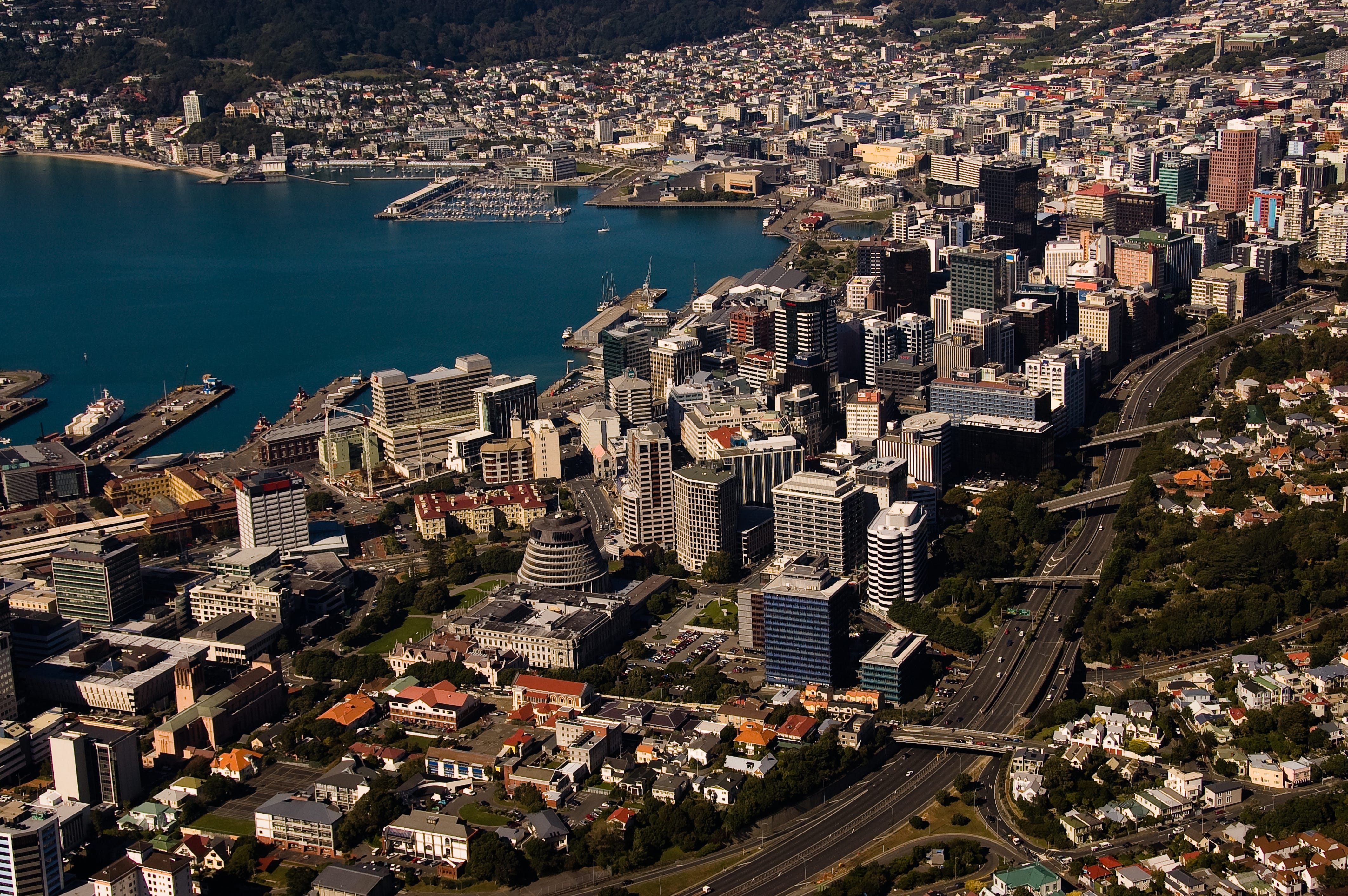
20) The water crisis in Wellington just gets more controversial – the council has now released the damning independent review of Wellington Water, and the whole issue is starting to get international attention. The Australian has just published the analysis of Oliver Hartwich on what’s going wrong in the Capital city – see: How Wellington has become a NZ tragicomedy (paywalled)
Here are some of the excerpts:
“Wellington’s problems are indicative of the state of New Zealand’s local government more generally.
A decade ago, in 2013, then-Prime Minister John Key declared Wellington a ‘dying city.’ It was controversial enough that Key had to retract his statement shortly afterwards. Today, however, many New Zealanders might agree with Key.”
“The woes of Wellington are man-made. Or, more precisely, they are a product of local government. To understand this, you only need to stroll around the capital. You will struggle to walk for more than five minutes without running into a puddle, even on dry and sunny days. That is because leaks are everywhere in the city. Some are small, others create impromptu fountains, and most take weeks, if not months, to repair. While one is being fixed, another two or three typically crop up elsewhere.”
“The electorate in Wellington is primarily made up of civil servants. It is the national capital, after all. Wellington also has a vibrant arts and film scene. There is a university with students and academics, too… It is no secret that Wellington’s electorate has a left-of-centre tilt. It was in the capital where the Greens won two of their three electorate seats in last year’s general election. In Wellington’s local elections, left-of-centre candidates have usually won most wards and the mayoralty. Without wishing to stereotype, Wellington City Council’s projects reflect these political leanings. Cycleways have been built in places where few people ride bikes. The rainbow-coloured crossing in the entertainment district is, well, striking. Recently, the city installed solar-powered parking ticket machines capable of communicating with drivers in both English and Maori – when they work.”
“Wellington’s water woes are a tragicomedy, but they are New Zealand’s local government problem in a nutshell. We should not expect good policy outcomes when cities are run by ideologues, when voters do not care for costs and benefits, and when councils speculate on being bailed out by the national government.”
Dr Bryce Edwards
Political Analyst in Residence, Democracy Project, School of Government, Victoria University of Wellington
NZ Politics Daily – 2 February 2024
TOBACCO, HEALTH
Guyon Espiner (RNZ): Revealed: NZ First Minister Casey Costello's notes on tobacco tax freeze
Tova O’Brien (Stuff): Rookie NZ First minister still exploring tobacco tax cuts despite PM rule out
Herald: Associate Health Minister Casey Costello fronts up over tobacco excise tax claims
RNZ: Associate Health Minister Casey Costello digs in over excise tax claims
Liam Hehir (The Blue Review): An interesting series of facts
Rowan Quinn (RNZ): Health Ministry admits failings in handling contracts it awarded to firm with links to Peeni Henare
Rachel Thomas (Post): Minister told Te Whatu Ora has 6000 hospital vacancies (paywalled)
Gray Gibson and Karen Rutherford (Newshub): Auckland City Hospital admits backup generators failed during 23-minute power outage
1News: Extra emergency department hospital security is 'a mixed bag'
RNZ: Some security staff provided to hospital EDs over summer not properly trained (paywalled)
Fiona Ellis (ODT): Hospital PET scanner has ‘not been taken off the table’ (paywalled)
Fiona Ellis (ODT): Plans for Dunedin hospital building revealed (paywalled)
GOVERNMENT
Matthew Hooton (Herald): Time for Christopher Luxon to take charge (paywalled)
Peter Dunne (Newsroom): Nats’ summer slumber lets ‘rabid dog’ run amok
Tracy Watkins (Post): Yes minister, the cupboard is bare (paywalled)
Greg Dixon (Listener): Another kind of politics: Roll up, roll up - the circus has arrived in town (paywalled)
Greg Presland (Standard): Christopher Luxon is no John Key
Adam Pearse (Herald): New briefings to incoming ministers bring bold challenges for Government about state of NZ
Herald: Briefings to incoming ministers: BIMS released to National-NZ First-Act coalition Government
Muriel Newman (Newstalk ZB): 2024 – a Year of Reckoning (paywalled)
GREENS
Newshub: Chlöe Swarbrick schedules press conference to reveal decision over Green Party co-leadership
1News: Swarbrick to announce co-leadership bid tomorrow, 1News understands
RNZ: Chlöe Swarbrick expected to run for Green co-leader role
Chris Trotter (Newstalk ZB): James Shaw Departs, and the Greens Are Diminished (paywalled)
Martyn Bradbury (Daily Blog): Chloe Swarbrick as co-leader could spell political doom for Labour
ODT Editorial: Shaw will be seriously missed (paywalled)
Marc Daalder (Newsroom): Behind the scenes of Shaw’s ‘blazing rows’ over climate
Caleb Fotheringham (RNZ): New Zealand's Green Party co-leader James Shaw haad 'good relationship with Pacific'
Mike Hosking (Newstalk ZB): It's sad, but it doesn't get a lot worse
TREATY, RACE RELATIONS
Glenn McConnell (Stuff): Tama Potaka rules out Treaty referendum, as new minister prepares for Waitangi
Chris Hipkins (Herald): The Treaty: We have moved from a country that turns a blind eye to racism
Maiki Sherman (1News): Seymour can expect 'very candid conversation' at forum
Pokere Paewai (RNZ): Leaders arrive for Iwi Chairs Forum ahead of Waitangi Day
Susan Botting (Local Democracy Reporting): Local government leaders to gather in Waitangi
Stephen Ward (Post): Trouble for Tuku at Tainui top table
Debbie Ngarewa-Packer (Herald): Te Tiriti o Waitangi; the covenant between Māori and the Crown
Michael Heard (Post): Unravelling the Treaty debate: words matter, but so does history (paywalled)
Peter Adams (Post): The unprincipled history of Treaty observance (paywalled)
Jamie Tahana (Spinoff): Ten of the most memorable Waitangi Days
Carwyn Jones (Spinoff): The changing scope of the Waitangi Tribunal
Michael Bassett: Shane Jones deserves support about the Waitangi Tribunal
Aaron Ryan (Whakaata Māori): South Asian women want to abide by Te Tiriti principles
PARLIAMENT
Chris Trotter (ODT): It is all wrong, and going wrong, so far for the Labour Party (paywalled)
Brent Edwards (NBR): Tax, Treaty principles, James Shaw, spending cuts
Herald: David Seymour’s first outing as acting Prime Minister, Casey Costello faces Question Time scrutiny
Conor Knell (Post): Wellington Central MP says Treaty being 'ramraided' in maiden speech (paywalled)
David Farrar: One third of backbench MPs still don’t have a bill in the ballot
MINIMUM WAGE, EMPLOYMENT
RNZ: Minister recommended lower minimum wage rise
Jenée Tibshraeny (Herald): Minimum wage to rise by 2 per cent - slowest rate in a decade
Dan Brunskill (Interest): Government increases minimum wage 2%, or half the rate of inflation
Susan Edmunds (Stuff): How does minimum wage rise stack up against previous hikes? (paywalled)
Susan Edmunds (Stuff): Minimum wage to rise to $23.15, despite warning
Anna Whyte and Tom Pullar-Strecker (Post): Minimum wage to increase 2% to $23.15 an hour (paywalled)
RNZ: Minimum wage set to increase to $23.15 from 1 April
Victoria Young (BusinessDesk): Workplace warnings to new minister (paywalled)
Sandra Conchie (Herald): Migrant exploitation: Tauranga kiwifruit orchard labour contractor pleads guilty to charges
Annemarie Quill (Stuff): Teen apprentice killed on site ‘not an accident’, says family
Mildred Armah (Stuff): Growing demand for te ao Māori in the workplace, study finds
Aimee Shaw (Post): Why the rise of AI will impact women much more than men (paywalled)
ECONOMY, COST OF LIVING
David Hargreaves (Interest): Household living costs increased 7.0% in the past year
Dan Brunskill (Interest): Treasury releases its briefing to incoming ministers but with minimal information or policy advice
Katie Harris (Newstalk ZB): MSD warns incoming minister of rising number of Kiwis on benefit, more increases likely
RNZ: Strain on infrastructure and social services if net migration remains high - MBIE
Jenny Ruth: Nicola Willis' to-do list at the Reserve Bank
Nona Pelletier (RNZ): Economic outlook brighter with GDP average forecast at 2% in 2024 / 2025 - Infometrics
William Hewett (Newshub): Expert says narrative around interest rates has 'definitely shifted', expects them to drop in 2024
Tom Pullar-Strecker (Post): Economic prospects brightening, says Infometrics (paywalled)
Liam Dann (Herald): Economists forecast NZ GDP growth will be better than expected (paywalled)
Herald Editorial: Tough economy might not last as inflation, growth improve (paywalled)
TAX
Thomas Coughlan (Herald): NZ tax system is fairer than you think despite big earners rorting top rate, rejected report finds (paywalled)
Gordon Campbell: On ACT’s flat tax fever
Susan Edmunds (Stuff): ‘A peculiar situation’: How tax change could mean bigger bills
Jonathan Mitchell (NBR): MPs warned about overtaxing trusts (paywalled)
BUSINESS
Pattrick Smellie (BusinessDesk): Shane Jones explores guarantees for gas sector (paywalled)
Brent Edwards (NBR): How to get international investors to invest in gas and minerals (paywalled)
Susan Edmunds (Stuff): Here’s how Govt ‘will create opportunities’ for business
Ella Somers (Interest): An MBIE briefing to the new Minister of Commerce and Consumer Affairs shows the Minister will be tackling everything from the Commerce Act to KiwiSaver
Ian Llewellyn (BusinessDesk): Electricity firms 'should have to tell customers best billing plan’ (paywalled)
Derek Cheng (Herald): The state of tourism: Low wages, poor productivity, and the perennial question of who pays (paywalled)
Susan Edmunds (Stuff): Days of posties are numbered: Union
RNZ: Sealord confirms purchase of Independent Fisheries
1News: Sealord cements position with Independent Fisheries purchase
RNZ: SkyCity agrees hefty penalty for alleged breaches in Australia
FOREIGN AFFAIRS, DEFENCE
1News: Foreign policy shift to AUKUS may be seen as a 'retreat' — expert
Thomas Coughlan (Herald): Judith Collins nearly runs over Australian Deputy Prime Minister with pink Mars rover
Thomas Manch (Post): NZ to align diplomatic and deterrence efforts with Australia (paywalled)
Amelia Wade (Newshub): Winston Peters and Judith Collins lay on the charm for Australia trip
Newstalk ZB: The ideal outcomes from foreign and defence meeting between New Zealand and Australia (paywalled)
RNZ: AUKUS: Australian officials to brief New Zealand govt on Pillar Two this year
1News: Australia to send group to brief New Zealand on AUKUS
Newstalk ZB: Australia to send team to New Zealand to investigate what joining 'pillar 2' of AUKUS could look like
Newshub: Australia to send team to New Zealand to investigate what joining 'pillar 2' of AUKUS could look like
Thomas Manch (Post): Australia to send Aukus experts to NZ to discuss ‘second pillar’
RNZ: Ministry of Foreign Affairs and Trade warns 'negative global trends' are accelerating
Heather du Plessis-Allan (Newstalk ZB): Winston seems keen on getting us involved with AUKUS
John MacDonald (Newstalk ZB): We don't need to be the bull in the china shop
RNZ: New Zealand Defence Force tells new minister of high attrition, staff shortages
CLIMATE CHANGE, EXTREME WEATHER, NATURAL DISASTERS
Eloise Gibson (RNZ): Climate Minister told: Make more emissions cuts here or negotiate carbon credits overseas
Bernard Hickey (The Kākā): 'Please manage and fund our climate retreat'
Tess Brunton (RNZ): South Dunedin not as prone to sea level rise as feared, research shows
Hamish McNeilly (Stuff): The ground beneath: the future of low lying South Dunedin
Grant Miller (ODT): Groundwater study boosts South Dunedin confidence
1News: Dunedin research highlights groundwater challenges as sea level rises
Te Ahikaa Trotman (Whakaata Māori): High-powered hui planned to discuss Te Tai Rāwhiti recovery
Marty Sharpe (Stuff): Council told its proposal could ‘tip people over the edge’
RNZ: NEMA warns of limited capacity for large-scale natural disasters
ENVIRONMENT, CONSERVATION
Philip Crump (Newstalk ZB): Department of Conservation CE advises staff of significant cuts and job losses (paywalled)
Charlie Mitchell (Post): ‘Significant pressure’ on conservation funding (paywalled)
Eric Frykberg (Interest): The new Coalition Government initiates moves to stop any new designations of private farmland as Significant Natural Areas (SNAs)
Marnie Prickett (Post): Govt unwinding decades of freshwater progress
WATER, INFRASTRUCTURE, LOCAL GOVERNMENT
Tom Hunt (Post): Internal emails reveal strife over critical Wellington Water report (paywalled)
Tom Hunt (Post): Scathing Wellington Water report ‘riddled with errors’ (paywalled)
Nick James (RNZ): Review finds Wellington Water not properly reporting spending
Maia Ingoe (RNZ): Most people think it fair for households to pay for how much water they use - survey
Nichoas Boyack (Post): Here’s a radical idea - let plumbers fix Wellington’s leaks (paywalled)
Doug Sail (Timaru Herald): Many Timaru District water leaks on private pipes: Council
Rachael Kelly (Southland Times): Gore council set on resolving water plant issues, says mayor
Joel MacManus (Spinoff): The first recommendations for the future of Wellington’s housing are in, and they’re shit
Erin Gourley (Post): Housing intensification report criticised for ‘scoffing’ at economics (paywalled)
Eleanor West (Post): A bold District Plan will free us from our housing doom loop (paywalled)
Oliver Hartwich (NZ Initiative): How Wellington has become a NZ tragicomedy
Laszlo Szollosi-Cira: Localism in New Zealand: Tradition is a Block
Matthew Rosenberg (Local Democracy Reporting): Invercargill councillor rejects use of te reo Māori in names
Brooke Black (Timaru Herald): Real estate agents critical of council processes
EDUCATION
John Gerritsen (RNZ): Government urged to tackle disparities for Māori, Pacific and disabled students
Gianina Schwanecke (Post): Education Ministry's financial position 'extremely tight’ (paywalled)
Tim Scott (ODT): School stress amid ‘cruel cycle’
Gianina Schwanecke (Post): 'Unprecedented' tertiary education deficit expected again (paywalled)
Jimmy Ellingham (RNZ): Cuts will have consequences, Massey University told
Alwyn Poole (Kiwiblog): Technology in Education and Life
Ian Allen (Marlborough Express): Principals hope no news is good news as ministry goes ‘silent’
Katie Townshend (Nelson Mail): Nelson council backs landfill fee hike, mayor warns of fly-tipping
ORANGA TAMARIKI, CHILD WELFARE
Niva Chittock (RNZ): Oranga Tamariki insists it has improved since damning data was collected
Niva Chittock (RNZ): Oranga Tamariki 'silent' on how it will improve social worker visits after Aroturuki Tamariki report
Glenn McConnell (Stuff): Fewer children in care, but more abuse for those who are
Hanna McCallum (Post): Report slams lack of improvement in social worker visits (paywalled)
HOUSING
Susan Edmunds (Stuff): Falling house prices ‘haven’t helped affordability’
RNZ: Checkpoint: Pressure on homeowners - mortgage arrears at 4 year high
David Hargreaves (Interest): Non-performing housing loans top the $1.5 billion mark
Greg Ninness (Interest): CoreLogic says average value of NZ homes increased $3696 in January
Anne Gibson (Herald): Auckland rents up 5.2pc, average $662/week: Barfoot & Thompson
Melanie Earley (Stuff): 'Vulnerable' Kāinga Ora tenant died in unit, lay undiscovered for days
CRIME, JUSTICE, POLICE
Herald: The Front Page: Will the Government’s plans to tackle crime and justice work?
Frances Chin (Post): Police Minister warned weather events may cost dearly
John MacDonald (Newstalk ZB): It's not just more cops that are needed
TRANSPORT
Tom Dillane (Herald): Auckland Light Rail ‘disestablishment’ to likely cost millions over six months - Cabinet paper release
RNZ: Paying for transport infrastructure an 'imminent challenge', Minister told
Oliver Lewis (BusinessDesk): 'Too high': Traffic management costs questioned (paywalled)
Nona Pelletier (RNZ): Airports Association to appeal Commerce Commission decisions over asset values
SPACE
RNZ: Space Minister told of barriers to fledgling local industry
Dileepa Fonseka (BusinessDesk): Warp speed ahead? Not without space licences, says MBIE (paywalled)
MEDIA, ARTS AND CULTURE
Daniel Dunkley (BusinessDesk): Threats to media, arts, culture and heritage sectors identified (paywalled)
Shayne Currie (Herald): Media Insider: Where is Ryan Bridge’s new show? Piha Black Coast Vanishings - police miss a PR beat; One NZ, ad agency part ways; 64 tickets: Kiwi frenzy for Taylor Swift (paywalled)
Bruce Cotterill (Newstalk ZB): The Christchurch call and the end of Woke (paywalled)
Michael Cugley (Whakaata Māori): ‘Kia Hiwa Rā!’ the first book on Māori journalism has launched
OTHER
Keith Rankin (Scoop): Collective Versus Individual: Māori Versus 'Maoris'
Michael Johnston (Newstalk ZB): The battle for free speech rages on
Gehan Gunasekara (Newsroom): Everyone should have something to hide
Rebecca Stevenson (BusinessDesk): Kiwibank could be a billion dollar (partially) listed baby (paywalled)
Grace Thomas (Newshub): Pride month kicks off in Auckland with Māori circus