

Te Pāti Māori (TPM) is in the grip of an escalating internal crisis that has spilt messily into public view. What began as rumblings of discontent has exploded into a full-blown civil war within the party, raising serious questions about integrity and governance. Last night, TPM’s own leadership took the extraordinary step of emailing members a dossier of allegations against one of its own MPs. This is a move virtually unheard of in modern New Zealand politics.
The email accuses Te Tai Tokerau MP Mariameno Kapa-Kingi of a litany of failings: a massive misuse of taxpayer funds (an overspend of up to $133,000 from her Parliamentary budget), nepotism in employing her son Eru Kapa-Kingi on the public dime, and even references to a confidential Parliamentary Service complaint about Eru’s conduct. Instead of containing the issue, this remarkable airing of dirty laundry has sent TPM into a tailspin, prompting furious backlash from grassroots, allegations of dictatorial leadership, and a vote of no confidence call against party president John Tamihere.
For a party that prides itself on kaupapa Māori values and fighting for the marginalised, the saga is sobering. It exposes integrity failures at multiple levels: apparent financial mismanagement, conflicts of interest, breakdowns in internal democracy, and a concentration of power in a tight circle at the top.
Co-leader Debbie Ngarewa-Packer has defended the decision to share these allegations internally as an act of “transparency” demanded by members. But critics, including some of the party’s own, see it as a symptom of a toxic, top-down culture within TPM. As one commentator put it, “Te Pāti Māori was supposed to be the people’s party… not a personal fiefdom”.
This Integrity Briefing examines how TPM’s internal meltdown unfolded, the integrity issues it lays bare, and what it means for a movement that claims the moral high ground.
Extraordinary public fallout: The leaked email and its allegations
The catalyst for this crisis was the bombshell email sent to TPM members last night about 10pm, signed off by the party leadership. In it, TPM hit back at recent claims by Eru Kapa-Kingi – a former vice-president and prominent figure in the party’s wider movement – who had accused the leadership of operating like a “dictatorship”. Rather than ignore or softly rebut these claims, the leadership responded with an explosive “fact sheet” that essentially put Mariameno Kapa-Kingi (Eru’s mother) in the firing line.
Below are Key allegations in the email included:
Budget Blowout
Parliamentary Service warned in July that Mariameno was on track to overspend her Te Tai Tokerau office budget by $133,000. By August 1, an official letter to her (included in the leak) said she had just $4,986 left for the remainder of the term and “urgent action” was needed to cover staff pay. Any overspend would be her personal liability, and if unresolved the issue would go to the Speaker, opening her office to full scrutiny.
President John Tamihere emailed her on August 3 giving 72 hours to fix it and outlining drastic options (personal repayment, cutting staff, etc.). In short, the party painted the MP as a poor financial manager who put TPM at risk.
Nepotism or “Aroha ki te Whānau”?
TPM’s email strongly suggests the overspending was driven by payments to her son, Eru Kapa-Kingi, whom she had engaged in her office. It alleges that “most of this money, or rather the debt, occurred because Mariameno was paying Eru”, and pointedly adds: “We will leave it to Mariameno to front that allegation and declare how much has been paid out to Eru.”
This reveals an apparent attempt to circumvent transparency – by hiring a close family member as a contractor, something the party says it only learned about when Parliamentary Service blew the whistle. Notably, documents show Eru had a $120,000/year contract with his mother which was terminated for “serious misconduct”, after which he was rehired via an external company – a loophole arrangement).
The spectre of an MP using public funds to employ whānau in secret is a stark integrity red flag. On this, the TPM email says: “Pākehā apply a word to us called nepotism. The Māori word for nepotism is Aroha ki te whānau, tautoko tō whakapapa.”
Parliamentary complaint – “Budget day incident”
Among the leaked documents is a confidential Parliamentary Service report about an incident on Budget Day 2024. While details remain scant, TPM’s email alleges Eru “assaulted two security personnel in Parliament in 2024 and was trespassed for it”, linking this to why his direct employment was ended.
Releasing this sensitive complaint – normally kept under wraps – is a jaw-dropping move, seemingly aimed at discrediting Eru’s credibility by airing his own misconduct.
Whip demotion explained (or spin?)
The leadership addressed why Mariameno was demoted last month as Party Whip. The official line: it was a strategic call to free her up to focus on the 2026 election campaign in Te Tai Tokerau. The email claims she wasn’t visible enough in her electorate, with iwi leaders complaining she was missing from hui, partly due to the heavy parliamentary schedule as whip.
TPM argued Te Tai Tokerau is highly competitive (citing strong challengers like Huhana Lyndon of the Greens and Willow-Jean Prime of Labour) and that Mariameno’s seat is “very marginal”, so she needed to be on the ground. In other words, stripping her of the whip role (and its $20k pay boost) was presented as a benevolent move to help her retain her electorate.
Critics note this explanation came only after the fact, and Mariameno herself said the demotion was “disappointing” and she hadn’t been properly consulted.
Alleged disloyalty – Talk of a coup
Perhaps most incendiary, the leaked email accuses Mariameno of entertaining thoughts of challenging the leadership. It alleges she met with Te Tai Tokerau iwi leaders seeking support to “topple the Leadership”. If true, that points to a serious breakdown in trust. An MP seemingly plotting against her own party bosses is always going to provoke a strong response. Mariameno has not publicly confirmed any such meeting, but the mere charge underscores how gravely Tamihere and co. viewed her as a threat.
Taken together, the email painted a picture of Mariameno Kapa-Kingi as a rogue MP: financially reckless, playing favourites with taxpayer money, and possibly scheming against her own leaders. It is a remarkable public shaming. Ngarewa-Packer justified it by saying members had demanded answers and it was time to “get the facts out” in the open: “This isn’t about crucifying anybody, these are the facts”. The co-leader claimed she herself only learned of some of these issues days prior – a point Mariameno greeted with thinly veiled scepticism: “We’re all up for integrity… if that’s her response, then that’s hers to live with”.
The fallout has been immediate and immense. This morning, news of the internal email was quickly leaked to media, plunging TPM into negative headlines. The party’s Te Tai Tonga electorate committee (which had already been agitating for more grassroots say) publicly called for a vote of no confidence in John Tamihere and the national executive.
And Eru Kapa-Kingi, the target of many allegations, has today labelled himself a “whistleblower” and hinted more was to come, though he refused media interviews. What had been an internal issue was now a very public spectacle of a party tearing itself apart.
Nepotism and conflicts: MPs hiring whānau under fire
At the heart of this saga lies a classic integrity dilemma: Is it ever okay for MPs to put family members on the taxpayer-funded payroll? In this case, Mariameno Kapa-Kingi’s decision to hire her son raises all the usual red flags.
MPs have a history of employing relatives in taxpayer-funded roles. Back in 2014, for example, Māori Party co-founder Tariana Turia drew criticism for staffing her electorate office with her son and granddaughter. NZ First’s Asenati Lole-Taylor had two daughters working for her as well. Parliament’s rules at the time did allow family hiring, but only if the person was genuinely the best qualified.
In fact, one National MP (Claudette Hauiti) was pinged for breaking the rules by employing her spouse – a clear no-no. The Speaker of the day ordered a crackdown: Parliamentary Service could block hires who “clearly lack the skills” for the job, an indirect way to prevent cushy nepotism gigs.
Today, it appears outright bans on hiring immediate family still don’t exist in our Parliament. However, transparency and conflict of interest protocols are supposed to apply. MPs must declare conflicts, and family members on staff usually attract extra scrutiny.
What the TPM email reveals is how those safeguards can be circumvented. By engaging her son Eru as a “contractor” through an entity, Mariameno’s arrangement was less visible, until the overspend rang alarm bells. In TPM’s words, “MPs can withhold information from the party… They can circumvent transparency by hiring casual or contract staff under a range of entities”, such that the party only finds out when something goes badly wrong. It’s a stark admission of how internal oversight failed. When Parliamentary Service finally sounded the warning in July, the overspend was eye-watering and staff salaries were in jeopardy.
The integrity issues here are obvious. At best, hiring a close relative creates a perception of nepotism – the whiff of favouritism and private interest overriding public duty. At worst, it can lead to actual misconduct or misuse of funds, as seems alleged in this case (with Eru’s role apparently not delivering value commensurate with cost).
There’s also the question of power dynamics: when a family member is both on an MP’s staff and holds positions in the party (Eru was a vice-president of TPM until earlier this year), can they ever be objective? Or will they act as enforcers of a family fiefdom?
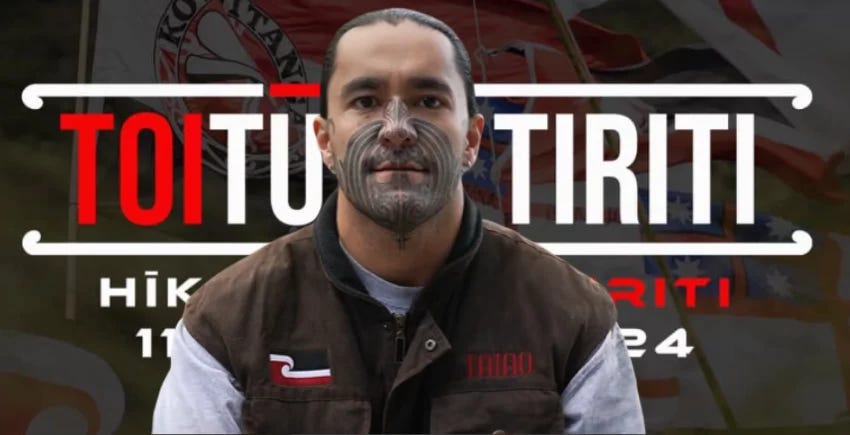
Notably, TPM’s leaked memo accuses Eru of treating the party as his platform – claiming Toitū Te Tiriti (the hīkoi protest movement he led) was never truly independent but “set up by Te Pāti Māori to build support” for the party. If true, that suggests a blurred line between what was grassroots activism and the party machine. Therefore, the Parliamentary Service has questions to answer about allowing taxpayer funds to be used for campaigning and electioneering.
It also implies Eru may have used party resources for that kaupapa. These entanglements of family, money, and power are exactly the sort of vested-interest politics TPM has historically railed against in “mainstream” parties.
One delicious irony not lost on observers: even as Mariameno’s nepotism is exposed, John Tamihere himself presides over a highly familial party structure. The TPM “leadership group” is effectively a whānau affair – it includes general manager Kiri Tamihere-Waititi, who is Tamihere’s daughter and co-leader Rawiri Waititi’s wife. In other words, the party president’s own child (and in-law) holds a top executive role managing the party day-to-day.
That fact has fuelled accusations that TPM is run less like a democratic institution and more like a family-controlled trust. When combined with the financial controversies (Tamihere’s charities were investigated in 2022 for funnelling nearly $500k into political campaigns), a picture emerges of a movement that may preach collective kaupapa, but seems prone to old-fashioned patronage. As one long-time observer, Professor Peter Davis, said of Tamihere’s operations: “He has always run the trust as a bit of a personal fiefdom… that has not been transparent”.
All of this underlines a key point: integrity standards must apply universally, to Māori and Pākehā politics alike. Having a righteous cause or indigenous perspective does not exempt a party from basic expectations of propriety. The leadership’s handling of the Kapa-Kingi affair – by airing it so publicly – suggests they recognise the seriousness of the issues. But it also invites the question: why were these integrity lapses allowed to happen in the first place?
Internal democracy on the brink: “Dictatorship” accusations and grassroots revolt
The Kapa-Kingi saga has also shone light on a deep malaise in TPM’s internal democracy. The very fact that Eru Kapa-Kingi went public with claims of a “toxic, dictatorial” leadership model hints at long-simmering frustrations.
He is not an outsider but a former insider, and one who, along with his mother, was part of TPM’s winning team in 2023. For him to blast the party’s style as “effectively a dictatorship model” suggests that decisions are being made by a small cabal at the top, with little consultation. Indeed, he and others have alleged that TPM’s constitutional requirements for hui and AGM have been ignored, saying that the party has failed to hold annual general meetings or proper national council meetings, thereby shutting members out of governance. If true, that is a serious breach of the party’s own kaupapa of rangatiratanga (self-determination) and collective leadership.
Tamihere and the co-leaders have, unsurprisingly, bristled at the “dictatorship” label. When 1News’s Maiki Sherman tried to ask about it at a press conference, Rawiri Waititi physically pulled Ngarewa-Packer away and cut the presser short, snapping “Kia ora… you fellas can thank Maiki for that one”. A few days later, Tamihere himself was pressed by reporters and pointedly refused to answer “claims and allegations”, delivering only glib one-liners. Such scenes – leaders literally walking away from accountability – hardly inspire confidence in transparent, accountable leadership.
Meanwhile at the grassroots, patience is running out. The revolt by the Te Tai Tonga branch is a flashing red light. In an unprecedented step, that electorate has effectively said it no longer trusts the party’s president or executive. They are demanding an urgent hui and democratic vote on Tamihere’s future.
It’s worth noting that Tamihere is not an MP but wields immense influence as president. Some members complain that he was never elected by the wider membership. He came in through the backroom in 2020 when the party was rebuilding, and ever since, power has been centralised in a handful of figures (Tamihere, the two co-leaders, and a tight circle of allies). The inclusion of his own daughter in the leadership team only amplifies perceptions of cronyism.
Transparency or tactics? Leadership’s defensive posture
Facing this storm, TPM’s leadership has alternated between claims of transparency and a defensive posture verging on denial. Co-leader Debbie Ngarewa-Packer has positioned the controversial email as a noble act of openness, saying the party “advanced to a point that the membership demanded transparency”, and that sharing the facts was about integrity. It’s true that in politics, candour with your members can be healthy.
However, blasting an MP’s alleged sins to thousands of inboxes at 10pm is no ordinary transparency; it felt to many like a pre-emptive strike to neutralise a critic. Indeed, Mariameno Kapa-Kingi’s supporters saw it as character assassination designed to justify her earlier demotion and any further disciplinary action.
John Tamihere, for his part, has struck a far more defiant tone. He has repeatedly dismissed media scrutiny of TPM’s troubles, framing it as culturally ignorant or hostile. In February, amid another controversy, he accused outlets of picking on Māori organisations and vowed to bypass mainstream media.
Now, in the wake of the Kapa-Kingi saga, he is doubling down on that stance. Yesterday he told Radio Waatea: “What we don’t do is what Pākehā parties do… What we don’t do is go to Pākehā media to have our kōrero”. He insists TPM will resolve matters “in our time and in our way,” according to tikanga.
At one level, this is an assertion of autonomy and a refusal to wash linen in the media just because journalists ask. But it also rings as a convenient shield against accountability. By casting inquiries as coming from the “white media” (his words: “what matters is what our people believe, not what the white media says”), Tamihere effectively dodges the substance of the allegations. He instead implies that any criticism is a cultural attack – a familiar refrain in his repertoire (he infamously labelled an investigative report on his financial dealings a “pogrom” against Māori).
This siege mentality of circling the wagons and blaming “racist” media or political rivals may play well to some of TPM’s base who are distrustful of mainstream institutions. But it also undermines the party’s claim of holding the moral high ground. If TPM refuses to subject itself to the same scrutiny it would demand of others, it risks looking hypocritical.
Recall that TPM has been quick to call out other parties’ misconduct. Co-leader Rawiri Waititi not long ago lambasted Labour and National as “major settler Pākehā parties” colluding to keep Māori down. Such rhetoric fed the image of TPM as uniquely principled. Yet here we have TPM’s president effectively saying “we’re above the rules of Pākehā politics”, even as serious questions hang over his own organisation’s conduct.
One glaring example is the party’s much-touted “reset.” Last week, TPM promised a reset to address internal issues and present a united front going forward. But that media event ended in fiasco, with the co-leaders walking out when pressed on dictatorship claims. Any “reset” messaging was drowned out by headlines of “broken trust” and an aborted press conference. In effect, the reset failed before it began, and within days came the nuclear option of the leak. Far from restoring confidence, these episodes reinforced the perception of a leadership in crisis control mode, reactive and thin-skinned.
To be fair, TPM’s leaders are under extraordinary pressure. They face an emboldened NZ First and a wary Labour, both eager to paint TPM as unstable “radicals” unfit for government. Tamihere no doubt feels that mainstream pundits don’t understand Māori contexts and that airing family disputes publicly violates cultural norms.
His emphasis that “there is a tikanga-based solution to every problem… [one] that doesn’t look for heads on platters – that’s Pākehātanga” is a reminder that Māori conflict resolution often prioritises reconciliation over public shaming.
However, that ideal is hard to reconcile with TPM’s own actions in this saga. They did serve up a head on a platter (Mariameno’s) in that all-members email. One could argue TPM abandoned tikanga themselves in that moment, opting instead for a very political (even Pākehā-style) execution to save the leadership. Ngarewa-Packer’s justification that “it’s not about crucifying anybody” rang hollow when they had just crucified their colleague in front of the whole party.
Punishing dissent: A pattern of silencing critics?
Mariameno Kapa-Kingi’s treatment has sent a clear signal to others in TPM: dissent at your peril. Earlier this year another figure, Tākuta Ferris, found himself on the outs after causing a stir. Ferris, a former candidate and party executive member, posted controversial comments on social media in September, accusing “Pākehā, Indians, Asians” and others of not understanding Māori issues.
The co-leaders disavowed his remarks as “totally unacceptable” and Ferris was swiftly told to sort himself out. Tamihere, notably, defended “the substance” of Ferris’ frustrations (the feeling of marginalisation fuelling such comments), but even he agreed the episode needed handling. Ferris has since gone quiet, effectively sidelined.
The common thread is that anyone diverging from the leadership’s script, whether by acting out of turn or challenging authority, is neutralised. In Ferris’s case, it was a public overstep on race rhetoric; in Mariameno’s, it was internal critique and perhaps jockeying for influence. Both were met with swift action to limit their power. Mariameno lost her whip position and now faces reputational ruin; Ferris (once seen as a rising star) was publicly rebuked and is keeping his head down. Even Hana-Rāwhiti Maipi-Clarke has been unusually quiet in Parliament.
This lends credence to Eru Kapa-Kingi’s charge that TPM’s upper echelon tolerates no challenge. He asserted that an “ego-driven narrative” had taken hold in TPM – a belief that the party “owned” the Māori electorates. Such a narrative would naturally cast dissenters as traitors or upstarts. Indeed, the leaked email’s harsh tone toward Eru (detailing his trespass and painting him as ungrateful) shows the leadership’s view that he “owes” the party and has no right to criticise it. Mariameno’s alleged meeting with iwi leaders was framed almost as treason. The message to members: trust the leadership, anyone stirring trouble has bad motives.
It is a testament to TPM’s culture that no MP has publicly defended Mariameno. Even though she is a colleague, the rest of the caucus (the other five MPs) have toed the line, supporting the co-leaders’ decisions. There are whispers that some MPs are uneasy but fear being seen as disloyal – a sure sign of a chill on internal debate. When a party that champions mana motuhake (self-determination) can’t accommodate a bit of internal disagreement, something is amiss.
Kaupapa Māori or political patronage?
Stepping back, this saga forces a hard reflection on integrity in Māori politics. Te Pāti Māori asserts a special moral authority as the bearer of kaupapa Māori. They position themselves as the voice of the dispossessed, unencumbered by the compromised politics of “the Crown” parties. But the current “civil war” exposes how TPM is not immune to the same pitfalls that bedevil all political movements: power struggles, ego, money problems, nepotism, and opacity.
Some commentators argue that TPM has become a political fiefdom for certain leaders – ironically mirroring the very elitism and patronage networks that drove the creation of the Māori Party in 2004 (when Tariana Turia broke from Labour over principle). If whanau ties and personal loyalty are placed above open process and merit, TPM risks replicating the failures of past Māori political endeavours. And, of course, Hone Harawira split to form the Mana Party in 2011 precisely because he felt the Māori Party had drifted into the hands of the Māori elite, losing its grassroots focus. Mana eventually reunited with the Māori Party, but those tensions never disappeared. Today, murmurs of discontent suggest history might be repeating – with talk that a new breakaway could emerge if things worsen.
What’s at stake here is not just one party’s fortunes, but the credibility of Māori representation in politics. If TPM implodes due to internal integrity failures, it could set back Māori political progress by years. Labour, which might need TPM as a partner, has been watching nervously; Chris Hipkins diplomatically acknowledged TPM’s “internal issues” and said they must work through them.
Te Pāti Māori’s current woes are a cautionary tale. As one seasoned journalist quipped, “the circus appears to be collapsing… what began as a bold revival has devolved into a circus of internal power plays and egos”. It would be a tragedy for kaupapa Māori politics if this “circus” disillusions the very people it aimed to empower.
The coming weeks will be pivotal. Will TPM undertake a genuine self-cleansing “reset” and emerge stronger and more accountable? Or will it circle the wagons, blame everyone else, and carry on until the next implosion?
Dr Bryce Edwards
Director of The Integrity Institute
Further reading:
Adam Pearse (Herald): Te Pāti Māori’s Mariameno Kapa-Kingi allegedly warned of $133k office overspend, urged to take action so staff paid - party emails claims about MP and her son to members
Waatea News: Te Pāti Māori focuses on tikanga response after Kapa-Kingi allegations
Anneke Smith (RNZ): Explosive email accuses Te Pāti Māori MP of $133k overspend
Glenn McConnell, Lloyd Burr and Chris Marriner (Stuff): Te Pāti Māori shares allegations against one of their MPs and her son in late night email
Henry Cooke (Post): Te Pāti Māori make allegations against own MP and her son in late night email to members (paywalled)
1News: Te Pāti Māori fires back at hīkoi leader after ‘dictatorship’ claims
David Farrar: The TPM allegations against the Kapa-Kingis
Julia Gabel (Herald): Politicians react to allegations against Te Pāti Māori MP and her high-profile son
Liam Hehir (The Blue Review): Why TPM will thrive in spite of chaos (paywalled)
The Spinoff: An incomplete timeline of the Kapa-Kingi/Te Pāti Māori allegations
Bryce Edwards: Integrity Briefing: Power, Pūtea, and Te Pāti Māori
Appendix: Email sent to TPM members:
TE PĀTI MĀORI FACT SHEET – ERU KAPA-KINGI ALLEGATIONS
Te Pāti Māori Pānui:
Tēnā koutou katoa e ngā mema o Te Pāti Māori, In light of recent allegations made by Eru Kapa-Kingi, our electorates have called for clarity and transparency.
Attached is documentation prepared in direct response to those allegations.
Last night, the National Council convened to discuss these matters and to chart a clear pathway forward. It was a constructive and grounded hui; one that reaffirmed our collective commitment to accountability, unity, and the kaupapa of Te Pāti Māori.
Toitū Te Tiriti
Toitū was set up by Te Pāti Māori activists. It was purposely designed to build a soft bridge in and around support for Te Pāti Māori without occasioning formal membership, etc. It was a way of attracting Tangata Pasifika, Tangata Tiriti in the support of our activations because we knew there was huge sympathy in non-Māori communities for the way in which the present governing regime incessantly attacks matters Māori.
Mr. Eru Kapa-Kingi was appointed Spokesperson and at all relevant times was the Vice President of Te Pāti Māori. He resigned from Te Pāti Māori on 24th March 2025, and his resignation letter is attached as Appendix 1. At no time were any difficulties with Te Pāti Māori flagged.
All activations were carried out and supported by Te Pāti Māori activists. Mr. Kapa-Kingi was our spokesperson but had no role in activating our communities.
Allegations
On 2nd October 2025, Mr. Kapa-Kingi launched a 72-hour roadshow particularly on Pākehā press, alleging Te Pāti Māori was led by a dictatorship, bullying, and toxic. Te Pāti Māori leadership refused to engage with these allegations because all electorates were aware that we were focusing on the swearing-in of Oriini Kaipara, along with Tāmaki Makaurau being honoured and being celebrated. An added bonus was Hana-Rāwhiti Maipi-Clarke being honoured as one of the most influential 100 politicians across the globe by the Times New York.
On 3rd October 2025, the Toitū movement’s executive issued a statement indicating that Mr. Eru Kapa-Kingi’s comments were individual to him. No Pākehā press broadcast this repudiation. This is attached as Appendix 2.
Bullying
We have caused inquiries and investigations and have asked at Caucus meetings if people could come forward with evidence or substance around this allegation. No evidence was placed before us either overtly or anonymously. What we now have to disclose is bullying by Mr. Kapa-Kingi.
On 2nd August 2024, we are now aware that Mr. Kapa-Kingi assaulted two security personnel in Parliament. This led to him being trespassed from the Parliamentary premises. In addition, we learned that he was on a Parliamentary service contract to his mother for $120,000 per annum, and this contract was terminated for serious misconduct. He was brought back by way of a company called Tautoru Ltd as a way of circumventing Parliamentary Services termination. I attach as Appendix 3 the Parliamentary Service Report on the incident.
Matters Matarau
Mariameno’s position as Matarau was changed by the Caucus for the following reasons. The Matarau position tethers the MP to the business of the Parliamentary precinct and makes it difficult for them to campaign in their electorates, which are large in any regard. Iwi leaders had approached us at a number of hui to say Mariameno was not seen at huihuinga through Te Tai Tokerau. In addition, she has a very marginal seat. Further, her competition in Te Tai Tokerau are simply superb candidates that any Party would greatly desire in Huhana Lyndon (Green Party) and Willow Jean Prime (Labour Party). We are 11 months out from having the numbers to determine the next Government of Aotearoa. These decisions are about clear tactical decisions made to support Mariameno’s run into Election 2026. In addition, Mariameno was also required to step into the Social Services Select Committee role as we had lost Tarsh Takutai Kemp from that position. We acknowledge her speciality skills in this subcommittee.
We attach as Appendix 4, which clearly shows Mariameno that she won Te Tai Tokerau in West Auckland but needed to bed in her vote in the North because that was where she lost heavily in the Far North and Whangārei. By this time, Mariameno was not communicating with us.
There were allegations made that Mariameno was shifted as Matarau because she had met with Te Tai Tokerau Iwi Leaders wanting their support to topple the Leadership. This is a matter for Te Tai Tokerau to respond to.
Mariameno’s financial mismanagement may have played a role, but it was not tactical or strategic; the decision to free her to fight for her electorate was.
Matters Financial
The problem Te Pāti Māori has is that MPs can withhold information from the Party. They can also circumvent transparency by hiring casual or contract staff under a range of entities. This means that the Party is only alerted by Parliamentary Services or the Speaker when major financial misappropriation or wrongdoing occurs. Parliamentary Services stated on 7th July 2025 that Mariameno had major overspending issues.
The Co-Leaders attempted to contact Mariameno and were unable to until 1st August 2025. Parliamentary Services advised that Mariameno Kapa-Kingi was tracking to overspend by $133,000. Their documentation is attached as Appendix 5.
On 1st August 2025, the Party President was appraised of the problem and understood that there had been some prevarication on the part of Mariameno. The Party President rang her on Saturday, 2nd August 2025, to advise her of the gravity of our position and that Te Pāti Māori did not and could not be seen to be poor managers over financial matters. The Party President agreed with the interplay of good advice provided by Parliamentary Services. None of this was taken on board, so the Party President indicated to Mariameno that we would agree to Parliamentary Services recommendations to the letter unless she looked at other options. The Party President followed this up with a letter explaining the difficulty and gravity of her position and the impact it could have on the wider Party. The Party President’s correspondence to her of 3rd August 2025 is attached as Appendix 6.
A further allegation has surfaced that most of this money, or rather the debt, occurred because Mariameno was paying Eru Kapa-Kingi. We will leave it to Mariameno to front that allegation and declare how much has been paid out to Eru.
We make the following acknowledgement to all Māori. Pākehā apply a word to us called nepotism. The Māori word for nepotism is Aroha ki te whānau, tautoko tō whakapapa. This report has nothing to do with the love we have for our whānau but the way in which we conduct ourselves in regard to it.
Ngā mihi,
Te Pāti Māori
I think one of two things may happen. TPM will sort out its internal splits and will not be affected at all in its polling, or it won't get itself sorted and will implode under the pressure of all the egos involved, to the extent that it fractures. However, over at all looms the spectre of John Tamahere who is not going to go quietly, if at all. Judging TPM by Pakeha mores and processes is irrelevant, they just do not operate within the same parameters. Remember how embedded the tentacles of Nanaia Mahuta's relatives were in some of the operations in her patronage. While i do not favour TPM and its grandstanding I'm sad that they have not matured into a party to be taken seriously.
Naniah Mahuta and her family dealings with He Puapua, co-governance and 3 waters, were the same sort of entitled nepotism as what is happening with TPM and, in my view, more sinister as she was a cabinet minister. TPM are behaving more like Stalin and Mao; they preach freedom for the workers but live like fuedal lords - Greens are not far behind.