

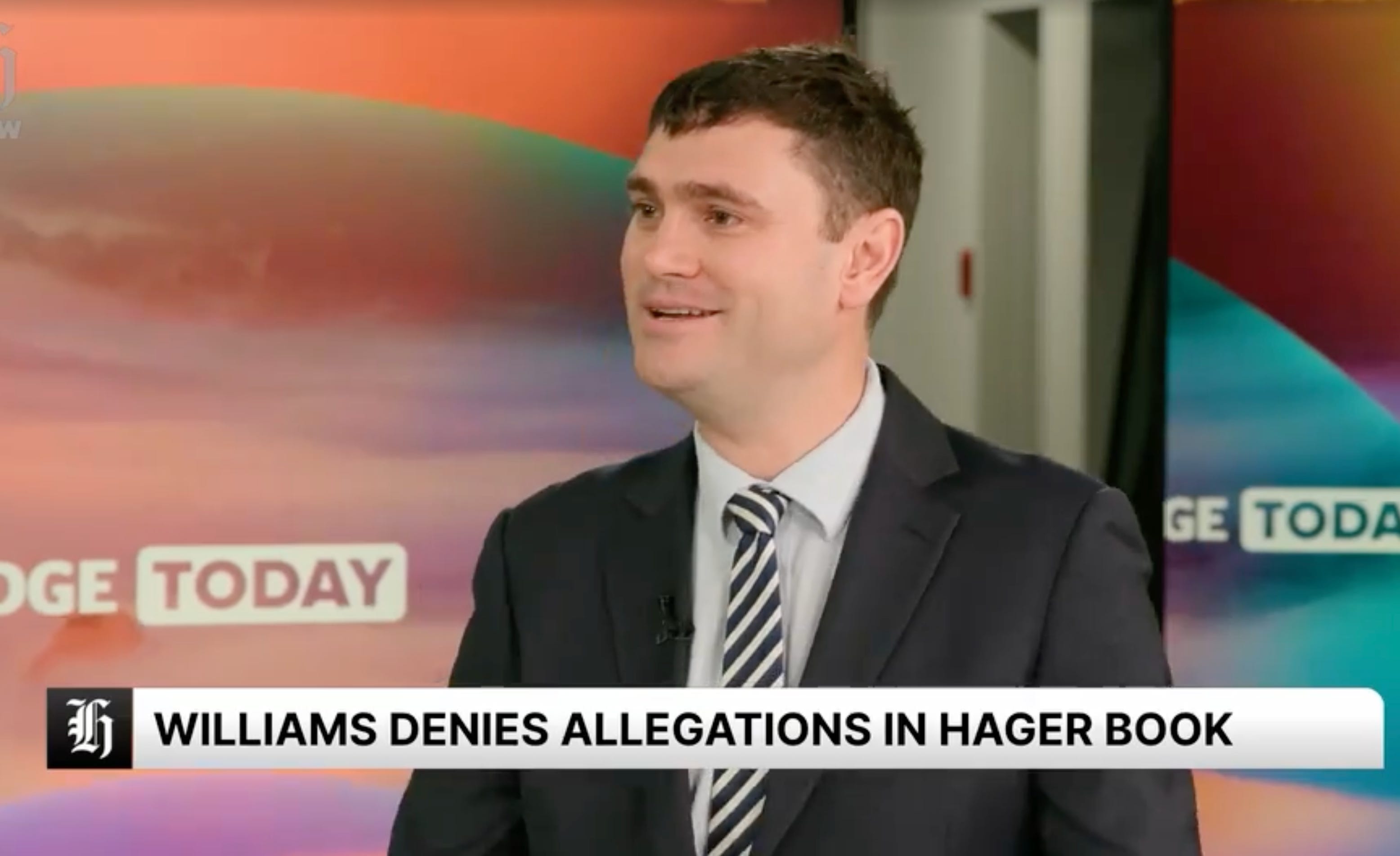
Nicky Hager’s Dirty Work reaches bookshops around the country today, but since Tuesday night’s launch in Wellington most of the argument about it has been over whether its claims are true. The Taxpayers’ Union, its co-founders and others named in the book have issued detailed denials, and Hager has now challenged the Union’s executive director, Jordan Williams, to waive any confidentiality over the book’s most serious allegation.
Yesterday I published a chapter-by-chapter guide to the book. Today I’m sticking to the disputes over the facts. The wider argument about what the book means, and the case for it, can wait for another column. On the evidence so far, the Union has made some fair points against the book, and the argument over its most serious allegation has turned into a dispute that remains unresolved.
The harassment allegation and the denials
Hager writes that the Union’s board paid out money to deal with “at least one sexual harassment case against Williams”. Williams calls the allegation “a disgusting smear” that “has come from absolutely nowhere”. The Union’s chair, Ruth Richardson, says the board “categorically denies” it: “There have been no claims, let alone settlements.” She says she has spoken to previous chairs and to co-founder David Farrar, and that all are “unequivocal” that the allegation is “totally untrue”.
Hager is standing by the claim. He told the Herald’s David Fisher he had checked it independently with people who knew about it first-hand. He also told Ryan Bridge that two separate sources knew what had happened and that he “wouldn’t make an allegation like that without having very solid information”.
And in a public statement through his lawyer, Felix Geiringer, he challenged Williams and Farrar to waive any confidentiality over the alleged complaint and settlement. “If the complaint letter and subsequent settlement do not exist, as Jordan Williams and David Farrar claim, then they will have no problem publicly waiving any and all rights they have to any claims of confidentiality, non-disclosure, or privilege, in relation to them,” he said, adding that documents could be redacted to protect the woman’s identity.
Hager also argued that Richardson, who became chair in June 2025, would have no direct knowledge of a settlement that predated her, and that at least two earlier chairs would know about it, although Richardson says she has already spoken to previous chairs. Farrar says payments require authorisation by at least two directors.
Why the waiver became an issue
Heather du Plessis-Allan put the waiver challenge last night to Williams in a Newstalk ZB interview about an hour after Hager’s statement came out. “Is it true that you settled a sexual harassment case?” she asked. “No, it is not,” Williams replied.
Williams repeatedly said there was “nothing to waive”, and adding that he couldn’t offer a blanket waiver because “We have employees that deal with confidential information.” Du Plessis-Allan treated his answers as a refusal and kept pressing him for an explicit waiver.
Williams called the challenge “frankly, desperate”, and said Hager had now given “three different versions of an allegation that came from nowhere”. The book, he pointed out, says the board paid out. On Wednesday morning Hager told Ryan Bridge Today that the settlement had been hidden “even from members of their own board”, and by the afternoon he was saying at least two earlier chairs would know about it.
Du Plessis-Allan kept pressing Williams: “If it doesn’t exist, there’s no risk in waiving it,” she told him, and at one point: “Front up, front up.” Asked if he would sue, Williams said he was “taking advice” and had been “in regular discussions with lawyers”, but that his focus was on not letting “this leftwing activist” derail the Union’s work in the six weeks before the election.
On Newstalk ZB’s “Huddle” panel that evening, former National minister Maurice Williamson was no kinder to Hager, calling the book’s reliance on anonymous claims “despicable journalism at the very, very worst”. But he said he was surprised Williams hadn’t simply offered a waiver. “I’d just say I give a full waiver to anybody that’s ever had a settlement with me over a sexual harassment because I know that doesn’t exist,” he said. “There you go, done.” He allowed that Williams “may be just trying to take the very cautious legal view”. Q+A host Jack Tame thought a waiver “would be a relatively easy thing to do should you choose to do that”.
Williams says Hager has changed his story. But a settlement known to some directors could have been concealed from others, so the accounts are not necessarily contradictory. Hager says he checked the allegation with people who had direct knowledge; the Union categorically denies it. The reporting available so far does not resolve that dispute. It is reasonable to ask Hager for a fuller explanation of how he verified the allegation, without requiring him to identify the woman or expose confidential sources.
Hager says the dispute is distracting attention from the book’s wider findings, and he’s right that those findings deserve more attention. But he published a serious allegation about Williams, and explaining how he verified it is part of defending the book.
The paywall now starts partway through all Democracy Project newsletters. Please take out a paid sub if you want to support this service and access the full content, including the following sections:
The database and the invoice
The other disputed claims
Why not ask before publication?